
In This Article
Picture this: you’re lining up at the start of the Tamarack Ottawa Race Weekend, the crowd is humming with energy, and the one thing standing between you and a personal best is the machine beneath you. That’s the moment when knowing how to choose the best racing wheelchair stops being an abstract question — and becomes everything.
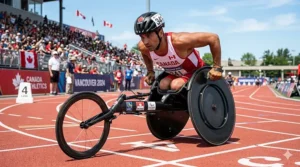
Wheelchair racing is one of Canada’s proudest para-athletic traditions. From Chantal Petitclerc’s legendary 21 Paralympic medals to Brent Lakatos’s North American records, and Austin Smeenk’s back-to-back World Para Athletics silvers out of Oakville, Ontario — Canadian athletes have shaped this sport at the highest level. Whether you’re lining up at a local 5K or eyeing the Paralympic podium, the chair you race in matters enormously.
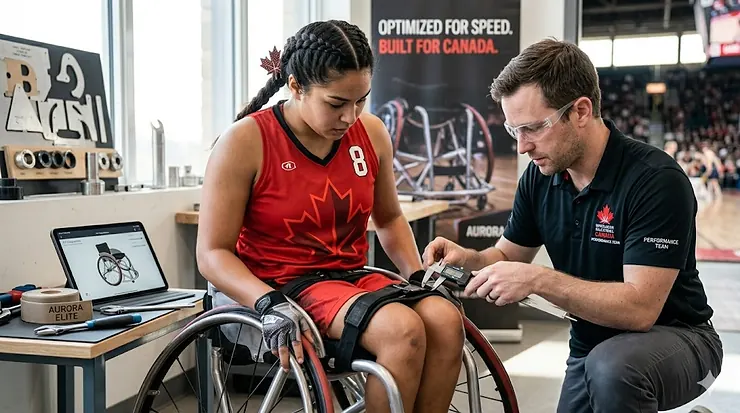
The best racing wheelchair isn’t a one-size-fits-all purchase. It’s a highly personal decision shaped by your disability classification, racing discipline (track vs. marathon), experience level, and budget in CAD. A beginner racer in BC working through the BC Wheelchair Sports Association has very different needs from a seasoned T53 competitor logging 200+ km per week.
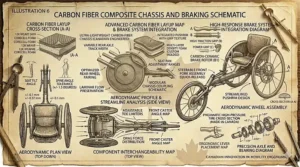
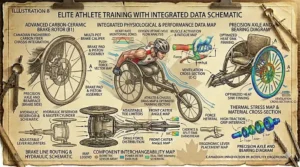
What most Canadian buyers overlook is that a racing wheelchair is not the same as an everyday manual wheelchair. Racing chairs use a distinctive three-wheel design — two large rear wheels and a single small front steering wheel — engineered for aerodynamic efficiency, not corridor navigation. Their rigid, low-profile frames bring the rider into a powerful forward-tucked position that generates far more propulsive force per stroke. Competitive racers can reach speeds exceeding 30 km/h (18.6 mph), and marathon-winning pace in elite races sits around 25–26 km/h (15.5–16 mph) sustained over 42.2 km (26.2 miles). That’s astonishing athleticism — and remarkable engineering.
In this guide, I’ll walk you through the top 7 racing wheelchairs available to Canadian buyers in 2026, break down what makes each one worth your investment, and give you the Canadian-specific context — dealer access, climate considerations, and funding programs — that most product reviews simply ignore.
Quick Comparison Table: Top 7 Racing Wheelchairs for Canadian Buyers
| Model | Frame Material | Weight (Approx.) | Best For | CAD Price Range | Canadian Availability |
|---|---|---|---|---|---|
| Top End Excelerator | 6061 Aluminium | 8–10 kg (17–22 lbs) | Marathon & road racing | $4,500–$6,500 | Specialty dealers across Canada |
| Top End Eliminator | 6061 Aluminium / Carbon Fork | 7–9 kg (15–20 lbs) | Track sprints & middle distance | $5,000–$7,000 | Specialty dealers |
| Quickie GP/GPV | Welded Aluminium | 9.5–11 kg (21–24 lbs) | Beginners & dual sport/everyday | $3,500–$5,000 | Motion Cares (CA), Sunrise Medical dealers |
| RGK High Octane | Titanium/Alloy | 7–8.5 kg (15–19 lbs) | Competitive club racing | $6,000–$9,000 | Import via specialty US/Canadian dealers |
| Per4Max Podium | Carbon Fibre/Aluminium | 6.5–8 kg (14–17 lbs) | Elite performance & Paratriathlon | $7,000–$11,000 | Specialty import, ships to Canada |
| TiLite TR | Titanium | 7–9 kg (15–20 lbs) | Premium everyday-to-race | $6,500–$9,500 | Permobil Canada dealers |
| Revolution Sports FLX | Aluminium (Canadian-made) | 8–10 kg (17–22 lbs) | Canadian club racers & beginners | $3,800–$5,500 | Revolution Sports, ships from QC |
⚠️ Important Canadian Note: True competitive racing wheelchairs are custom-built specialty items — not shelf products. They are measured and configured to the individual athlete by trained clinicians or certified dealers. This table reflects approximate CAD ranges based on current market data; always request a custom quote. Some accessories (gloves, pump kits, training equipment) are available directly on Amazon.ca.
The table above tells an interesting story. If you’re a first-time racer in Canada, the Quickie GP/GPV and Revolution Sports FLX represent the most accessible entry points — under $5,500 CAD with Canadian dealer support. For serious competitors already racing club events, the Top End Excelerator or Eliminator offers the best combination of proven performance and cross-Canada dealer coverage. Elite athletes with funding from provincial sport programs or ADP (Ontario’s Assistive Devices Program) should seriously evaluate the Per4Max Podium or RGK High Octane, where the engineering investment pays dividends in race times.
✨ Don’t Miss These Exclusive Deals!
🔍 Take your racing performance to the next level with these carefully selected products. Click on any highlighted item to check current pricing and availability on Amazon.ca. These tools will help you compete at your absolute best!
Top 7 Racing Wheelchairs: Expert Analysis
1. Top End Excelerator — The Marathon Legend
The Top End Excelerator is the chair that built careers. Top End Racing Wheelchairs have produced more world champions and more world records than any other brand, and the Excelerator is their flagship road and marathon machine — the choice for athletes who want to go long and go fast.
Built from 6061 aerospace-grade aluminium, the Excelerator’s frame geometry places the athlete in a deep forward tuck, reducing frontal drag dramatically over a 42.2 km marathon. The carbon-fibre fork absorbs road vibration — meaningful if you’re racing on Montreal’s cobblestoned race routes or Vancouver’s uneven pavement. Weight comes in around 8–10 kg (17–22 lbs) depending on wheel specifications, and the custom fit means no two chairs are identical. Every chair is built to your measured dimensions in Florida, then shipped to Canadian dealers for final fitting.
What most Canadian buyers overlook about this model is how critical the seat-to-floor height and compensator position are for injury prevention. A poorly fitted Excelerator will overload your shoulder rotator cuffs within 20 km — a fitting session with a qualified Canadian clinician isn’t optional, it’s essential.
Canadian customer feedback highlights the chair’s consistent push-stroke efficiency on flat road courses like the Mississauga Marathon or the Ottawa Race Weekend. The sealed bearing hubs handle spring slush and early-season grit without complaint — a real advantage in our shoulder seasons when racing resumes before roads are fully clear.
✅ Proven marathon geometry refined over decades
✅ Carbon fork dampens road vibration beautifully
✅ Exceptional resale value in the Canadian adaptive sports community
❌ Long lead time for custom builds (6–12 weeks typical)
❌ Premium pricing puts it out of reach without funding support
Price range: $4,500–$6,500 CAD. For a marathon-focused athlete with provincial ADP funding, this is the gold standard — worth every dollar.
2. Top End Eliminator — The Track Specialist
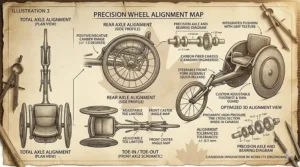
If the Excelerator is built for endurance, the Top End Eliminator is built for explosive speed. This is the chair you want when racing 100m, 400m, or 1500m on a track — distances where aerodynamic drag, acceleration response, and tight cornering control dominate the outcome.
The Eliminator’s more aggressive seat angle positions the athlete nearly parallel to the ground, maximizing power transfer from each push stroke directly into forward momentum. The frame runs even stiffer than the Excelerator because on the track, any flex is wasted energy. Standard spec includes a carbon-fibre fork and compensator system tuned for track banking. Weight lands around 7–9 kg (15–20 lbs) depending on wheel choice — Corima carbon disc wheels are a popular upgrade that shaves another 500–700 g and improves cornering traction significantly.
For Canadian track athletes competing through Athletics Canada’s para athletics program, the Eliminator is commonly seen at provincial championships from BC to Ontario. It’s compatible with the same classification structure (T51–T54 chair classes) used at all major Canadian and international competitions.
Customer reviews from Canadian club racers consistently praise the chair’s cornering stability, particularly on older 6-lane tracks where the banking angles vary. The downside? The ultra-aggressive position is difficult for newer athletes to sustain, and the narrow performance window means this chair has little dual-use value as an everyday chair.
✅ Best-in-class acceleration geometry for track sprints
✅ Carbon fork and upgrade-ready spec as standard
✅ Proven on Canadian championship tracks
❌ Extreme position unsuitable for road racing or beginners
❌ Higher price bracket — budget for carbon wheel upgrades
Price range: $5,000–$7,000 CAD base. Expect carbon wheel upgrades to add $1,500–$3,000 CAD.
3. Quickie GP/GPV — The Ideal Starting Chair for Canadian Beginners
Not everyone enters racing through the elite pipeline, and the Quickie GP/GPV is frankly the most sensible starting point for a Canadian new to the sport. This is the chair that teaches you proper technique without punishing every mistake — and it doubles as a high-performance active everyday chair, which matters enormously when you’re not sure yet how deep into racing you want to go.
The one-piece welded aluminium frame is a masterpiece of durability. The GPV comes standard with seven degrees of camber for easier propulsion, but can be adjusted from 0° to 12° — this adjustability is the spec sheet detail that matters most. More camber improves stability and pushing efficiency; less camber makes transfers easier in tight Canadian apartment spaces or transit environments. This chair can adapt as your racing skill grows.
Starting weight is around 9.5 kg (21 lbs) — heavier than a pure racing chair, but that mass is strategically distributed for stability. For a beginner racing 5Ks or half-marathons with clubs like BC Wheelchair Sports Association, the extra few hundred grams are irrelevant next to the confidence boost of a forgiving, responsive frame.
Available through Motion Cares (motioncares.ca) and other Sunrise Medical-affiliated Canadian dealers, the GPV has reasonably accessible service networks in Toronto, Vancouver, and Calgary — unlike some import-only brands where parts arrive from the US with 2–3 week delays.
✅ Highly adjustable camber system — grows with your skill level
✅ Canadian dealer network for service and fitting
✅ Excellent dual-purpose chair — racing and everyday use
❌ Heavier than dedicated racing chairs
❌ Not competitive at elite classification levels
Price range: $3,500–$5,000 CAD. Exceptional value for beginners — and eligible for ADP funding in Ontario.
4. RGK High Octane — The European Powerhouse
RGK is a UK-based brand with a fervent global following, and the High Octane brings their competition philosophy to the road: maximum stiffness, minimum weight, zero compromise. The titanium frame option comes in around 7–8.5 kg (15–19 lbs), and the tubing geometry is engineered specifically for road and marathon racing at a competitive club level.
What sets the RGK apart from American brands is the build philosophy. RGK is the manufacturer of the world’s lightest titanium wheelchair, the Octane Sub4, weighing less than 8 kg — and that obsession with material science carries through the High Octane. The titanium frame has a natural vibration-damping quality that aluminium lacks, meaning it absorbs rough tarmac on a 42K marathon better than a similarly weighted aluminium chair.
For Canadians, the RGK requires importing through specialty US dealers (currently only officially authorized through How iRoll Sports in the US) or sourcing through Canadian adaptive sports clinicians. Cross-border shipping adds cost and extends lead times, and you’ll want to confirm Canadian warranty support before ordering. That said, several Canadian national team athletes have used RGK frames, and the community knowledge base here is solid.
Canadian club racers who’ve trained at national training centres praise the High Octane’s cornering feel — the low centre of gravity makes it confidence-inspiring on downhill marathon sections like those found on the Vancouver BMO Marathon course.
✅ Titanium frame’s natural vibration damping on rough Canadian roads
✅ Exceptionally light for competition-level racing
✅ Polished finish holds up against road salt and grime better than painted frames
❌ Canadian warranty and service support requires planning
❌ Premium price bracket without local dealer availability
Price range: $6,000–$9,000 CAD including import and shipping. Best suited for funded competitive athletes.
5. Per4Max Podium — The Paratriathlon & Elite Choice
The Per4Max Podium is what happens when a racing wheelchair is designed from scratch for elite multi-event athletes. Originating from the UK’s elite adaptive sports engineering ecosystem, the Podium has found favour with paratriathlon competitors who need a chair that transitions quickly from T1 (transition zone) to race pace in seconds — because in paratriathlon, a slow chair setup loses you the race before you’ve pushed a single stroke.
The carbon fibre/aluminium hybrid frame reduces weight to around 6.5–8 kg (14–17 lbs), making this one of the lightest chairs available to Canadian buyers short of full bespoke titanium builds. The aerodynamic seat cage and compensator are engineered with wind-tunnel input, and the result is genuinely measurable drag reduction — independent testing cited in adaptive sports research suggests 4–7% aerodynamic improvement over conventional aluminium frames at racing speeds.
Practically speaking for Canadian athletes: if you’re racing with Paratriathlon Canada or targeting qualifier events for international competition, the Per4Max deserves serious evaluation. Pricing is steep, but provincial sport organization grants and the Canadian Paralympic Committee’s Athlete Assistance Program can offset significant costs for classified athletes.
Free shipping has been offered to Canadian buyers during promotional periods (use code PER4MAX, when available — check current promotions directly with the distributor). Standard cross-border shipping adds approximately $300–$500 CAD.
✅ Aerodynamically optimized for elite-level performance
✅ Ideal for paratriathlon T1 transition design
✅ Measurably lighter than most competition
❌ Price is the highest in this guide — requires funding support for most Canadian athletes
❌ Complex technical fit requires experienced clinician — not beginner-friendly
Price range: $7,000–$11,000 CAD. A serious investment for seriously competitive athletes.
6. TiLite TR — The Premium Canadian Dealer Option
TiLite has a distinguished history in the adaptive mobility world. Acquired by Permobil — a Swedish powerhouse in power mobility — in 2014, TiLite now benefits from an international support network that directly benefits Canadian buyers. Permobil Canada maintains dealer relationships across the country, meaning a TiLite TR purchase comes with more accessible service and fitting support than most import brands.
The TR frame is built from aerospace-grade titanium tubing, hand-welded by craftsmen in Pasco, Washington. It weighs in at 7–9 kg (15–20 lbs) depending on configuration. What distinguishes titanium from aluminium in real-world Canadian use isn’t just the weight — it’s the cold-weather behaviour. Titanium maintains its structural properties more consistently across the extreme temperature range a Canadian athlete might encounter, from -20°C winter indoor training to +35°C summer road race conditions. Aluminium, while excellent, can feel marginally different (subtly stiffer) in deep cold — a nuance that experienced racers notice.
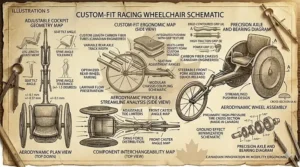
The TR’s bolt-on rear frame design means growth adjustments are possible without buying a new chair — a meaningful consideration if you’re a junior racer still developing, or an athlete whose fitness progression is changing their optimal position.
Canadian reviews through Permobil Canada dealers often cite the TR’s longevity: owners regularly report 7–10 years of competition use before major frame work is required, which fundamentally changes the cost-per-year calculation even at the premium price point.
✅ Permobil Canada dealer network — accessible service nationwide
✅ Titanium performs consistently across Canadian temperature extremes
✅ Adjustable frame design extends chair lifespan significantly
❌ Permobil premium pricing in Canadian dollars
❌ Heavier than full carbon competition frames
Price range: $6,500–$9,500 CAD. Best option for athletes prioritizing long-term durability and Canadian service access.
7. Revolution Sports FLX — The Canadian-Built Option
Revolution Sports (revolutionsports.ca) is a Quebec-based adaptive sports manufacturer that deserves far more recognition than it typically receives in English-Canadian wheelchair sports media. The FLX is their competition-oriented racing chair, designed specifically with input from Canadian club-level racers who wanted a domestically supported option that doesn’t require waiting 8 weeks for a chair to clear US customs.
Built from aircraft-grade aluminium, the FLX runs around 8–10 kg (17–22 lbs) depending on configuration, and is available in both track and road geometry versions. What makes Revolution Sports genuinely exciting for Canadian buyers is the full ecosystem: they also manufacture the Flex Racing Gloves, a 3D-printed flexible racing glove that has been praised by Canadian racers for its grip consistency in both wet and dry conditions — critical for those early-spring Canadian races when light rain is almost guaranteed.
The FLX can be ordered with a complete racing setup: chair, pushrims, gloves, and training accessories sourced entirely from Canadian suppliers, keeping your dollars in Canada and minimizing customs delays. Revolution Sports ships from Quebec across all provinces, including northern regions where international courier delays can stretch to 3–4 weeks.
For athletes connected through provincial associations like BCWSA or Ontario Wheelchair Sports, Revolution Sports has existing relationships that sometimes facilitate subsidized access for developing athletes. Worth a direct inquiry if budget is a constraint.
✅ Canadian-built and shipped — no border delays or customs fees
✅ Full ecosystem: gloves, pushrims, and accessories available domestically
✅ Responsive Canadian customer support in both English and French
❌ Smaller brand — less name recognition at international events
❌ Limited comparative data against elite European/American brands
Price range: $3,800–$5,500 CAD. The best Canadian-built option and an outstanding value for club racers.
How Canadian Athletes Actually Choose a Racing Wheelchair: Real-World Scenarios
Understanding specs is one thing — understanding which chair fits your life as a Canadian racer is another. Here are three realistic profiles I encounter when discussing racing wheelchair choices with Canadian athletes:
Profile 1: First-Time Racer in Toronto, Budget ~$4,500 CAD James, 34, sustained a T6 spinal cord injury two years ago and has been pushing a standard everyday chair. He’s been training with Ontario Wheelchair Sports and wants to run his first 10K race. For James, the Quickie GP/GPV or Revolution Sports FLX is the call. Both are within his budget, both are adjustable enough to accommodate his still-developing push technique, and both have Canadian dealer or direct-ship support so a clinician can fit him properly. He should also apply for Ontario’s ADP funding — up to $2,400 CAD is available for sports wheelchairs under certain criteria, which changes his budget math significantly.
Profile 2: Competitive Club Racer in Vancouver, Budget ~$7,000 CAD Priya, 28, has been racing for four years and is placing top-3 in BC provincial events. She wants a chair that will take her to nationals. For her, the Top End Excelerator is the natural choice — it’s proven at national championship level, available through BC dealers, and the marathon geometry suits the Vancouver BMO Marathon where she’s targeting a sub-2-hour time. The carbon fork option is worth the extra $600 CAD given BC’s rainy race conditions, where road vibration management matters more than in drier provinces.
Profile 3: Elite Para Athlete in Montreal, Provincial Team Funding Available Marco, 23, is racing at the T53 category and has been selected for the Canadian national training squad. With provincial and federal sport funding behind him, the Per4Max Podium or RGK High Octane is worth serious evaluation. Both require cross-border sourcing, but at the elite level, the performance margins these chairs deliver justify the administrative complexity. His French-language communication needs are met by the Revolution Sports FLX ecosystem for training chairs — keeping primary correspondence in Quebec.
How to Choose the Best Racing Wheelchair in Canada: A Practical Framework
Choosing a racing wheelchair is not like buying running shoes. Here’s a structured decision process for Canadian buyers:
- Confirm your classification first. Wheelchair racing uses T51–T54 classification bands that determine legal racing posture, handrim placement, and compensation equipment. Athletics Canada and your provincial para athletics body can guide you through classification. The Canadian Para Athletics Championships follow World Para Athletics classification rules, so getting properly classified before purchasing equipment saves costly mistakes.
- Choose your primary discipline. Track (100m–10,000m) favours the aggressive geometry of the Top End Eliminator. Road/marathon (10K–42.2K) rewards the sustained efficiency of the Excelerator or TiLite TR. Beginners uncertain of their discipline should choose an adaptable chair like the Quickie GPV.
- Set your realistic CAD budget — including accessories. The chair is only the beginning. Budget $300–$600 CAD for quality racing gloves (Revolution Sports Flex or Harness Designs), $200–$500 CAD for a high-pressure track pump and tyre set, and $150–$400 CAD for a training roller or resistance trainer for Canadian winter off-season sessions.
- Find a Canadian clinician for fitting. The BC Wheelchair Sports Association, Ontario Wheelchair Sports, and similar provincial bodies maintain referral lists of clinicians experienced in racing wheelchair fitting. Never order a racing chair based on online specs alone — a 5mm error in seat height fundamentally changes push mechanics and injury risk.
- Explore Canadian funding. Ontario’s ADP program, BC’s FAIR program, Veterans Affairs Canada, and various provincial disability support programs can partially or fully fund sports wheelchairs for eligible Canadians. Many athletes don’t know these exist until they ask.
- Consider Canadian winter storage. A carbon-fibre chair stored in an unheated garage through a Saskatchewan winter is at risk of adhesive joint failure from extreme freeze-thaw cycling. Aluminium and titanium chairs handle Canadian temperature extremes more robustly. Store your chair indoors above -10°C when not in use.
- Plan for bilingual product support. If you’re based in Quebec or Franco-Ontario communities, Revolution Sports is your strongest option for French-language technical support. Most American brands offer English-only service documentation.
Wheelchair Racing vs. Handbike: Which Is Right for the Canadian Athlete?
This comparison comes up constantly in adaptive sports circles, so let’s address it directly. Both are Paralympic disciplines, both are available to a wide range of physical impairments, and both are growing in Canada — but they are fundamentally different.
| Factor | Racing Wheelchair | Handbike |
|---|---|---|
| Propulsion | Push-rim technique (arms only) | Crank/cycling motion (arms) |
| Speeds on flat | 25–30 km/h | 35–45 km/h |
| Technique barrier | High — push mechanics complex | Moderate — feels more intuitive |
| Indoor training | Roller trainers available in CAD | Smart trainers (Zwift-compatible) |
| Paralympic events | T51–T54 track + road | H1–H5 road only |
| Price range (CAD) | $3,500–$11,000+ | $4,000–$15,000+ |
| Best for | Track racing & urban road races | Long-distance road events |
The comparison table above highlights that wheelchair racing is the better choice for athletes interested in competing across both track and road disciplines — a meaningful advantage in Canada where track programs through Athletics Canada operate year-round. Handbikes offer higher raw speeds on the road but are track-ineligible. For athletes solely interested in marathon distance, the crossover question is real — but most Canadian coaches recommend starting with a racing chair, developing fundamental push technique, and then deciding.
What to Expect: Real-World Racing Wheelchair Performance in Canadian Conditions
The spec sheet won’t warn you about this: racing wheelchairs in Canada face environmental challenges that American product reviews rarely mention.
Spring road salt and grit is the biggest enemy of racing wheelchair bearings in Ontario and Quebec. Even sealed bearing hubs benefit from a post-race rinse when you’ve been racing on salty spring roads. Titanium hardware corrodes less aggressively than steel — another reason titanium frames justify their cost in coastal or road-salt-heavy provinces. Wipe down aluminium frames after wet races.
Cold-weather hand function matters enormously for push efficiency. At temperatures below 10°C, hand dexterity drops measurably, affecting your grip on the pushrim. Canadian racers competing in early-spring or late-fall events swear by thinner liner gloves worn under racing gloves — a technique that maintains warmth without compromising the tactile feedback that good push timing requires.
Temperature effects on tyre pressure are significant: racing wheelchair tyres inflated to 120–140 PSI (830–970 kPa) at room temperature can drop 5–10 PSI for every 10°C decrease in ambient temperature. Inflate your tyres immediately before a cold-weather race, not the night before in a warm hotel room.
Indoor training in Canadian winters is non-negotiable for serious racers. An enclosed roller trainer designed for racing wheelchairs allows full technical work from November through March without navigating ice. Several Amazon.ca-available resistance trainers from brands like SportCrafters can be adapted for racing wheelchair use — search for “wheelchair roller trainer” on Amazon.ca for current options in the $250–$500 CAD range.
Common Mistakes When Buying a Racing Wheelchair in Canada
Even experienced everyday wheelchair users make costly errors when crossing into the racing chair world. Here are the ones I see most often:
Ordering without a professional fitting. A racing chair custom-built to wrong measurements is worse than no chair at all. The forward tuck position amplifies every fit error. This is not optional.
Ignoring Canadian funding programs. Hundreds of eligible Canadian athletes pay full price for racing chairs that could have been substantially subsidized. Check with your provincial para athletics association about equipment grant programs before spending a dollar.
Buying a track chair for marathon. The aggressive geometry of a track sprint chair (like the Top End Eliminator) causes shoulder impingement and hand numbness over marathon distance. Match the chair’s design to your discipline.
Skipping the glove investment. A $4,000 racing chair paired with $20 work gloves is like buying racing tires and putting them on a misaligned car. Quality racing gloves (budget $250–$450 CAD) fundamentally change your pushrim contact efficiency and reduce injury risk.
Assuming US Amazon prices apply in Canada. Racing wheelchair accessories ordered from Amazon.com rather than Amazon.ca often attract customs fees, brokerage charges, and province-specific taxes that can add 20–35% to the sticker price. Always verify Amazon.ca availability first — and remember, Prime members get free shipping on eligible items above $35 CAD.
✨ Don’t Miss These Exclusive Deals!
🔍 Upgrade your racing setup with the right accessories — racing gloves, tyre pumps, training rollers, and maintenance kits are all available on Amazon.ca. Click any highlighted product name to check current pricing and availability. Equip yourself properly and race with confidence!
FAQ: Best Racing Wheelchair in Canada
❓
What is the best racing wheelchair for beginners in Canada?
❓ How fast can a racing wheelchair go in Canada?
❓ Can I buy a racing wheelchair on Amazon.ca?
❓ What Canadian funding programs help cover racing wheelchair costs?
❓ Are racing wheelchairs allowed at Canadian road races and marathons?
Conclusion: Race Smarter, Not Just Faster
Finding the best racing wheelchair for your needs as a Canadian athlete comes down to honest self-assessment: your current skill level, your target discipline, your CAD budget, and — critically — the level of Canadian dealer and clinical support you need.
For beginners stepping into the sport through provincial clubs: the Quickie GP/GPV or Revolution Sports FLX. For competitive club racers aiming at provincial and national championships: the Top End Excelerator or TiLite TR. For elite athletes with funding and a specific performance target: Per4Max Podium or RGK High Octane.
Canada has one of the most vibrant wheelchair racing communities in the world. Chantal Petitclerc didn’t become a 21-medal Paralympian in a generic chair chosen without guidance — she worked with coaches, clinicians, and engineers to find exactly the right equipment for her exact body and goals. You deserve the same approach, at whatever level you’re racing.
The chair is the tool. The athlete is the engine. Choose wisely, fit properly, and then get out there and push.
✨ Ready to Find Your Perfect Racing Chair?
🔍 Explore racing wheelchair accessories — gloves, training rollers, pushrim kits, and maintenance essentials — available now on Amazon.ca. Every piece of equipment matters. Click any highlighted product to check current pricing and availability on Amazon.ca today!
Recommended for You
- Best Basketball Wheelchair in Canada: 7 Expert Picks for 2026
- Best Sports Wheelchair in Canada 2026: Top 7 Picks Reviewed
- Folding vs Rigid Wheelchair Comparison: 7 Best Picks for Canada 2026
Disclaimer: This article contains affiliate links. As an Amazon Associate, I earn from qualifying purchases. If you purchase products through these links, we may earn a small commission at no additional cost to you.
✨ Found this helpful? Share it with your friends! 💬🤗
