
In This Article
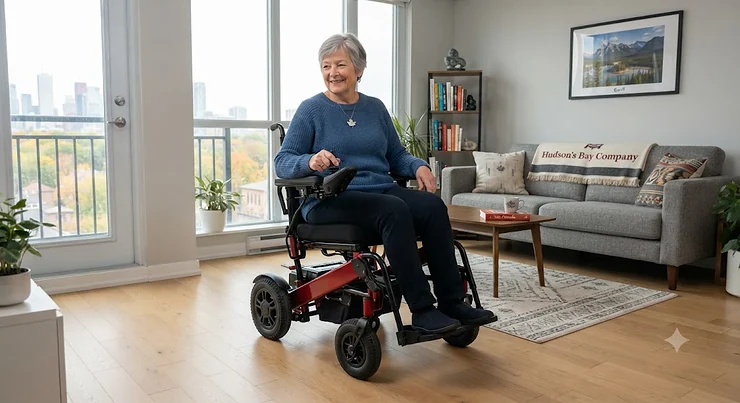
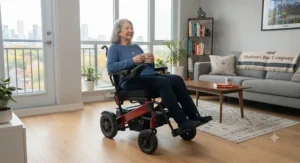
Nobody warns you, when you’re apartment hunting, that the hallway width is going to matter more than the view. A compact power wheelchair for apartment living is a joystick-driven mobility chair engineered with a narrow frame and a tight turning radius (often under 30 inches), built specifically to manage 28 to 32-inch interior doorways, cramped galley kitchens, and elevators shared with a dozen neighbours. That’s the textbook answer, but the lived reality is messier — you’re not just buying a chair, you’re negotiating a truce between your independence and your building’s floor plan. Condo hallways were not designed with a 40-inch-long power base in mind, and neither, frankly, were most bathroom doors built before 2005.
This guide skips the fluff you’d find on a standard Amazon listing. We’ve researched seven real, currently available power wheelchairs — spanning budget take-apart chairs to premium elevating models — and we’re weighing them specifically against apartment-sized realities: turning circles, fold-down dimensions, elevator weight limits, and how painless (or not) charging is when your outlet is twelve feet from where you park the chair. According to CMHC’s research on aging in place, a striking share of Canadians using a wheelchair or mobility aid report their home simply wasn’t built with an accessible entrance in mind — which is exactly why chair selection has to compensate for what the building itself won’t.
Whether you’re renting your first condo, downsizing from a house, or replacing a bulkier chair that’s been scraping your doorframes for two years, you’re in the right spot. Let’s get into it.
Quick Comparison Table
| Chair | Turning Radius | Weight (chair) | Best For |
|---|---|---|---|
| WHILL Model Ci2 | 29.9″ | ~115 lbs (42.8 lb heaviest piece) | Tightest hallway turns |
| Golden Technologies Compass Sport GP605 | 24″ | 300 lbs (bulk unit) | Daily indoor/outdoor stability |
| Journey Zoomer | 35.5″ | 39.6 lbs w/ battery | Lightest, zero-disassembly fold |
| Pride Jazzy Air 2 | 20.75″ | 205.5–231 lbs | Reaching counters and shelves |
| EWheels EW-M45 | Not published (compact folding frame) | 58–59 lbs | Closet-friendly single fold |
| Drive Medical Cirrus Plus EC | ~35″ | Varies by seat width | Custom seat-width fit |
| Merits P321 EZ-GO | 23″ | 99–113 lbs (35 lb heaviest piece) | Elevator and trunk portability |
A quick read of this table tells you something the spec sheets won’t spell out directly: turning radius and overall weight rarely move in the same direction. The WHILL Model Ci2 and Golden Technologies Compass Sport GP605 win on maneuverability precisely because they’re mid-wheel or center-wheel drive designs, a layout that trades a bit of portability for a genuinely tighter pivot in a hallway. Meanwhile, the Journey Zoomer and Merits P321 EZ-GO win on portability because they’re built to come apart or fold flat, which is the feature that actually matters if you’re wrestling a chair past a building superintendent and into a freight elevator. Nobody wins on both fronts simultaneously — that trade-off is the whole ballgame for apartment buyers, and it’s the lens we’ll use for the rest of this guide.
💬 Just one click — help others make better buying decisions too!😊
Top 7 Compact Power Wheelchairs: Expert Analysis
Before you jump into the individual breakdowns, here’s the full-spec view side by side, including approximate Canadian pricing (prices fluctuate constantly, so treat these as ranges rather than quotes — always check current pricing before buying).
| Chair | Top Speed | Range | Weight Capacity | Price Range (CAD) |
|---|---|---|---|---|
| WHILL Model Ci2 | 5 mph | ~11 miles | 300 lbs | C$5,600–C$6,300 |
| Golden Technologies Compass Sport GP605 | Varies by controller setting | ~24 miles | 300 lbs | C$4,800–C$6,000 |
| Journey Zoomer | 3.7 mph | ~8–9.3 miles | 275–300 lbs | C$4,000–C$5,000 |
| Pride Jazzy Air 2 | 4 mph | Up to 16.6 miles | 300 lbs | C$6,200–C$8,500 |
| EWheels EW-M45 | 3.7 mph | ~15.5 miles | 400 lbs | C$2,400–C$3,200 |
| Drive Medical Cirrus Plus EC | 5 mph | Up to 10 miles | Varies by seat width | C$1,900–C$2,700 |
| Merits P321 EZ-GO | 4 mph | 9–12 miles | 250–300 lbs | C$1,800–C$2,500 |
Looking at the numbers together, the pattern that jumps out is how little top speed actually correlates with apartment usefulness — the Pride Jazzy Air 2 tops out at a modest 4 mph, yet it’s the priciest chair here, because its value is in the elevating seat, not in outdoor sprinting. If your daily reality is mostly hallways, a kitchen, and the occasional trip to the lobby mailboxes, range and speed matter far less than they would to someone commuting outdoors daily. Budget-conscious shoppers should also notice that the two cheapest chairs, the Drive Medical Cirrus Plus EC and Merits P321 EZ-GO, both sacrifice some range for their lower price, which is a reasonable trade if your building itself is compact.
1. WHILL Model Ci2 — tightest turning radius for narrow hallways
The standout here is WHILL’s patented front omni-wheel design, which lets the chair pivot in place without the wide swing-arc that trips up bulkier power chairs. On paper, a 29.9-inch turning radius sounds like a modest number, but in practice it’s the difference between three-point-turning in a galley kitchen and simply rotating on the spot. The dual motors and 4-wheel independent suspension work together to smooth out the transition between hardwood, tile, and that one uneven threshold strip every rental unit seems to have, while the omni-wheels themselves can climb obstacles up to two inches high — door thresholds included — without the driver needing to build up speed first. Based on the spec comparison, this chair is best suited to renters and condo owners who prioritize indoor precision over raw range; WHILL is explicit that the Ci2 is engineered for that dual indoor-outdoor role rather than pure distance travel. Reviewers consistently note the WHILL app’s remote-drive feature as a genuine convenience for parking the chair out of a doorway or fetching it to a bedside, and Forbes Health’s hands-on coverage specifically praised how easily the disassembled chair fit into standard ride-share trunks. What the spec sheet won’t tell you, but user reports suggest, is that the 42-to-43-lb heaviest piece is still a two-hand lift for most people, so daily disassembly isn’t realistic for solo users — this chair is better left assembled and simply driven, elevator and all.
Pros:
- ✅ 29.9″ turning radius handles tight condo hallways with room to spare
- ✅ Omni-front wheels climb 2″ thresholds without a running start
- ✅ 4-wheel independent suspension smooths hardwood-to-tile transitions
Cons:
- ❌ Heaviest piece (~42.8 lbs) is a real lift for one person
- ❌ Premium price puts it above several comparable chairs on this list
At a price typically in the C$5,600–C$6,300 range, the Model Ci2 is a genuine investment, but for a renter who’s measured their narrowest doorway and found it uncomfortably close to the chair’s width, the maneuverability arguably justifies the premium.

2. Golden Technologies Compass Sport GP605 — best all-rounder for daily condo living
What immediately stands out about the Compass Sport is its center-wheel drive platform, a layout that puts the drive wheels directly under the seat rather than at the front or back, which is precisely what produces its 24-inch turning radius. Golden’s springless articulating chassis keeps all six wheels in ground contact at once, a detail that matters more than it sounds — it’s what prevents the chair from rocking or losing traction when you pivot sharply near a kitchen island. The captain’s seat adjusts its back angle up to 115 degrees and offers multiple height positions, addressing the kind of all-day comfort that a purely indoor-use chair often skips. Based on the spec comparison, this chair suits someone who wants one wheelchair to handle both apartment hallways and outdoor sidewalk trips confidently, rather than a chair purpose-built for either extreme. Reviewers on the manufacturer’s own product pages and independent mobility retailers highlight the Dynamic LiNX controller’s smoother acceleration compared to older Golden models, though verified independent review volume for this specific 2026 configuration is still thinner than for long-running chairs like the Jazzy line — worth noting honestly rather than papering over. What most buyers overlook about center-wheel drive chairs generally is that the tight turning radius comes with a wider overall footprint (around 24 inches across), so measuring your doorway width before ordering isn’t optional here.
Pros:
- ✅ 24″ turning radius, among the tightest of any non-folding chair here
- ✅ Six-wheel-contact chassis keeps traction stable through sharp turns
- ✅ Captain’s seat reclines to 115° with multiple height settings
Cons:
- ❌ Full 300-lb steel-and-composite build isn’t a fold-and-store option
- ❌ At roughly 24″ wide, it needs a dedicated parking spot, not a closet
Expect a price in the C$4,800–C$6,000 range at the time of research. For apartment dwellers who don’t need portability but do want confident everyday handling, the Compass Sport earns its keep.
3. Journey Zoomer — lightest chair with zero disassembly required
The Zoomer’s party trick is folding flat in a single motion — no bolts, no separating the base from the seat, just a release cable and a fold down to roughly 12 inches tall. That single feature reframes the entire “storage-friendly” conversation, because most compact power wheelchairs still ask you to break into pieces before they’ll fit in a closet; the Zoomer doesn’t. Dual 200-watt brushless motors and a removable, airline-approved 24V lithium-ion battery keep the whole unit under 40 lbs with the battery installed, which is light enough that many users can lift it into a trunk solo. Based on the spec comparison, this is the chair for someone whose apartment building has a shallow closet, a tight storage locker, or simply no patience for reassembly after every trip. Reviewers consistently describe the fold-and-carry routine as genuinely fast — under a minute in most accounts — and the airline-compliant battery means it travels well too, a bonus if visiting family is part of your routine. The trade-off reviewers flag honestly: at a 3.7 mph top speed and an 8-to-9.3-mile range, this is not a chair built for long outdoor stretches, and Journey itself markets the Zoomer as a “personal mobility device” rather than an FDA-classified wheelchair, which can affect insurance or extended health coverage eligibility — something to confirm with your provider before buying.
Pros:
- ✅ Folds flat in one motion, no disassembly or tools required
- ✅ Under 40 lbs with the battery installed — genuinely one-person portable
- ✅ Airline-approved lithium battery removes for easy indoor charging
Cons:
- ❌ 3.7 mph top speed is noticeably slow for outdoor sidewalk use
- ❌ Marketed as a mobility device, not an FDA-classified wheelchair, which may affect funding
Pricing typically falls in the C$4,000–C$5,000 range. If storage space is your single biggest constraint, the Zoomer solves that problem better than anything else on this list.
4. Pride Jazzy Air 2 — best for reaching counters and shelves
The headline feature is the power-elevating captain’s seat, which lifts a full 12 inches in just 11 seconds — and unlike some elevating chairs, it can rise or lower while the chair is actively moving, up to 4 mph even at full height. That matters more than it might initially sound: in practice, it means you can start elevating on your way to a kitchen counter rather than stopping, waiting, then elevating once you arrive. Mid-Wheel 6 drive technology and Active-Trac suspension work together for tighter cornering and a steadier ride over uneven flooring transitions, both genuinely useful in an apartment with mixed flooring types. Based on the spec comparison, this chair is best suited to someone who spends real time cooking, doing laundry, or socializing at counter height, where a standard seated position leaves you constantly straining upward or asking for help. Reviewers on manufacturer and retailer sites consistently cite the elevating function as the single reason they chose this chair over a standard Jazzy model, describing the ability to make eye contact during conversations as an underrated quality-of-life improvement rather than a gimmick. What most buyers overlook, though: at 205 to 231 lbs depending on configuration, this is a full-size chair that needs professional in-home delivery and setup — it will not disassemble for a trunk or a tight elevator without real effort.
Pros:
- ✅ Seat elevates 12″ in 11 seconds, even while the chair is moving
- ✅ Mid-Wheel 6 drive handles condo-scale turns with genuine precision
- ✅ Active-Trac suspension smooths transitions across mixed flooring
Cons:
- ❌ Heaviest piece exceeds 200 lbs — no realistic solo disassembly
- ❌ The priciest chair on this list by a meaningful margin
Prices land in the C$6,200–C$8,500 range depending on seat size and accessories. For buyers who value functional reach over raw portability, it’s a legitimate premium pick — just budget for professional delivery.
5. EWheels EW-M45 — best single-fold for closet storage
EWheels built the EW-M45 around one core idea: fold the entire chair in half, in a handful of steps, without tools. At just under 59 lbs with its lithium-ion batteries installed, it’s genuinely liftable by most adults, and the fold reduces its footprint enough to tuck into a hallway closet rather than needing dedicated floor space. A large foot platform and a specialty foam seat address comfort for all-day indoor use, which lighter travel chairs sometimes skimp on in the name of shaving weight. Based on the spec comparison, this chair suits someone who’s downsizing from a full-size power chair and wants a genuine reduction in bulk without giving up the 400-lb weight capacity that larger users often need — that capacity figure is notably higher than most chairs in this compact category. Reviewers describe the fold mechanism as intuitive after the first couple of tries, and the chair’s FDA clearance plus airline-approved battery pairing means it does double duty as a travel chair, not just a home unit. What the spec sheet won’t spell out is that the trade-off for that generous weight capacity and easy fold is a fairly basic suspension setup — smooth indoor flooring is where this chair performs best, and rougher outdoor terrain will transmit more vibration than a chair like the Compass Sport.
Pros:
- ✅ Folds in half in a few simple steps, no tools required
- ✅ 400-lb weight capacity is the highest of any chair on this list
- ✅ FDA-cleared and airline-approved for dual home-and-travel use
Cons:
- ❌ 3.7 mph top speed limits it for longer outdoor errands
- ❌ Basic suspension means rougher pavement is noticeably felt
At a typical C$2,400–C$3,200 range, the EW-M45 lands as one of the stronger value picks here, particularly for larger-frame users who still want a fold-flat, closet-friendly chair.
6. Drive Medical Cirrus Plus EC — best budget pick with a custom seat-width fit
The Cirrus Plus EC’s standout feature is its seat-width flexibility — it’s available in four widths, from 16 up to 22 inches, which is a wider range of custom fit than most budget-tier power chairs offer. That matters because an ill-fitting seat isn’t just uncomfortable, it actively affects control and posture over a full day of use. The carbon-steel frame folds down for storage, and Drive Medical states the chair has passed ANSI/RESNA testing requirements, a meaningful third-party safety benchmark rather than a marketing claim you have to take on faith. Based on the spec comparison, this chair is a sensible entry point for someone prioritizing budget and proper seat fit over top-tier maneuverability — its roughly 35-inch turning radius is the widest of any chair on this list, a real consideration if your unit’s kitchen or bathroom is on the tighter side. Reviewers across multiple mobility retailers describe it consistently as a dependable, no-frills chair, with fewer standout complaints than glowing praise — the kind of quietly competent reputation that budget medical equipment earns rather than markets. What most buyers overlook is that the steel frame, while durable, adds noticeable weight versus the aluminum-framed chairs on this list, meaning disassembly for transport is more of a two-person job.
Pros:
- ✅ Four seat-width options (16″–22″) for a genuinely custom fit
- ✅ Passed ANSI/RESNA third-party safety testing requirements
- ✅ Foldable steel frame at a genuinely budget-friendly price point
Cons:
- ❌ ~35″ turning radius is the widest of any chair reviewed here
- ❌ Steel frame construction adds weight versus aluminum competitors
Expect pricing in the C$1,900–C$2,700 range, making this one of the most accessible entry points on the list for buyers who need a proper seat fit without a premium price tag.
7. Merits P321 EZ-GO — lightest piece-by-piece breakdown for elevators
The EZ-GO’s whole design philosophy centres on one number: a 35-lb heaviest piece, achieved by breaking the entire chair down into three components in seconds without tools. That’s the feature that actually solves the elevator problem directly — rather than wheeling a 250-lb assembled chair into a shared elevator and hoping it fits, you can carry the frame, seat, and batteries separately if space or weight is genuinely tight. A 23-inch turning radius keeps it competitive with pricier chairs for indoor maneuvering, and the steel frame carries a limited lifetime warranty, an unusually strong guarantee for a chair at this price point. Based on the spec comparison, this chair is squarely built for renters and frequent travellers who value portability above outright range or top speed — the 9-mile standard range (12 miles on the EZ-GO Deluxe variant) is honestly the shortest on this list, which reviewers note is fine for apartment-and-errand use but tight for anyone covering real outdoor distance daily. Aggregated feedback from mobility retailers consistently praises how easily this chair loads into a standard sedan trunk, a detail that matters if you don’t own an accessible van. What the spec sheet doesn’t emphasize is that the 8-inch solid tires, while puncture-proof, transmit more road vibration than the suspension-equipped chairs earlier on this list — a fair trade for a chair built this light.
Pros:
- ✅ Breaks into 3 pieces with a 35-lb heaviest piece — genuinely elevator-friendly
- ✅ Among the lightest full power chairs available at 99–113 lbs total
- ✅ Backed by a limited lifetime warranty on the steel frame
Cons:
- ❌ 9–12 mile range is the shortest of any chair on this list
- ❌ Solid tires transmit more vibration than suspension-equipped models
At a budget-friendly C$1,800–C$2,500 range, the EZ-GO is arguably the single best fit for the “small apartment, tight elevator, tighter budget” scenario this whole guide is built around.
Practical Usage Guide: Living With a Compact Power Wheelchair Day to Day
Getting a compact power wheelchair into your apartment is step one; living with it daily is a different skill entirely. In the first 30 days, the single most common mistake new owners make is skipping the battery break-in period — most manufacturers, WHILL and Pride Mobility included, recommend charging daily during the first two weeks regardless of how much charge remains, because it calibrates the battery management system toward its full advertised range. Skip this and you may find your “11-mile” chair delivering closer to seven.
Set up a consistent parking spot near an outlet from day one — not because it’s required, but because inconsistent parking is what leads to hallway clutter complaints from neighbours or property managers. Measure your tightest turn (usually the bathroom doorway or a kitchen corner) with painter’s tape before your chair even arrives, so you know in advance whether you’re working with a 24-inch or 35-inch turning radius reality. For maintenance, a monthly check of tire pressure (on pneumatic models), a wipe-down of the joystick and controller, and a visual check for loose bolts after any bumpy elevator ride will catch most issues before they become service calls. Reviewers across nearly every brand mention the same optimization trick: slightly reducing max speed via the controller settings in your first week improves confidence and reduces accidental wall bumps while you’re still learning the chair’s turning behaviour in your specific space.
Real-World Scenarios: Matching the Chair to Your Living Situation
The downtown condo renter: Someone in a 550-square-foot one-bedroom with a single narrow hallway and a shared freight elevator is generally best served by prioritizing turning radius and take-apart portability over raw range — the Merits P321 EZ-GO or WHILL Model Ci2 both fit this profile well, since elevator trips happen daily and storage space is minimal.
The older, low-rise apartment resident: A person in a building constructed before accessibility codes tightened, with narrower 26-to-28-inch doorways throughout, needs to prioritize overall chair width above nearly everything else. The Golden Technologies Compass Sport GP605, despite its bulk, actually performs well here because its center-wheel drive tolerates a tight footprint better than front- or rear-wheel configurations.
The suburban condo owner with in-unit storage: Someone with a coat closet or a small den to dedicate to the chair, and less concern about elevator weight limits, benefits most from the Pride Jazzy Air 2 or Journey Zoomer — one maximizes comfort and reach, the other maximizes ease of storage, and both assume you’re not hauling the chair through a shared lobby elevator multiple times a day.
Problem → Solution: Common Apartment-Living Challenges Solved
Problem: the elevator has a posted weight limit and I’m not sure my chair plus my own weight fits. Solution: check your building’s posted elevator capacity plaque (typically required under provincial elevator codes) and add the chair’s listed weight to your own — most residential elevators are rated well above 2,000 lbs, so a combined chair-and-rider weight under 600 lbs is almost never the actual constraint, but verify with your property manager if you’re unsure.
Problem: my chair won’t fit through the bathroom door. Solution: measure the doorway’s clear width (not the door slab width) and compare it against the chair’s overall width, not just the seat width — center-wheel drive chairs like the Compass Sport are often narrower overall than their turning radius suggests.
Problem: my building doesn’t allow charging cables in common hallways. Solution: choose a chair with a removable battery, like the Journey Zoomer or WHILL Model Ci2, and charge the battery pack indoors at your own outlet rather than leaving the whole chair plugged in near a shared corridor.
Problem: my strata council has flagged my chair as a “fire risk” in common areas. Solution: request the chair’s certification documentation (CSA, cUL, or cETL marks) from the manufacturer and share it directly with your board — most concerns stem from unfamiliarity with certified lithium battery equipment, not an actual documented hazard.
Buyer’s Decision Framework: If This, Then That
If your daily reality is mostly indoors and your hallway or bathroom door is under 30 inches wide, choose a chair with a sub-25-inch turning radius, because width tolerance matters more than range in that scenario. If you’re regularly using a shared elevator with posted capacity limits or storage restrictions, choose a take-apart or single-fold chair under 60 lbs, because portability solves more daily friction than top speed ever will. If reaching counters, cooking, or eye-level conversation matters to your routine, choose an elevating-seat model even if it costs more, because that functional gain compounds daily in a way raw mileage doesn’t. If budget is the deciding factor and your building is reasonably accessible already, choose the lightest chair with the longest warranty you can find in your price range, since warranty coverage protects you against the exact wear-and-tear issues budget chairs are more prone to.
How to Choose a Compact Power Wheelchair for Apartment Living
Choosing the right chair for a small Canadian apartment comes down to a handful of concrete, measurable criteria rather than gut feeling:
- Measure your tightest doorway and turn first. Before comparing a single spec sheet, tape off your bathroom doorway and your sharpest hallway corner — this single measurement eliminates more unsuitable chairs than any other factor.
- Prioritize turning radius over top speed. Indoor apartment living rarely benefits from a chair that tops out at 5 mph if it can’t pivot in your kitchen.
- Decide how the chair needs to travel. If it rides in elevators daily, weight-per-piece matters; if it’s mostly parked, overall stability and seat comfort matter more.
- Confirm the weight capacity fits the actual user, with margin. Manufacturers rate capacity at the chair’s absolute limit, not its comfortable operating range.
- Check the battery type and charging method. A removable lithium battery, certified to CSA, cUL, or cETL standards, solves both the charging-location problem and most fire-safety concerns raised by property managers.
- Read the warranty terms, not just the length. A “lifetime” frame warranty that excludes electronics and batteries covers far less than it sounds like it does.
- Ask your building — before you buy, not after. Confirm with your property manager or strata council whether there are documented storage, charging, or common-area rules specific to mobility devices.
Compact Power Wheelchair vs Mobility Scooter for Condo Living
| Factor | Power Wheelchair | Mobility Scooter |
|---|---|---|
| Turning Radius | As tight as 20–30″ | Typically 35–45″+ |
| Indoor Doorway Fit | Generally narrower footprint | Often wider tiller and base |
| Seating | Fitted, postural seating | Bench-style seat |
| Best For | Daily indoor navigation | Longer outdoor distances |
The core difference comes down to steering geometry: a scooter’s front tiller requires a wider turning arc by design, which is exactly why scooters struggle in galley kitchens and narrow condo hallways where a power wheelchair’s joystick-controlled pivot excels. Power wheelchairs also tend to offer proper postural seating with adjustable backs and armrests, which matters more the more hours per day you’re seated, while scooters generally prioritize a simple bench seat built for shorter outings. For apartment living specifically, where the daily challenge is indoor navigation rather than covering long outdoor distances, a compact power wheelchair almost always wins on practicality — a scooter only makes sense if your primary use case is outdoor errands and you have ample indoor space to spare.
Elevator Weight Limits: What Apartment and Condo Buyers Need to Know
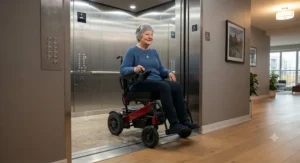
Every residential elevator in Canada is installed and inspected under standards that trace back to the ASME A17.1/CSA B44 elevator safety code, and separately, devices like platform lifts fall under CSA B355, the national standard for barrier-free access lifts, which sets minimum design and safety requirements distinct from standard passenger elevators. In practical terms, most residential passenger elevators are rated well above 2,000 lbs of combined capacity, so a power wheelchair weighing anywhere from 40 to 300 lbs, plus its rider, is almost never close to the actual posted limit — the real-world friction tends to be about physical space and door-clearance timing rather than weight. That said, older buildings with smaller freight or service elevators may have genuinely lower capacity ratings, so it’s worth checking the posted plaque in your specific building rather than assuming. If your elevator is on the smaller side, a take-apart chair like the Merits P321 EZ-GO removes the ambiguity entirely, since you can transport it in pieces well under any reasonable capacity concern.
Strata and Condo Mobility Device Rules Across Canada
Provincial human rights codes across Canada require condo corporations and strata councils to reasonably accommodate residents who need a mobility device, and case law backs this up firmly. In one widely cited Ontario case, the Human Rights Tribunal found a condominium corporation had failed its duty to accommodate a resident by delaying automatic door installation and refusing to formally permit an electric scooter’s storage — the corporation was ultimately ordered to update its bylaws and pay damages for the delay. The Condominium Authority of Ontario outlines the accommodation process that boards are expected to follow when a resident raises a mobility-related need, and similar accommodation duties exist under human rights legislation in every Canadian province, even where the specific regulatory body differs. Practically speaking, this means your strata council cannot simply refuse to let you store, charge, or use a certified mobility device in reasonably accessible common areas — though they can set neutral, safety-based rules around exactly how and where charging happens. If you’re facing pushback, put your accommodation request in writing, reference your province’s human rights legislation, and keep the conversation documented from the outset.
Charging a Power Wheelchair in an Apartment: What Actually Matters
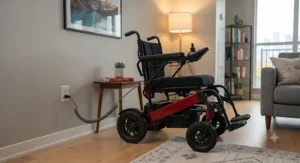
Charging is where a lot of apartment-specific anxiety concentrates, and for good reason — Canadian fire officials have flagged a real rise in lithium-ion battery-related fires tied to e-bikes, scooters, and similar devices in recent years, and mobility chair batteries use the same underlying chemistry. The practical response isn’t panic, it’s certification: only use the charger that came with your chair, buy replacement batteries only from the manufacturer or an authorized dealer, and confirm your battery and charger carry a recognized Canadian certification mark such as CSA, cUL, or cETL. Charge while you’re home and awake rather than overnight while unattended if your building’s fire safety rules recommend it, and never charge in a hallway, stairwell, or other shared egress path — both because most strata bylaws prohibit it and because it genuinely is the higher-risk scenario. Chairs with a removable battery pack, like the WHILL Model Ci2 or Journey Zoomer, sidestep a lot of this friction entirely, since you can bring just the battery inside to charge near a normal outlet without leaving the full chair blocking a doorway or hallway overnight.
Storage-Friendly Power Wheelchairs: Features That Actually Matter
Marketing copy loves the word “compact,” but the features that genuinely determine whether a chair fits your storage reality are narrower: fold height, disassembly piece count, and heaviest single-piece weight. A chair that folds to 12 inches tall, like the Journey Zoomer, slides under a bed or into a shallow closet in a way that a bulkier, non-folding chair like the Golden Technologies Compass Sport GP605 simply can’t, regardless of how tight its turning radius is. Piece count matters separately — a three-piece breakdown, as on the Merits P321 EZ-GO, distributes weight across multiple lighter components, which is genuinely useful if you’re storing the chair in a locker down the hall rather than right in your unit. What doesn’t matter nearly as much as marketing suggests: overall seat width, since most apartment storage constraints are about depth and height, not how wide the cushion is. The honest advice here is to measure your actual storage space — closet depth, under-bed clearance, or storage locker dimensions — before falling for a “compact” label that may only be compact relative to a full-size outdoor scooter, not relative to your studio apartment’s closet.
Common Mistakes When Buying a Power Wheelchair for a Small Apartment
The single most common mistake is ordering based on seat width alone, when overall chair width (including armrests and wheel guards) is what actually determines doorway clearance — these numbers can differ by several inches. A close second is skipping the battery-and-charging conversation with your building before purchase, only to discover afterward that your strata has specific rules about where charging can happen. Buyers also frequently underestimate delivery logistics for heavier premium chairs like the Pride Jazzy Air 2, assuming they can unbox and assemble it themselves when professional in-home setup is genuinely required. Finally, many shoppers focus heavily on top speed and range figures that matter far more for outdoor scooter-style use than for the indoor-first reality of apartment living, paying a premium for outdoor performance they’ll rarely use.
✨ Don’t Miss These Exclusive Deals! 🔍
Take your apartment mobility setup to the next level with these carefully selected chairs. Click on any highlighted product to check current pricing and availability on amazon.ca. These picks are built to help you move through your home — and your building — with genuine confidence.
Frequently Asked Questions
❓ What is the smallest power wheelchair for an apartment?
❓ Can I keep a power wheelchair in a condo hallway?
❓ How much does a compact power wheelchair cost in Canada?
❓ Will my power wheelchair fit through a standard apartment door?
❓ Can I charge my power wheelchair battery inside my unit?
Conclusion
If there’s one theme running through every chair on this list, it’s that “compact” means something different depending on what your apartment is actually asking of you. A tight hallway wants turning radius; a small storage locker wants a low fold height and light disassembled pieces; a shared elevator with posted limits wants portability more than horsepower. None of the seven chairs here wins on every front simultaneously, and that’s honestly the point — the right choice depends on which specific friction point your building creates for you daily.
For pure indoor precision in a narrow condo, the WHILL Model Ci2 and Golden Technologies Compass Sport GP605 both earn their premium pricing through genuinely tight turning circles. For anyone prioritizing storage and portability above all else, the Journey Zoomer and Merits P321 EZ-GO solve that problem more directly than any spec sheet number alone could suggest. And if functional reach — counters, shelves, eye-level conversation — matters more to your daily routine than raw range, the Pride Jazzy Air 2‘s elevating seat is worth the added cost.
Before you buy anything, measure your own space, talk to your property manager or strata board about charging and storage rules, and treat every price you see online as a starting point rather than a final number — always check current pricing directly before committing.
✨ Ready to find the right fit for your space? Compare these picks against your own hallway measurements today, and take the first step toward moving through your apartment with real confidence. 🏠⚡
Recommended for You
- Compact Power Wheelchair: 7 Best Picks For Tight Spaces (2026)
- Compact Power Wheelchairs: 7 Best Picks For Canadians In 2026
- Canadian Winter Wheelchair for Icy Sidewalks: 7 Rugged Picks (2026)
Disclaimer: This article contains affiliate links. As an Amazon Associate, I earn from qualifying purchases. If you purchase products through these links, we may earn a small commission at no additional cost to you.
✨ Found this helpful? Share it with your friends! 💬🤗
