
In This Article
Here’s the thing nobody tells you when you start shopping for compact power wheelchairs: the specs sheets all start to blur together after about twenty minutes. Every listing promises “lightweight,” every battery claims “long range,” and somehow every single chair is apparently the one “seniors love most.” You end up with forty browser tabs open and zero clarity. Sound familiar?
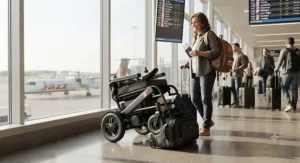
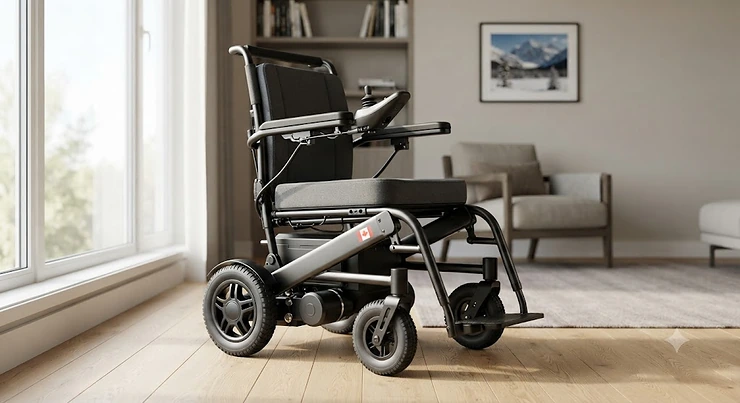
Compact power wheelchairs are motorized mobility chairs built specifically to fold, disassemble, or shrink down small enough to fit in a car trunk, an airplane cargo hold, or a condo hallway closet — trading some of the bulk of a full-size power chair for portability, without giving up the motor and battery that make it “power” in the first place. That’s the 60-second version. The real version has a lot more nuance, especially once you factor in Canadian winters, Canadian pricing, and Canadian funding programs that don’t always mirror what you’ll read on American mobility blogs.
This guide breaks down seven real, currently available compact power wheelchairs — from a genuinely affordable power wheelchair Canada shoppers can find on Amazon.ca, right up through a carbon-fibre travel chair that barely tips the scale at 44 pounds. We’ll compare battery range, turning radius, and folding mechanisms side by side, dig into what FSA/HSA eligibility in Canada actually looks like (spoiler: it’s not quite the American system), and walk through folding vs non-folding compact frames so you know which trade-off fits your daily routine. A 2023 Canadian Transportation Agency ruling involving Air Canada made it clear that mobility device accommodation is still very much an evolving issue here, which is exactly why picking the right compact chair — and understanding its battery, weight, and travel specs before you buy — matters more in Canada than the marketing copy lets on.
Quick Comparison Table: Compact Power Wheelchairs at a Glance
Before the deep dive, here’s the shortcut. This table sorts our seven picks by category so you can jump straight to the tier that fits your budget and needs.
| Chair | Category | Weight (chair) | Price Range (CAD) | Best For |
|---|---|---|---|---|
| Serianie Foldable Electric Wheelchair | True Budget | ~62 lbs (28 kg) | Under C$1,300 | affordable power wheelchair Canada shoppers, occasional use |
| ComfyGo Majestic IQ-8000 | Budget-Mid | 54 lbs (24.5 kg) | C$1,900–C$2,900 | best value remote-controlled chair |
| Journey Zinger Chair | Mid | 42–47 lbs (19–21 kg) | C$2,600–C$3,600 | nimble indoor turns, non-medical use |
| Golden Technologies Buzzaround CarryOn | Mid | 46 lbs base (21 kg) | C$2,300–C$3,200 | tightest turning radius |
| Pride Jazzy Passport | Mid | 60 lbs (27 kg) | C$2,600–C$3,900 | trusted brand, airport travel |
| Golden Technologies Ally | Mid-Premium | 49.5 lbs (22.5 kg) | C$2,900–C$3,900 | outdoor ride quality |
| Pride Jazzy Carbon | Premium | 43.6 lbs (19.8 kg) | C$4,200–C$5,800 | lightest premium frame |
Looking at this lineup, the spread between the Serianie Foldable Electric Wheelchair and the Pride Jazzy Carbon is almost C$4,500 — and that gap isn’t arbitrary. It tracks pretty directly with frame material (aluminum versus carbon fibre), battery chemistry, and whether the chair carries formal medical device classification versus being marketed as a personal mobility device. Before you fixate on the cheapest number, skim the “Best For” column twice: the right chair for an occasional grocery-run user is a genuinely bad fit for someone who’s in the chair eight hours a day, and vice versa.
💬 Just one click — help others make better buying decisions too!😊
Top 7 Compact Power Wheelchairs: Expert Analysis
We picked these seven to cover the realistic range Canadian buyers actually encounter — from a sub-C$1,000 Amazon listing to a premium carbon-fibre travel chair — with an eye toward real specs, verified retailer data, and (where it genuinely exists) aggregated owner sentiment. A quick honesty note before we dive in: for a few of the newer or lower-volume listings, third-party review data is thinner than we’d like. Where that’s the case, we say so plainly rather than inventing a star rating that doesn’t exist.
1. ComfyGo Majestic IQ-8000 — best budget-friendly remote-controlled chair
The standout here is the included wireless remote, which lets a caregiver drive the chair from behind — a feature you’d expect to pay a premium for, not find on the budget end of the lineup. Under the hood, the ComfyGo Majestic IQ-8000 runs dual 220W brushless motors (440W combined) on a 330 lb weight capacity frame that folds in about three seconds flat. The base 12AH lithium battery is airline-approved and rated for roughly 10 miles (16 km) per charge, while an optional 20AH pack stretches that to around 19 miles (30 km) — a meaningful jump if your daily route includes more than a trip to the mailbox.
Based on the spec comparison, this is one of the few sub-C$3,000 chairs offering a swappable battery tier, which matters more than most buyers realize: you’re essentially buying future-proofing against the single most common complaint in this category — range anxiety. It’s best suited to budget-conscious buyers and caregivers who want remote override capability without stepping up to a C$4,000+ chair. Reviewers commenting on retailer sites and forums consistently flag the assembly as refreshingly simple and note the seat comfort holds up well over longer sits, though a handful mention the footplate feels heavier than the chair’s overall weight would suggest, and shipping timelines from Canadian resellers can run longer than domestic warehouse orders.
Pros:
- ✅ Two battery tiers let you buy range as you need it
- ✅ Wireless caregiver remote is rare at this price point
- ✅ Folds in seconds without tools
Cons:
- ❌ Footplate feels disproportionately heavy to some owners
- ❌ Fewer verified Canadian retailer reviews than the Pride or Golden lines
Price range: under the ComfyGo brand’s direct pricing and Canadian resellers, expect roughly C$1,900–C$2,900 depending on battery size and seat width — genuinely solid value for a remote-controlled, airline-rated chair.
2. Pride Jazzy Passport — best all-around brand reliability for airport travel
What most buyers overlook about the Pride Jazzy Passport is that it’s not just “another folding chair” — it’s built by Pride Mobility, one of the longest-standing power wheelchair manufacturers in North America, and that pedigree shows up in the small details: dual braking systems, a 3-inch ground clearance that shrugs off curb cuts, and folded dimensions (31″ x 23.5″ x 16″) specifically engineered to clear most sedan trunks and overhead bins.
The chair runs on a 10.4 AH lithium-ion travel battery as standard (an 18 AH upgrade is available), delivering roughly 8–11 miles of range depending on rider weight, with a 250 lb weight capacity and a top speed of about 3.6 mph. Here’s what the spec sheet won’t tell you, but owner reports on mobility retailer sites suggest: the Jazzy Passport’s smaller wheels make it noticeably better on smooth indoor flooring and airport terminals than on grass or gravel, so this is really a city-and-travel chair first, outdoor-adventure chair second. It’s the pick for someone who flies a few times a year and wants a name-brand chair a rental counter or airline gate agent will recognize on sight.
Pros:
- ✅ Well-known brand with wide Canadian dealer network
- ✅ Dual braking system adds real safety margin
- ✅ Compact folded footprint clears most trunks and overhead bins
Cons:
- ❌ Smaller wheels struggle on grass, gravel, and uneven terrain
- ❌ 250 lb weight capacity is lower than several competitors here
Price range: C$2,600–C$3,900 through Pride’s authorized Canadian dealers, with the lower end more common during seasonal promotions.
3. Pride Jazzy Carbon — lightest premium carbon-fibre frame
The Pride Jazzy Carbon is the chair for people who’ve already owned a heavier folding chair and are tired of wrestling it into a trunk. At 43.6 lbs total (39.6 lbs for the heaviest single piece), it’s built from a carbon-fibre-and-aluminum hybrid frame that folds to a genuinely compact 28.3″ x 24″ x 12.2″ — small enough to tuck behind a car seat rather than eat the whole trunk.
Specs alone don’t capture why this matters in practice: a chair under 45 lbs is one an average adult can lift into a car unassisted, which is the actual dividing line between “independent travel” and “need someone else along every time.” The 300 lb weight capacity and front suspension add comfort most ultralight chairs skip entirely, and the removable lithium battery is airline-compliant. This is squarely a premium pick for frequent flyers, snowbirds, and anyone whose top priority is minimizing physical strain during transfers — not the budget-conscious buyer, and Pride is upfront that you’re paying for the carbon-fibre material science, not extra motor power (top speed tops out around 3.7 mph, similar to lighter-duty chairs in this list).
Pros:
- ✅ Under 44 lbs total — liftable by most adults alone
- ✅ Carbon-fibre frame with genuine front suspension
- ✅ Compact folded size fits behind car seats, not just trunks
Cons:
- ❌ Meaningfully pricier than every other chair on this list
- ❌ Top speed (3.7 mph) doesn’t outperform cheaper chairs despite the premium
Price range: C$4,200–C$5,800 — the clear premium option here, and worth it specifically for the weight reduction, not top-end speed or range.
4. Golden Technologies Buzzaround CarryOn (GP130) — best turning radius for tight indoor spaces
If your home has narrow hallways, this is the spec sheet you want memorized: a 21-inch turning radius, among the tightest of any compact power wheelchair currently sold. The Golden Technologies Buzzaround CarryOn achieves this through center-wheel drive — the same layout used on many full-size power chairs — scaled down into a 46 lb (base) folding frame that collapses to just 10 inches tall for storage.
Based on the spec comparison, center-wheel drive chairs typically out-maneuver front- or rear-wheel-drive folding chairs in tight indoor spaces, at a small cost to outdoor stability on loose surfaces — a genuine trade-off, not a marketing spin. The 12.5 AH lithium battery is rated for up to 12.5 miles per charge (some of the strongest range-per-dollar in this lineup), and the 300 lb weight capacity plus four-wheel independent suspension make it more forgiving over door thresholds and uneven pavement than its tiny turning radius might suggest. It’s the pick for apartment or condo dwellers navigating tight corridors, elevators, and kitchens daily.
Pros:
- ✅ 21″ turning radius — among the tightest available
- ✅ 12.5-mile range beats several pricier competitors
- ✅ Folds to 10″ height for closet or trunk storage
Cons:
- ❌ Center-wheel drive can feel less planted on loose gravel or grass
- ❌ Disassembly for transport takes more steps than single-fold competitors
Price range: C$2,300–C$3,200 through Golden Technologies’ Canadian dealer network.
5. Journey Zinger Chair — most nimble for indoor navigation, with an important caveat
The Zinger stands apart from everything else on this list in one crucial way, and we want to say it plainly rather than bury it: Journey Health & Lifestyle markets the Journey Zinger Chair as a personal mobility device, not a medical device or wheelchair, and the company states it isn’t intended to provide mobility for people restricted to a sitting position. That’s an important distinction for insurance, funding programs, and medical necessity documentation in Canada — so if you’re hoping to use ADP or a private health plan to offset the cost, confirm eligibility before you buy, not after.
With that caveat out front: the design itself is genuinely clever. Dual-lever steering (think zero-turn lawn mower, not joystick) gives the Zinger a tight 24-inch turning radius, and at 42–47 lbs with the battery it’s among the lightest chairs here. The lithium-ion battery delivers up to 8 miles of range, and the chair climbs ADA-style ramps up to 10 degrees. What most buyers overlook is that the dual-lever system has a real learning curve — it’s not intuitive to everyone on day one — but owners who stick with it consistently describe it as more engaging and “fun” to drive than joystick chairs, particularly for users with decent upper-body strength and coordination but reduced walking endurance.
Pros:
- ✅ Ultra-tight 24″ turning radius for indoor maneuvering
- ✅ Among the lightest chairs in this roundup at 42–47 lbs
- ✅ Freewheel levers allow easy manual push when powered off
Cons:
- ❌ Not classified or marketed as a medical device — confirm funding eligibility first
- ❌ Dual-lever steering has a real learning curve versus a joystick
Price range: C$2,600–C$3,600 through Journey’s Canadian retail partners.
6. Golden Technologies Ally — best ride quality on rough outdoor terrain
Where several chairs on this list optimize hard for indoor tightness, the Golden Technologies Ally splits the difference in the other direction. Ten-inch pneumatic (air-filled) rear drive wheels and 2.5 inches of ground clearance mean it handles cracked sidewalks, gravel driveways, and grass far more comfortably than the small hard-caster wheels common on ultralight travel chairs — while still folding down for transport at 49.5 lbs without the battery.
Here’s what that trade-off means in practice: pneumatic tires absorb bumps that hard rubber wheels transmit straight into the seat, which matters enormously for anyone with pressure sensitivity or spinal conditions where jolting is genuinely painful, not just uncomfortable. The 28.5-inch turning radius is looser than the Buzzaround CarryOn’s, so it’s not the top choice for a cramped apartment — but for someone whose daily reality is a driveway, a yard, and neighbourhood sidewalks rather than tight hallways, that trade is well worth making. Golden backs it with a one-year in-home service contract, a detail worth factoring into total cost of ownership.
Pros:
- ✅ Pneumatic tires and 2.5″ ground clearance smooth out rough terrain
- ✅ Memory foam cushion and adjustable footrests for comfort
- ✅ Includes a one-year in-home service contract
Cons:
- ❌ 28.5″ turning radius is looser than dedicated indoor chairs
- ❌ At 49.5 lbs (chair only), it’s heavier to lift than the Zinger or Jazzy Carbon
Price range: C$2,900–C$3,900 through Golden Technologies dealers across Canada.
7. Serianie Foldable Electric Wheelchair — most affordable true budget pick
If your priority is simply the lowest realistic entry point into compact power wheelchairs, this is it. The Serianie Foldable Electric Wheelchair runs a 500W motor and 12Ah battery rated for up to 15 miles per charge, with a 300 lb weight capacity and the intuitive 360-degree joystick control you’d expect on a chair three times the price — all in a frame that collapses for trunk storage.
Honest analytical take: this is a direct-to-consumer, Amazon-marketplace chair rather than a chair backed by a decades-old mobility equipment manufacturer, and that distinction matters for warranty support, parts availability, and long-term service — areas where Pride and Golden simply have more infrastructure built up over time. What most buyers overlook about chairs in this category is that “FSA/HSA Eligible” labels on Amazon listings reflect the U.S. tax system, not the Canadian one; we cover exactly what that badge does and doesn’t mean for Canadian shoppers a bit further down. For someone testing whether a power chair fits their lifestyle before committing to a C$3,000+ purchase, or for occasional/backup use, the value proposition here is hard to beat — reviewers on the listing consistently describe the fold-and-storage process as fast and straightforward, though verified long-term durability data (two-plus years of daily use) simply isn’t available yet given how recently these budget listings launched.
Pros:
- ✅ Lowest entry price of any chair in this roundup
- ✅ 15-mile range rivals chairs costing twice as much
- ✅ Simple 360° joystick control, no learning curve
Cons:
- ❌ Newer brand with limited long-term durability data
- ❌ Warranty and parts support less established than legacy manufacturers
Price range: generally under C$1,300, making it the clearest affordable power wheelchair Canada option for budget electric wheelchair for adults Canada shoppers testing the waters.
Practical Usage Guide: Getting the Most From Your Compact Power Wheelchair
Buying the chair is step one; using it well is where most of the value actually gets unlocked. In your first 30 days, resist the urge to fully charge the battery every single night regardless of how much you used it — most lithium batteries in this category prefer partial-cycle charging (topping up from 40–80%) over constant full drains and full charges, which extends usable battery life over the chair’s lifespan.
A common early mistake: folding the chair before fully powering it down, which can strain the joystick harness and connector cables on chairs like the Jazzy Passport or Majestic IQ-8000. Get in the habit of powering off first, folding second, every time. For maintenance, check tire pressure or tread wear monthly if your chair uses pneumatic tires like the Golden Technologies Ally, and wipe down the joystick and control panel weekly — road salt is genuinely corrosive to electronics, and Canadian winters make this a bigger deal than most American buying guides account for. Finally, store the chair somewhere temperature-stable when possible; leaving a lithium battery in an unheated garage through a Prairie or Northern Ontario winter measurably shortens its usable range over time.
Real-World Scenarios: Who Should Buy Which Compact Power Wheelchair
The condo-dwelling retiree in downtown Toronto or Vancouver: narrow hallways, tight elevators, and a mostly-indoor daily routine point straight at the Golden Technologies Buzzaround CarryOn, whose 21-inch turning radius is purpose-built for exactly this environment. Budget C$2,300–C$3,200 and prioritize the tight turn over top speed.
The frequent traveller who flies to see grandkids twice a year: weight is everything here. The Pride Jazzy Carbon‘s sub-44-lb total weight means self-sufficient trunk-loading and easier airline gate-checking, even if it costs more upfront. If budget doesn’t stretch that far, the Pride Jazzy Passport is the next-best travel-focused option with a more established price point.
The budget-conscious adult testing whether a power chair fits their daily life: this is exactly the affordable power wheelchair Canada scenario the Serianie Foldable Electric Wheelchair or ComfyGo Majestic IQ-8000 were built for — low financial risk, real motor power, and a genuine on-ramp before committing to a four-figure premium purchase.
The rural or suburban homeowner navigating gravel driveways and uneven yards: pneumatic tires aren’t optional here. The Golden Technologies Ally‘s 10-inch air-filled rear wheels and 2.5-inch ground clearance handle this terrain far better than the small hard casters common on ultralight travel chairs.
How to Choose Compact Power Wheelchairs: 7 Criteria That Actually Matter
What is the most important factor when choosing compact power wheelchairs? In short: match the turning radius and tire type to your actual daily environment (indoor vs. outdoor) before you compare price or brand name, since those two specs determine day-to-day usability more than any other single factor.
- Turning radius vs. your home layout. Measure your tightest hallway or doorway before shopping — a chair with a 28-inch radius simply won’t work in a space that needs 22 inches.
- Weight capacity with margin. Choose a chair rated at least 20–30 lbs above your actual weight; motors and batteries both work harder, and wear faster, near their rated maximum.
- Battery range for your real routine, not the marketing number. If you’ll use the chair for full days out, add 30–40% buffer to the stated range to account for hills, cold weather, and rider weight.
- Folded dimensions vs. your vehicle. A chair that “fits most trunks” may not fit yours — check the folded measurements against your actual trunk opening.
- Tire type for your terrain. Hard casters for smooth indoor floors and airports; pneumatic tires for grass, gravel, and rougher outdoor use.
- Medical device status, if you plan to pursue funding or insurance reimbursement — as the Zinger example above shows, not every “power chair” is classified the same way.
- Manufacturer support network in Canada. Established brands with Canadian dealer networks generally offer faster parts and service turnaround than direct-import listings.
Compact Power Wheelchairs vs Traditional Power Wheelchairs
| Factor | Compact Power Wheelchairs | Traditional Power Wheelchairs |
|---|---|---|
| Weight | 42–74 lbs | 100–350+ lbs |
| Portability | Folds/disassembles for car trunk or plane | Requires a wheelchair-accessible vehicle or ramp van |
| Battery Range | 8–19 miles typical | 15–25+ miles typical |
| Seating/Positioning | Limited to fixed or basic recline | Full tilt, recline, power positioning available |
| Best For | Travel, apartments, daily errands | Full-time users needing complex positioning |
The core trade-off is portability against capability. Compact power wheelchairs win decisively for anyone who travels, lives somewhere without vehicle-lift access, or needs to store the chair in tight quarters — but they generally sacrifice the power tilt, recline, and custom seating systems that full-time wheelchair users with complex positioning needs actually require. If you’re in a chair essentially all day, every day, a traditional power wheelchair with proper seating assessment is very often the clinically appropriate choice, not the compact alternative — this is exactly why an occupational therapist assessment matters so much for ADP and similar funding applications.
Battery Range on a Budget Chair: What the Spec Sheet Doesn’t Tell You
Every listing in this roundup advertises a “miles per charge” number, and every single one of those numbers assumes near-ideal conditions: a rider near the low end of the weight capacity, flat pavement, mild temperature, and a battery that isn’t yet showing age-related capacity loss. Real-world range on a budget chair like the Serianie or ComfyGo typically runs 20–35% below the advertised figure once you factor in an actual Canadian winter, a rider closer to the weight limit, or a route with hills.
What most buyers overlook about battery range on a budget chair specifically is the battery chemistry gap: premium chairs increasingly use higher-density lithium cells that hold their rated capacity longer over hundreds of charge cycles, while some budget-tier batteries degrade faster after the first year of regular use. That doesn’t mean skip the budget chair — it means budget for a replacement battery sooner (often year two or three rather than year four or five) and factor that into your real total cost of ownership rather than comparing sticker prices alone.
Folding vs Non-Folding Compact Frames: Which Should You Choose
Folding vs non-folding compact frames is really a proxy question for how often the chair leaves the house. Folding frames — like the Jazzy Passport or Majestic IQ-8000 — collapse in seconds without tools, trading a small amount of structural rigidity for genuine day-to-day convenience. Non-folding (or disassembling) frames, more common on chairs like the Buzzaround CarryOn that separate into a few components, tend to feel slightly more solid over rough terrain but take longer to load into a vehicle.
Based on the spec comparison across this roundup, single-fold chairs are the better fit for someone loading and unloading multiple times a day — running errands, commuting to appointments — since speed and simplicity win. Disassembling chairs suit someone who transports the chair less frequently (a weekly outing, an occasional flight) and values the slightly sturdier ride more than the fold speed. Neither is objectively “better” — it’s a genuine trade-off between convenience and structural feel that should map to your actual usage pattern, not marketing language.
Compact Power Wheelchair Price Comparison: Budget vs Mid-Range vs Premium
| Tier | Price Range (CAD) | Representative Chairs | What You’re Paying For |
|---|---|---|---|
| Budget | Under C$1,300–C$2,900 | Serianie, ComfyGo Majestic IQ-8000 | Core motor/battery function, fewer premium materials |
| Mid-Range | C$2,300–C$3,900 | Jazzy Passport, Buzzaround CarryOn, Zinger, Golden Ally | Brand support, terrain versatility, established parts network |
| Premium | C$4,200–C$5,800+ | Jazzy Carbon | Lightest possible weight, premium materials, front suspension |
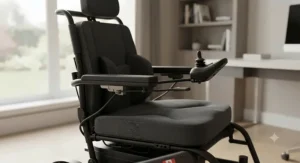
This compact power wheelchair price comparison makes the value curve pretty clear: the jump from budget to mid-range buys you brand infrastructure and terrain versatility, while the jump from mid-range to premium buys almost exclusively weight reduction and material quality rather than dramatically more power or range. If your daily terrain is mostly flat and indoor, the mid-range tier likely delivers 90% of the premium experience for meaningfully less money — the premium tier earns its price specifically for frequent flyers and anyone who personally lifts the chair unassisted.
FSA/HSA Eligibility in Canada: What Actually Gets Reimbursed
Here’s where a lot of Canadian shoppers get tripped up by American product listings: those “FSA/HSA Eligible” badges you’ll see on Amazon product pages refer to the U.S. Flexible Spending Account and Health Savings Account systems, which don’t exist in Canada. Canada’s actual equivalent is the Health Care Spending Account (HCSA) — sometimes just called a Health Spending Account — which employers can offer as part of a flexible benefits plan, plus the federal Medical Expense Tax Credit (METC) available to every Canadian taxpayer regardless of employer benefits.
Under CRA rules, wheelchairs (including power wheelchairs) are explicitly listed as eligible medical expenses, and the CRA’s official medical expense guidance confirms mobility aids qualify, provided you keep your receipts and, in some cases, a prescription from a medical practitioner. If your employer offers an HCSA, the same CRA-eligible expense list generally applies, meaning a compact power wheelchair purchase can often be reimbursed through payroll before tax rather than claimed at tax-filing time. The practical takeaway: don’t rely on an Amazon listing’s “FSA/HSA Eligible” badge to determine Canadian eligibility — check your specific HCSA plan documents or the CRA’s medical expense list directly, since the American badge and the Canadian rule aren’t the same thing even when the underlying expense category overlaps.
Affordable Power Wheelchair Funding in Canada: ADP, VAC & Provincial Programs
Beyond tax credits, several Canadian programs directly subsidize the purchase price — which meaningfully changes the affordable power wheelchair Canada math. Ontario’s Assistive Devices Program (ADP) covers 75% of the ADP-approved price for eligible power wheelchairs, rising to 100% for residents receiving ODSP or Ontario Works, and requires an assessment from a registered occupational therapist plus a valid Ontario Health Card. Other provinces run comparable programs under different names: British Columbia offers assistance through its own provincial mobility equipment channels, and Alberta’s AADL (Alberta Aids to Daily Living) program provides funding for residents who qualify, so check your specific provincial ministry of health site for current criteria rather than assuming Ontario’s rules apply everywhere.
Veterans have an additional path: Veterans Affairs Canada’s Programs of Choice, specifically POC 13, covers special equipment including power mobility devices for eligible veterans, prescribed and supported by approved health professionals. One problem-solving note that trips people up repeatedly: most of these programs require pre-approval before purchase, not reimbursement after the fact, so the sequence matters — get the occupational therapy assessment and program approval lined up before you buy, not after, or you risk paying full price out of pocket with no path to recover the funded portion.
Common Mistakes When Buying a Compact Power Wheelchair
The single most common mistake is buying based on the lowest advertised weight or the longest advertised range without checking whether the turning radius fits your actual living space — a chair that’s technically lighter but has a wider turning circle can be less functional day-to-day than a slightly heavier chair that clears your hallway. A close second: skipping the weight capacity margin. Buying a chair rated right at your body weight, rather than 20–30 lbs above it, shortens motor and battery lifespan and can void some manufacturer warranties.
Buyers also frequently underestimate folded dimensions against their specific vehicle — “fits most trunks” is not the same guarantee as “fits your trunk,” so measure before you buy rather than after a failed return window. And on the funding side, purchasing before securing ADP or HCSA pre-approval is a repeat, expensive mistake: once you’ve paid out of pocket without the paperwork in place, most programs won’t retroactively fund the purchase.
Safety, Battery Regulations & Air Travel Rules for Compact Power Wheelchairs in Canada
If you plan to fly with a compact power wheelchair, Canadian rules are more permissive than many travellers expect, but they’re specific. CATSA confirms that lithium batteries used to operate mobility devices are allowed through security screening without a strict watt-hour limit, and travellers may also carry one spare battery up to 300 Wh. That said, individual airlines can layer on stricter requirements, so contact your carrier at least 48 hours before departure to confirm whether your specific battery needs to be removed, protected, or transported separately.
In terms of device classification, several manufacturers in this roundup — including Pride and Golden Technologies — reference FDA Class II medical device status for their U.S. listings; in Canada, comparable mobility devices are generally regulated under Health Canada’s Medical Devices Regulations, and it’s worth confirming a specific model’s Canadian licensing status with the manufacturer or dealer rather than assuming U.S. classification carries over directly. Beyond travel and classification, basic safety habits matter: always engage the chair’s brake or freewheel lock before transferring in or out, avoid charging the battery unattended overnight in living spaces, and inspect tires and the joystick harness seasonally, particularly after exposure to road salt.
Frequently Asked Questions
❓ What is the lightest compact power wheelchair available?
❓ How much does a compact power wheelchair cost in Canada?
❓ Are power wheelchairs covered by FSA or HSA in Canada?
❓ Can I take a compact power wheelchair on a plane in Canada?
❓ What's the difference between folding and non-folding compact power wheelchairs?
Conclusion
If there’s one thing worth remembering after all these specs, it’s this: the “best” compact power wheelchair isn’t the one with the longest range or the lowest price — it’s the one whose turning radius fits your hallway, whose folded dimensions fit your actual trunk, and whose funding path (or lack thereof) you’ve confirmed before you buy. The ComfyGo Majestic IQ-8000 and Serianie Foldable Electric Wheelchair cover the genuinely affordable power wheelchair Canada end of the spectrum for testing the waters. The Pride Jazzy Passport, Golden Technologies Buzzaround CarryOn, Golden Technologies Ally, and Journey Zinger Chair each solve a specific mid-range problem — travel reliability, tight turns, rough terrain, and nimble indoor handling, respectively. And the Pride Jazzy Carbon sits at the top for anyone whose non-negotiable priority is minimizing weight above all else.
Whichever chair you land on, run the numbers on ADP or your provincial equivalent, check your employer’s HCSA plan documents, and confirm the CRA medical expense paperwork before you finalize a purchase — the funding side of this decision can be worth thousands of dollars, and it’s far easier to arrange upfront than to chase down after the fact.
✨ Don’t Miss These Exclusive Deals! 🔍
Take your mobility shopping to the next level with these carefully selected compact power wheelchairs. Click on any highlighted item to check current pricing and availability. The right chair can hand you back a level of everyday independence your family will genuinely notice!
Recommended for You
- Canadian Winter Wheelchair for Icy Sidewalks: 7 Rugged Picks (2026)
- Wheelchair Snow Attachment for Wheels: 7 Proven Picks (2026)
- Wheelchair Snow Attachment for Wheels: 7 Proven Picks (2026)
Disclaimer: This article contains affiliate links. As an Amazon Associate, I earn from qualifying purchases. If you purchase products through these links, we may earn a small commission at no additional cost to you.
✨ Found this helpful? Share it with your friends! 💬🤗
