

In This Article
The first time your kid rolls across the playground without waiting for a push, something shifts. That’s the whole point of a junior wheelchair for active kids — it’s not a medical accessory tucked in a corner, it’s the thing that gets a seven-year-old to the top of the slide before their friends notice they were even behind. Choosing one, though, feels a lot less thrilling than watching your kid use it. You’re staring at seat widths, camber angles, and frame materials with names that sound like they belong on a race car spec sheet, not a nine-year-old’s mobility device.

This guide breaks down seven real junior wheelchairs sold and serviced in Canada, from budget-friendly folding models to ultra-light rigid frames built for kids who treat recess like a competitive sport. A junior wheelchair for active kids is a manually propelled mobility device sized and engineered specifically for a child’s proportions, growth pattern, and energy level — lighter and more manoeuvrable than an adult chair, and typically more durable and adjustable than a basic paediatric transport chair. We’ll walk through honest, spec-grounded commentary on each model, compare them head-to-head, and cover the Canadian-specific stuff — Wikipedia’s overview of wheelchair mechanics is a decent primer if you want the engineering basics first — school logistics, funding programs, and the everyday mistakes parents make when buying their child’s first (or third) chair. Every price mentioned below is a range in Canadian dollars, because exact figures shift constantly and vary by configuration, dealer, and province.
Quick Comparison Table
| Wheelchair | Frame Type | Approx. Weight | Best For |
|---|---|---|---|
| Drive Medical Wallaby | Folding steel | 15 kg (33 lb) | Budget school and transport use |
| Feather Kids Wheelchair | Folding aluminum | 5.4-7.7 kg (12-17 lb) | Ultra-light travel and car trunks |
| Sunrise Medical ZIPPIE Kidz | Rigid aluminum | ~7 kg (15 lb) | Toddlers learning to self-propel |
| Ki Mobility Little Wave XP | Rigid aluminum | ~8 kg (18 lb) | Everyday active mid-range use |
| Sunrise Medical ZIPPIE Zone | Rigid Shapeloc | 6.4 kg (14 lb) | Playground speed and agility |
| Ki Mobility Little Wave Clik | Rigid aluminum, 5th wheel | ~8.5 kg (19 lb) | Independent, confident propulsion |
| TiLite Pilot Pediatric | Aluminum/carbon hybrid | ~5 kg (11 lb) | Serious, growth-adjustable active use |
Looking at the spread above, the split really comes down to frame construction: folding steel and aluminum chairs like the Drive Medical Wallaby and Feather Kids Wheelchair prioritize portability and price over pure performance, while rigid frames from Ki Mobility, Sunrise Medical, and TiLite trade some folding convenience for lower rolling resistance and sharper handling. Weight differences that look small on paper — a few kilograms — translate into a noticeably different push effort for a small child propelling themselves all day at school. If your child mostly needs a chair for occasional outings, folding wins on convenience; if they’re self-propelling for hours daily, the rigid frames earn their higher price tag through reduced fatigue.
💬 Just one click — help other Canadian families make better buying decisions too!😊
Top 7 Junior Wheelchairs: Expert Analysis
1. Drive Medical Wallaby Pediatric Folding Wheelchair — budget folding all-rounder for school and home
The standout here is simplicity: a steel folding frame that any grandparent, teacher, or babysitter can collapse in seconds without training. Available in 30 cm and 36 cm (12″ and 14″) seat widths, the Drive Medical Wallaby rides on 56 cm (22″) rear wheels with 15 cm (6″) front casters, giving a young self-propeller enough leverage to move confidently on smooth school hallway floors. The steel frame means it’s heavier than the rigid options on this list, but that weight buys durability — this is a chair that survives being loaded and unloaded from a minivan trunk twice a day without complaint.
Based on the spec comparison, this model sits squarely in “workhorse” territory rather than “performance” territory: the height-adjustable push handles and flip-back desk arms matter more for caregivers than for the child’s own propulsion efficiency. Reviewers consistently report that the fold mechanism is the chair’s biggest selling point, particularly for families juggling multiple kids and a lot of gear. It’s also WC19 transit-tested when paired with the manufacturer’s transit bracket kit, which matters if your child rides a school bus in a secured wheelchair position rather than transferring to a bus seat.
Pros:
- ✅ Fast, intuitive fold for daily transport
- ✅ WC19 transit compliance available with bracket kit
- ✅ Lifetime frame warranty from Drive Medical
Cons:
- ❌ Steel frame adds noticeable push effort versus rigid rivals
- ❌ Limited growth adjustability compared to custom rehab chairs
Price sits in the C$500-C$1,200 range depending on seat width and accessories, making it one of the more accessible entry points on this list — a solid value pick for a first chair or a school-only backup.

2. Feather Kids Wheelchair — lightest budget-friendly travel option
What most buyers overlook about this model is that its headline feature — a 5.4 kg (12 lb) frame weight without rear wheels — isn’t just a marketing number, it directly changes who can lift the chair. A parent with a bad back, a grandparent, or the child themselves loading it into a car trunk all benefit from a chair that weighs less than a carry-on suitcase, even with the 20″ rear wheels attached bringing total weight to roughly 7.7 kg (17 lb). The aircraft-grade aluminum construction keeps costs down relative to carbon fibre options while still shaving weight aggressively.
The spec sheet won’t tell you this, but user reports suggest the compact folded footprint (about 30 cm x 64 cm x 69 cm) is genuinely useful for small vehicles and apartment storage — a real pain point for urban Canadian families without garage space. Quick-release wheels and included anti-tippers add safety margin for a child who’s still building core control. This is a strong pick for families whose child needs a chair primarily for outings, travel, and occasional school use rather than all-day, every-day mobility.
Pros:
- ✅ Among the lightest kids’ wheelchairs available, easy to lift
- ✅ Compact fold suits small cars and apartments
- ✅ Bright, washable fabric options kids actually like
Cons:
- ❌ Sling seat offers less postural support than rigid rehab chairs
- ❌ Fewer growth-adjustment points than custom-built alternatives
Expect a price in the C$1,300-C$1,800 range. For families prioritizing portability over deep customization, the value proposition here is hard to beat.
3. Sunrise Medical ZIPPIE Kidz — best starter rigid chair for toddlers learning to push
The Sunrise Medical ZIPPIE Kidz is built for a very specific moment: the transition from stroller to self-propulsion. Its rear-or-front wheel positioning — an unusual feature on this list — lets a toddler’s smaller hands reach the pushrims regardless of arm length, something that matters enormously when a child is first learning the mechanics of propelling themselves. Width and depth adjustments allow the frame to grow with the child through those rapid early years without buying an entirely new chair every twelve months.
Here’s what to weigh: this is genuinely the smallest rigid frame in the ZIPPIE lineup, designed for very young riders rather than school-age kids who need speed and range. Reviewers consistently note that occupational therapists favour this model specifically for building propulsion confidence in three- to six-year-olds, since the geometry rewards small, successful pushes rather than demanding adult-level strength. It’s less suited to a nine-year-old who’s already an experienced self-propeller and wants performance.
Pros:
- ✅ Adjustable wheel position supports early propulsion learning
- ✅ Width and depth grow with rapid toddler development
- ✅ Rigid frame lighter than comparable folding toddler chairs
Cons:
- ❌ Sized specifically for younger children, not school-age kids
- ❌ Custom configuration means longer lead times than off-the-shelf
Pricing typically falls in the C$2,200-C$3,800 range as a custom-configured order through an authorized Canadian dealer. As a starter rigid chair, it’s an investment that pays off in propulsion skills your child carries into every future chair.
4. Ki Mobility Little Wave XP — best sleek mid-range rigid frame for growing kids
Built from Ki Mobility’s signature 7000-series 1 3/8-inch aluminum tubing — the same construction used in their adult performance chairs — the Ki Mobility Little Wave XP keeps the frame light while staying rigid enough that pushing energy translates directly into forward motion instead of flexing away in the frame. That rigidity is the whole game for an active kid: a wobbly frame wastes a child’s limited upper-body strength, while a stiff one rewards every push.
Based on the spec comparison against the folding options earlier on this list, the Little Wave XP’s rigid construction and easily adjustable centre of gravity make it noticeably easier to manoeuvre through tight school hallways and around furniture at home. What most buyers overlook is that CG adjustment isn’t just about comfort — moving the rear axle position changes how easily a child can pop a small wheelie to clear a doorway threshold or curb cut, a skill active kids pick up fast once the geometry supports it. Reviewers in the pediatric rehab community consistently praise the tower-style CG adjustment for being simple enough that a parent can make small tweaks between OT appointments rather than waiting weeks for a clinic visit.
Pros:
- ✅ Rigid 7000-series aluminum frame maximizes push efficiency
- ✅ Simple, tool-light centre-of-gravity adjustment
- ✅ Sleek profile that reads more “sport” than “medical”
Cons:
- ❌ Custom build process takes longer than buying off a shelf
- ❌ Not a folding frame, so it needs more trunk space than the Wallaby
Budget roughly C$2,800-C$4,500 depending on options, wheel upgrades, and seating. It’s a genuinely strong middle-ground chair for a child who’s outgrown a starter model but doesn’t need the top-tier carbon fibre construction yet.
5. Sunrise Medical ZIPPIE Zone — lightest rigid frame for playground speed and agility
At around 6.4 kg (14 lb), the Sunrise Medical ZIPPIE Zone claims one of the lightest frames in the pediatric rigid category, achieved through Sunrise’s Shapeloc frame technology, which the manufacturer describes as lighter than titanium and more rigid, at a lower cost than carbon fibre. In practice, that combination means less rotational mass at the wheels a child has to overcome with every push — noticeable on a playground where quick direction changes matter more than straight-line speed.
The spec sheet’s real-world meaning: this chair has 7.6 cm (3″) of built-in depth adjustability plus roughly 5 cm (2″) of folded-in sling fabric up front, so it grows with the child without a full rebuild. Reviewers consistently highlight the single-lever wheel lock built into the sideguard as a genuine convenience feature — one motion locks both wheels, which matters for a kid transferring independently. On the downside, the frame-width adjustment requires swapping four tubes plus the seat, back, camber, and footrest components, which is more involved than a simple bolt tweak and typically needs a clinic visit.
Pros:
- ✅ One of the lightest rigid pediatric frames on the market
- ✅ Single-lever wheel lock simplifies independent transfers
- ✅ Wide range of frame and accent colour customization
Cons:
- ❌ Frame-width changes require component swaps, not simple bolts
- ❌ Premium frame tech pushes price above basic rigid competitors
Expect a price range of roughly C$3,500-C$5,500 depending on configuration and wheel selection. For a genuinely active kid who treats gym class and recess as the main event, the weight savings here are worth the premium.

6. Ki Mobility Little Wave Clik — best 5th-wheel stability for independent propulsion
The Little Wave Clik’s defining feature is its adjustable dynamic 5th wheel — a small caster mounted behind the rear axle that lets the wheelchair sit with the rear wheels positioned more aggressively forward without tipping backward. Reviewers consistently note that this is the feature that lets kids access the pushrims closer to their body’s midline, which is more efficient biomechanically and reduces shoulder strain over years of daily propulsion — a genuinely research-backed concern in pediatric wheelchair seating, since shoulder overuse injuries are a documented long-term risk for lifelong manual wheelchair users.
What the spec sheet won’t tell you, but occupational therapists note anecdotally, is that this 5th-wheel system essentially removes the “training wheels” problem: a child gets the stability of a slightly rearward wheel position while still gaining the efficiency of an aggressive, midline setup, because the 5th wheel catches any backward tip before it becomes a fall. Ki Mobility’s Index adjustment system also covers seat height, width, depth, CG, and caster wing position — described by the manufacturer as the most built-in adjustment available in the category, which matters enormously for families trying to stretch a single chair purchase across several years of growth.
Pros:
- ✅ Dynamic 5th wheel enables safer midline wheel access
- ✅ Extensive built-in growth adjustment (Index System)
- ✅ Transit-tested and approved for school bus securement
Cons:
- ❌ More moving parts than a simple rigid frame, meaning more to maintain
- ❌ Sits at a higher price point than the standard Little Wave XP
Pricing generally runs C$4,200-C$6,800 depending on the 5th-wheel configuration and seating package chosen. For a child who’s ready to propel aggressively and independently, this is one of the more thoughtfully engineered options available in Canada.
7. TiLite Pilot Pediatric — best ultra-premium carbon fibre pick for serious active use
The TiLite Pilot Pediatric is the chair built for parents who’ve already worked through a couple of pediatric chairs and know exactly what matters: weight, growth room, and rear-wheel access that never needs to be relearned. At roughly 5 kg (11 lb), its aluminum-and-carbon-fibre hybrid frame is described by the manufacturer as 50% lighter than comparable pediatric frames, and the seat expands from 20 cm x 23 cm up to 36 cm x 38 cm (8″x9″ to 14″x15″) with built-in forward growth adjustment that preserves optimal rear-wheel position throughout that entire range.
That growth mechanism is the real differentiator here. Based on the spec comparison with every other chair on this list, most pediatric frames require a component swap or full rebuild to accommodate significant growth; the Pilot’s tool-free seat pan and side-panel adjustments let a parent or therapist dial in width and depth changes on the spot, without the chair’s rear-wheel geometry drifting out of the efficient zone the child has already learned to push from. Reviewers consistently describe the footrest’s ability to drop to just 7.6 cm (3″) seat-to-floor height as unusually useful for very short-statured young riders. The trade-off is straightforward: this is a fully custom, made-to-measure order, and it carries the highest price tag on this list by a meaningful margin.
Pros:
- ✅ Lightest frame on this list at roughly 5 kg
- ✅ Growth adjustment preserves rear-wheel access as the child grows
- ✅ Lifetime frame warranty and quick-release transit-ready wheels
Cons:
- ❌ Highest price point of the seven models covered here
- ❌ Fully custom order means a longer wait than off-the-shelf options
Budget C$5,500-C$8,500+ depending on wheel selection, seating system, and colour customization. For families who’ve decided this child needs one exceptional chair rather than several adequate ones, the Pilot earns its premium price through years of reduced push effort and fewer growth-related replacements.
Setting Up Your Child’s New Junior Wheelchair for School
Getting a new chair delivered is the easy part; the first thirty days of actually using it well is where most families either build good habits or accidentally create bad ones. Start with tire pressure and wheel lock checks weekly for the first month — a soft tire on a rigid frame changes push effort dramatically, and a child won’t necessarily know to mention it. Schedule a mid-point fitting check around week two or three with the prescribing occupational therapist, even if nothing seems wrong; small posture drift is much easier to correct early than after months of compensating movement patterns.
The most common early mistake isn’t mechanical, it’s logistical: parents forget to confirm the chair’s dimensions against classroom desk height and doorway widths before the first day back. A rigid frame that measures perfectly at the clinic can still be too wide for an older school building’s narrower doorframes, so measure the actual routes your child will use — classroom, gym, cafeteria, accessible washroom — not just the front entrance. Pack a simple maintenance kit in the school’s accessible equipment storage: a multi-tool for wheel-lock adjustments, spare footrest hardware, and the dealer’s direct phone number taped inside a folder the teacher can find quickly.
Real-World Scenarios: Matching the Right Chair to Your Life
Consider three different Canadian families working through this decision. A six-year-old starting kindergarten who’s never self-propelled before is generally best served by something like the Sunrise Medical ZIPPIE Kidz — its adjustable wheel position rewards small early wins rather than demanding strength the child hasn’t built yet, and the lower price cushions the inevitability of a growth-driven upgrade within a couple of years. A ten-year-old who’s been self-propelling since age five, plays wheelchair basketball on weekends, and needs a chair that survives an actual sport is better matched to something like the Ki Mobility Little Wave Clik or Sunrise Medical ZIPPIE Zone, where the lighter frame and midline wheel access directly translate into on-court performance and reduced shoulder fatigue.
A third scenario — a family on a tighter budget whose child mainly needs the chair for school hallways and the occasional outing rather than sport-level activity — is well served by the Drive Medical Wallaby or Feather Kids Wheelchair. Neither sacrifices safety, and both fold small enough to fit in a compact car, which matters if the family is juggling siblings, hockey bags, and grocery runs in the same vehicle every afternoon. None of these scenarios are prescriptive; a registered occupational therapist assessing your specific child’s strength, growth trajectory, and daily routine should always have the final say, but matching chair type to lifestyle intensity this way at least frames the right questions to bring into that appointment.
How to Choose a Junior Wheelchair for Active Kids
- Confirm current and near-future measurements. Have an OT or physiotherapist measure seat width, depth, and back height, then ask specifically how much growth room the frame builds in before requiring new parts.
- Match frame type to activity level. Folding steel and aluminum frames suit occasional or transport-focused use; rigid frames suit daily, high-mileage self-propulsion.
- Weigh the chair yourself, empty, before ordering. A few kilograms of difference compounds across hundreds of pushes a day — ask for the exact configured weight, not just the base frame weight.
- Check transit compliance if your child rides a secured school bus position. Look specifically for WC19 crash-tested transit certification rather than assuming any wheelchair qualifies.
- Ask about the growth-adjustment mechanism, not just the growth range. A chair that needs a full clinic rebuild to grow is a very different ownership experience than one with tool-free, on-the-spot adjustment.
- Get a real quote, not a sticker price, from an ADP-registered vendor. Because most of these chairs are prescribed rather than bought off a shelf, actual out-of-pocket cost depends heavily on provincial funding eligibility.
- Test-drive before committing whenever possible. A short trial session at a rehab equipment showroom reveals handling differences that a spec sheet simply can’t.
Lightweight Paediatric Wheelchair for School Use: What Actually Matters
Not every feature that sounds impressive on a spec sheet matters equally in a school hallway. Frame weight matters enormously for a child self-propelling between classes all day, but total chair weight including wheels matters more for caregivers who lift the chair in and out of vehicles. A lightweight paediatric wheelchair for school use should be judged on push effort in realistic conditions — carpeted classrooms, tile hallways, ramps — rather than the marketing number alone, since two chairs with similar listed weights can feel very different depending on wheel bearing quality and rolling resistance.
Storage is the other underrated factor. Schools rarely have dedicated wheelchair storage space, so a chair that folds compactly (like the Feather Kids Wheelchair or Drive Medical Wallaby) can simply live in a coat closet, while a rigid frame needs a genuine parking spot that doesn’t block a fire exit — something worth confirming with the school’s accessibility coordinator before the first day, not after. Reviewers consistently note that quick-release rear wheels, standard on most rigid frames in this category, are the single most useful feature for school use specifically, since a teacher’s aide can remove them in seconds to slide the chair into a smaller storage footprint at the end of the day.
Children’s Wheelchair vs Junior Wheelchair: What’s the Real Difference
The terms get used loosely, and that causes real confusion for parents shopping online. “Children’s wheelchair” is often used as a broad, generic label covering any mobility device sized for a young user, including basic transport chairs designed mainly to be pushed by a caregiver rather than self-propelled. “Junior wheelchair,” by contrast, more often signals a chair specifically engineered for a child’s own self-propulsion — lighter frames, pushrims sized and positioned for smaller hands, and growth adjustability tuned to a child’s development curve rather than an adult’s fixed proportions.
In practice, every model reviewed above sits on the “junior” end of that spectrum, built around active, self-directed mobility rather than passive transport. A basic children’s transport chair, by comparison, typically prioritizes caregiver convenience — a simple push handle, basic recline, and a lower price point — over the propulsion-focused engineering of a true junior chair. If your child can self-propel or is actively learning to, the junior category is almost always the better long-term investment, even at a higher upfront cost, because it supports the independence goal rather than just the transport goal. If your child cannot yet self-propel due to age or medical need, a transport-style children’s wheelchair may genuinely be the more appropriate and cost-effective choice, and there’s no shame in that being the right call for your family right now.
School Mobility Equipment: Rules, Funding, and Logistics in Canada
School mobility equipment in Canada sits at the intersection of provincial education accessibility rules and provincial health funding programs, and the two don’t always move at the same pace. Ontario’s Assistive Devices Program, for example, covers a significant share of the cost of medically necessary manual wheelchairs for eligible residents, though it’s worth noting explicitly on Ontario’s official mobility aids page that ADP funding criteria generally exclude equipment required exclusively for school, work, sport, or recreational purposes — meaning the wheelchair itself typically needs to be justified as a daily-living necessity first, with school use simply being one of many settings it’s used in.
That funding nuance matters because school accessibility itself remains an active, evolving issue across the country — a Halifax student’s 2024 petition over a school’s inaccessible classroom, reported by CBC News, is a useful reminder that having the right wheelchair solves only part of the equation; physical building access, classroom layout, and staff training around transfers and equipment maintenance all factor into whether a chair actually works for daily school life. Before finalizing a chair purchase, it’s worth walking the specific school routes your child will use with the actual model’s width and turning radius in mind, and confirming with the school’s accessibility coordinator that storage, charging (for any powered add-ons), and transit securement needs are addressed well before the first day.
Lightweight Frame Explained: Materials, Trade-offs, and Long-Term Value
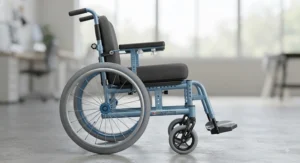
The phrase “lightweight frame” covers a surprisingly wide range of actual engineering, and the material choice drives most of the price and performance differences across this list. Standard aluminum tubing, used in models like the Ki Mobility Little Wave XP, offers a solid balance of low weight, reasonable cost, and long-term durability, making it the workhorse choice across most mid-range pediatric chairs. Proprietary alloys like Sunrise Medical’s Shapeloc technology, used in the ZIPPIE Zone, push weight down further than standard aluminum while staying more affordable than carbon fibre, occupying a genuine middle ground in the market. Carbon fibre hybrid construction, as seen in the TiLite Pilot, delivers the lowest weight of the group but at a meaningfully higher price, since carbon layup and finishing require more specialized manufacturing.
Here’s what to weigh when deciding how much to spend on frame weight specifically: for a child who self-propels for a few hours a day, the difference between a 8 kg aluminum frame and a 5 kg carbon hybrid is real but modest in daily fatigue terms. For a child who self-propels for six-plus hours daily across a full school day plus after-school activities, that same weight difference compounds significantly, and the higher upfront cost of an ultra-light frame can genuinely pay for itself in reduced shoulder strain and increased independence over years of use. Steel-framed folding chairs, meanwhile, remain the heaviest option on this list but compensate with the lowest price and highest durability against rough daily handling, which is exactly why models like the Drive Medical Wallaby still make sense for lower-mileage, transport-focused use.
Active Lifestyle Wheelchair Features That Actually Matter (And Those That Don’t)
Marketing copy for an active lifestyle wheelchair tends to emphasize colour options and styling, and while those genuinely matter for a child’s confidence and willingness to use the chair enthusiastically, they shouldn’t drive the core purchasing decision. Features that actually matter for active use include centre-of-gravity adjustability (it directly affects how easily a child can manoeuvre and even briefly pop a wheelie over a curb cut), quick-release rear wheels (essential for transport and storage), and camber angle, which widens the wheelbase at the bottom for better stability during quick turns — a genuinely useful feature for playground and sport use that rarely gets marketed prominently despite its real-world impact.
Features that matter less than their marketing suggests include maximum weight capacity far beyond a child’s actual and projected weight (paying for structural overkill that will never be used before the chair is outgrown anyway) and an excessive number of colour and accent combinations, which mostly affect price without touching function. Reviewers consistently note that the single most impactful “feature” across every chair on this list isn’t a spec at all — it’s whether the fitting was done properly by a qualified therapist, since even the best-engineered frame performs poorly if the seat width, depth, or axle position doesn’t match the child’s actual body and strength.
Common Mistakes When Buying a Junior Wheelchair
Parents shopping for a first or replacement chair tend to repeat a handful of avoidable mistakes. The most frequent is buying significantly ahead of current size “to save money on the next upgrade,” which sounds financially sensible but actually undermines propulsion efficiency in the short term — an oversized seat forces a child to compensate with poor posture and inefficient pushing mechanics while they “grow into” the chair, sometimes for a year or more. A second common mistake is skipping the transit conversation entirely, only to discover after purchase that the chair isn’t WC19 transit-certified and can’t be safely secured in the child’s school bus position without an add-on kit.
A third mistake is underestimating storage and doorway clearance at school and at home before ordering a rigid frame, leading to a chair that fits the child perfectly but doesn’t fit the building. Finally, many families treat the initial fitting as a one-time event rather than an ongoing relationship — skipping the follow-up adjustment appointments in the first few months, when a growing, actively-propelling child’s needs shift fastest, means small fit issues can go uncorrected far longer than they should.
Long-Term Cost and Maintenance
The purchase price is only the first number in a junior wheelchair’s real cost of ownership. Tires, casters, and bearings on any actively-used chair wear faster than on an adult chair used more conservatively, simply because kids push harder, more often, and less gently. Budget for replacement caster wheels roughly every one to two years of heavy use, and factor in that most pediatric chairs will need at least one, and often two, growth-related component adjustments or upgrades before a child reaches their teenage years, even on models specifically designed with built-in growth room.
Where a higher upfront investment genuinely pays off is in reduced replacement frequency: a well-built rigid frame with generous growth adjustment, like the Ki Mobility Little Wave Clik or TiLite Pilot, can often serve a child through several years and multiple growth spurts with component swaps rather than full chair replacements, while a budget folding frame purchased without growth adjustability may need full replacement sooner. Provincial funding programs like Ontario’s ADP typically won’t cover a second full chair within a set minimum period unless medical need changes significantly, so factoring total years of expected use into the initial purchase decision — rather than optimizing purely for lowest sticker price — often produces better long-term value.
Benefits vs Traditional Alternatives
| Factor | Junior Wheelchair (Active) | Basic Transport Chair | Adaptive Stroller |
|---|---|---|---|
| Self-propulsion support | Purpose-built pushrims and geometry | Minimal to none | None |
| Growth adjustability | Extensive, often tool-light | Limited | Moderate |
| Weight (typical) | 5-15 kg | 12-18 kg | 8-14 kg |
| Best For | Active, self-propelling kids | Caregiver-driven transport | Very young or high-support needs |
The comparison above makes the trade-off explicit: a basic transport chair costs less upfront and requires less fitting complexity, but it doesn’t build a child’s independent mobility skills the way a true junior wheelchair does. An adaptive stroller occupies a useful middle ground for younger children or those with higher postural support needs, offering more comfort features than a bare transport chair without the full performance engineering of a rigid junior frame. For an actively self-propelling child, the junior wheelchair category consistently delivers better long-term functional outcomes, even though it typically carries a higher initial price than either alternative.
✨ Don’t Miss These Exclusive Deals!
🔍 Take your child’s mobility to the next level with a chair that actually keeps pace with them. Check current pricing and availability on any of the models above, and give your family the freedom to build an active, independent lifestyle your child will genuinely enjoy!

Frequently Asked Questions
❓ What is the difference between a junior wheelchair and an adult wheelchair?
❓ How much does a junior wheelchair for active kids cost in Canada?
❓ Can a child's wheelchair be used on a school bus in Canada?
❓ How often does a growing child need a new wheelchair?
❓ Does Ontario's ADP program cover a wheelchair used mainly for school?
Conclusion
Choosing between these seven chairs really comes down to an honest read of your child’s current activity level, growth trajectory, and daily routine, not just the specs on a page. Budget-focused families whose kids need dependable transport will do well with the Drive Medical Wallaby or Feather Kids Wheelchair, while families supporting a highly active, self-propelling kid will likely find the extra investment in a rigid frame like the Ki Mobility Little Wave Clik, Sunrise Medical ZIPPIE Zone, or TiLite Pilot pays for itself in reduced fatigue and years of reliable growth adjustment. Ontario’s accessibility rules remain a genuine work in progress — advocates told CBC News in late 2024 that the province is “nowhere close” to meeting its own 2025 accessibility deadline — which is exactly why getting the equipment side right, in partnership with a qualified occupational therapist, matters as much as ever for Canadian families navigating school and daily life together.
Whatever you choose, involve your child’s therapist early, measure the actual spaces the chair needs to fit through, and don’t be afraid to prioritize the features that support genuine independence over the ones that just look good in a product photo. An active kid with the right chair isn’t waiting for anyone.
Recommended for You
- Growing Wheelchair for Kids With Disabilities: 7 Top Picks
- Paediatric Wheelchair for Toddlers: 7 Real Options Compared
- Extra Wide Wheelchair for Plus Size Adults: 7 Best Picks (2026)
Disclaimer: This article contains affiliate links. As an Amazon Associate, I earn from qualifying purchases. If you purchase products through these links, we may earn a small commission at no additional cost to you.
✨ Found this helpful? Share it with your friends! 💬🤗
