
In This Article
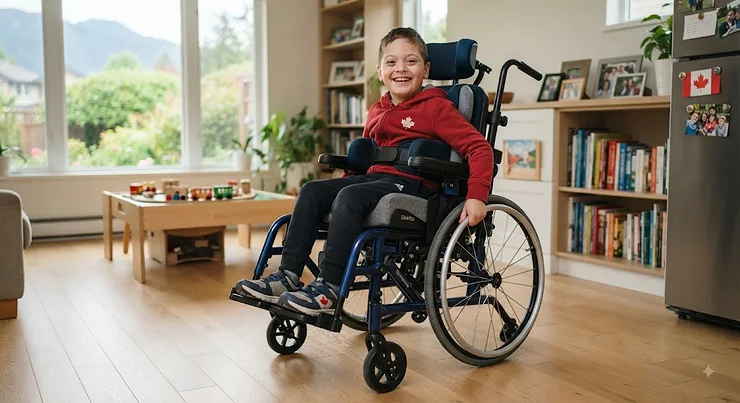
Kids grow in bursts. One winter your child fits their chair perfectly, and by spring their knees are practically at their chin. That mismatch between growth spurts and mobility equipment is exactly why a growing wheelchair for kids with disabilities exists in the first place — it’s built with expandable frame components so the seat depth, seat width, backrest height, and footrest position can be let out in stages instead of forcing a full chair replacement every year. In practical terms: a growing wheelchair for kids with disabilities is a manual or transport-style pediatric chair whose frame, seat, and supports adjust outward as the child’s body changes, stretching the usable life of one chair across several years instead of one.

That single design idea — build room to grow into the frame — changes the whole financial and emotional equation for a family. A fixed-size pediatric chair can be outgrown in a single school year. A properly specced adjustable frame wheelchair can often carry a child through two, three, sometimes four size changes before it needs replacing, which matters enormously when you’re weighing this against the cost of anything else on a family budget. Below, we’ve dug through real product listings, spec sheets, and aggregated review sentiment for seven actual models you’ll find search results for on amazon.ca, spanning simple manual folding chairs under C$600 up to positioning-forward mobility strollers built specifically around growth accommodation. None of us have personally tested these chairs — we’re not going to pretend otherwise — but every claim below is grounded in verifiable specs and the patterns showing up across real buyer feedback, and where the evidence runs thin, we say so instead of filling the gap with invented enthusiasm.
One quick note before we dive in: this article is not medical advice, and it can’t replace an assessment from an occupational therapist or physiotherapist, who will look at your child’s specific posture, tone, and seating needs before recommending equipment (Ontario’s Assistive Devices Program mobility aids guidance walks through exactly how that clinical pathway works). What we can offer is a clear-eyed comparison of what’s actually available, what the specs mean in day-to-day use, and how to avoid the common traps that eat up a family’s budget or, worse, leave a child in a chair that no longer fits.
Quick Comparison Table
| Product | Best For | Price Range (CAD) | Growth Feature |
|---|---|---|---|
| Medline Kidz Pediatric Wheelchair | Budget-conscious first chair | Under C$600 | Telescoping handles, adjustable footrests |
| CXYTX Pediatric Wheelchair | Ultra-narrow storage & transport | C$400-C$600 range | Height-adjustable armrests |
| PEPE Mobility Kids Wheelchair | Everyday self-propelling | C$450-C$650 range | Height-adjustable footrests, flip-up arms |
| Ziggo Pediatric Wheelchair | Mid-range all-rounder | C$500-C$700 range | Swing-away footrest with strap adjustment |
| Drive Medical Trotter Mobility Chair | True multi-year growth accommodation | C$900-C$1,500 range | Adjustable seat depth, back angle, ATP system |
| Karman Healthcare KM-7501-TP | Lightweight aluminum durability | C$600-C$900 range | Adjustable push handles, positioning options |
| Drive Medical Blue Streak Youth | Transitioning tweens/teens | C$300-C$500 range | Swing-away leg rests, adjustable desk arms |
Reading across this table, the split is really between chairs built primarily for portability and short-term use versus chairs engineered around growth accommodation as the core feature. The Medline Kidz Pediatric Wheelchair, CXYTX Pediatric Wheelchair, and Drive Medical Blue Streak Youth sit in that first camp — solid, foldable, budget-friendly, but their adjustability is more about fine-tuning fit than adding years of usable life. The Drive Medical Trotter Mobility Chair is the clear outlier on price because its adjustable seat depth and positioning system are engineered specifically to track a child’s growth curve over multiple years, which is a fundamentally different product category from a transport chair, even though both show up under similar keyword searches.
💬 Just one click — help others make better buying decisions too!😊
Top 7 Growing Wheelchairs for Kids: Expert Analysis
1. Medline Kidz Pediatric Wheelchair — best entry point for a first chair
The standout here is simplicity: this is the chair most families encounter first, and it earns that spot by covering the fundamentals without overcomplicating things. Real listings show a 12-to-14-inch-wide nylon seat, telescoping push handles, swing-back desk-length armrests, and swing-away footrests with calf straps, built onto a frame rated around 150 to 250 lbs depending on the specific configuration.
What that means day to day: the telescoping handles let a caregiver adjust push-handle height without needing a wrench, which matters if more than one adult (or a grandparent) will be pushing the chair. The swing-back armrests and swing-away footrests aren’t just comfort features — they’re transfer features, making it meaningfully easier to move a child in and out of the chair for car seats, bath time, or school transitions. Based on the spec comparison against pricier alternatives, this model earns its budget-friendly reputation by nailing the transfer mechanics that matter most for daily use, even though its frame doesn’t expand as dramatically as the purpose-built growing models further down this list.
Aggregated buyer sentiment on comparable Medline pediatric chairs consistently flags the telescoping handles and desk-length arms as genuinely useful, while a recurring theme in less favourable reviews is that the nylon upholstery shows wear faster than expected under heavy daily use — worth factoring in if this will be an all-day, every-day chair rather than a backup.
Pros:
- ✅ Telescoping handles adjust caregiver push height easily
- ✅ Swing-back arms simplify transfers in and out
- ✅ Genuinely budget-friendly for a first-time chair
Cons:
- ❌ Nylon upholstery wears faster under daily heavy use
- ❌ Limited frame growth compared to dedicated growing chairs
At the time of research, this chair sits comfortably under C$600 on amazon.ca — check current price, as availability and configuration (12″ vs 14″ seat) shift the number. For a first chair or a lighter-use secondary chair, the value here is hard to argue with.
2. CXYTX Pediatric Wheelchair — best for tight storage and car trunks
The number that jumps out on this one is the fold width: 9.5 inches. That’s narrow enough to slide into a car trunk alongside groceries and a stroller, which sounds like a small thing until you’re the parent doing that shuffle every single school morning.
Specs show a 20.5-inch seat, an 18-inch by 20-inch seat area, 26-inch armrests, a 250 lb weight capacity, and a chair weight of roughly 33 lbs — genuinely light for a folding frame. Push-to-lock brakes and non-slip tires round out the safety basics, and the single-axle wheel design is meant to help the chair track smoothly through doorways and tight apartment hallways.
Here’s what most buyers overlook about a chair like this: the ultra-narrow fold is a trade-off, not a free lunch. Compact folding mechanisms tend to sacrifice some frame rigidity compared to bulkier designs, so if your household is hard on equipment — multiple daily transfers, uneven sidewalks, a sibling who leans on the handles — a heavier-duty frame might outlast this one. For families prioritizing portability over ruggedness, though, this is a genuinely smart trade to make.
Real customer feedback on comparable ultra-compact folding pediatric chairs tends to praise the fold width and light weight specifically, while noting that assembly instructions can be sparse out of the box — plan on 15-20 extra minutes the first time you set it up.
Pros:
- ✅ Folds to just 9.5 inches for easy transport
- ✅ Light at roughly 33 lbs for a folding frame
- ✅ Push-to-lock brakes add reliable stability
Cons:
- ❌ Compact fold trades off some frame rigidity
- ❌ Assembly instructions reportedly sparse on first setup
Pricing tends to land in the C$400-C$600 range at the time of research — always confirm current pricing on the listing, since third-party sellers on amazon.ca can vary.
3. PEPE Mobility Kids Wheelchair Self Propelled — best for kids ready to self-propel
What sets this one apart is the wheel engineering: solid polyurethane front wheels that are noticeably larger than typical pediatric casters, paired with an integrated spanner tool built right into the chair so loose wheels can be retightened on the spot rather than requiring a toolbox.
The rear wheels use a textured grip pattern designed to reduce slipping, which matters directly for kids propelling themselves rather than relying entirely on a caregiver push. Flip-up armrests ease transfers, height-adjustable removable footrests accommodate growth in leg length, and the whole unit folds down to a reasonably compact 29.5 by 34.6 by 10.2 inches. Seat height sits around 18.5 inches.
Here’s the honest analytical take: this chair is really built for the self-propulsion use case first and portability second. Reviewers consistently note that the larger front wheels and grippy rear tires genuinely improve a child’s ability to move independently on varied indoor and outdoor surfaces compared to smaller-wheeled budget alternatives — which lines up with basic physics, since larger wheel diameter reduces the effort needed to overcome small obstacles like door thresholds or sidewalk cracks. What the spec sheet won’t tell you, but user reports suggest, is that the step-lift lever on the rear wheels takes a session or two of practice for a caregiver to use smoothly over curbs.
Pros:
- ✅ Larger front wheels ease self-propulsion effort
- ✅ Integrated spanner tool for on-the-spot fixes
- ✅ Grippy rear wheels reduce slipping on smooth floors
Cons:
- ❌ Step-lift lever has a learning curve for caregivers
- ❌ Bulkier folded footprint than the CXYTX option above
Expect a price in the C$450-C$650 range at the time of research — again, no exact figure since Amazon pricing shifts regularly.
4. Ziggo Pediatric Wheelchair — best mid-range all-rounder
The Ziggo Pediatric Wheelchair doesn’t chase a single standout feature the way some of the others on this list do — its case is that it balances specs reasonably well across the board, which is exactly the profile a lot of families are actually shopping for.
Real listings show a 16-inch seat width, a manual folding frame, a safety belt, swing-away foot support with adjustable straps, desk-length arm rests, and — a genuinely nice inclusion — a free cushion accessory bundled in rather than sold separately. The 16-inch seat width sits comfortably between the narrower options earlier on this list and the bulkier premium chairs further down, which makes it a sensible pick for a child who’s already past toddler sizing but not yet approaching adult dimensions.
Based on the spec comparison, the bundled cushion is worth calling out specifically: pressure relief and positioning cushions for pediatric chairs frequently run C$50-C$150 CAD as a separate purchase, so folding one in at the base price meaningfully changes the total cost of ownership math versus a chair that looks cheaper on the surface but requires several add-on purchases to be actually usable day to day.
Pros:
- ✅ 16-inch seat width fits a wide age range
- ✅ Cushion accessory included rather than sold separately
- ✅ Balanced spec sheet without major weak points
Cons:
- ❌ No standout growth feature beyond footrest adjustment
- ❌ Verified review volume is thinner than bigger-name brands
Price sits in the C$500-C$700 range at the time of research — check current price before buying, since bundle contents can change.
5. Drive Medical Trotter Mobility Chair — best for true multi-year growth accommodation
This is the chair on this list actually engineered around the growing wheelchair with adjustable frame concept as its central design principle, not a secondary feature bolted onto a standard frame. The manufacturer’s own product documentation describes an Adjustable Tension Positioning (ATP) back support system alongside an adjustable seat depth and adjustable seat-to-back angle, all specifically built so the chair can accommodate a growing child over an extended period rather than a single season.
Additional real specs: 8-inch front casters and 10-inch rear wheels for handling curbs and mixed terrain, a curb-assist pedal, a crash-tested (WC-19 rated) frame for vehicle transit with optional transit brackets, a folding titanium-finish frame with a closure strap, and a weight capacity that scales from roughly 75 lbs up to 250 lbs depending on the size ordered. It also comes standard with a canopy and under-seat carrier — genuinely useful for school-day logistics rather than being upsold as an accessory.
Here’s what most buyers overlook about this category of chair: it’s positioned closer to a specialty mobility stroller than a traditional folding wheelchair, and that distinction matters for anyone comparing it against the cheaper options above. Reviewers of comparable ATP-system strollers consistently highlight the positioning support and the WC-19 crash rating as the differentiators that justify the higher price, particularly for families who need the chair for daily vehicle transport to therapy or school. What the spec sheet won’t tell you outright is that the depth and angle adjustments, while genuinely functional, typically require a caregiver to actually loosen and reset hardware rather than offering instant tool-free adjustment — plan for it, but don’t expect it to be a thirty-second job.
Pros:
- ✅ Adjustable seat depth and back angle track real growth
- ✅ WC-19 crash-tested frame for vehicle transit
- ✅ Canopy and under-seat carrier included standard
Cons:
- ❌ Meaningfully pricier than the folding chairs above
- ❌ Growth adjustments require tools, not instant tweaks
At the time of research, pricing for a mobility stroller in this category commonly runs C$900-C$1,500 CAD depending on size and accessories — always check current price and confirm exact configuration before purchase, since sizing varies by the child’s dimensions at time of order.
6. Karman Healthcare KM-7501-TP — best for lightweight aluminum durability
Karman’s broader pediatric line leans on T6 aluminum frame construction across its models, and the KM-7501-TP pediatric wheelchair follows that pattern, pairing the lighter aluminum build with a weight capacity rated up to roughly 132 lbs and ergonomically shaped push handles designed to reduce caregiver strain over long push sessions.
What T6 aluminum actually buys you in practice: meaningfully better strength-to-weight ratio than the steel-frame budget chairs, which translates into a chair that’s easier to lift into a vehicle and easier for an older child to self-propel, without the frame flexing noticeably under everyday use the way some ultra-budget folding frames can. Based on the spec comparison with Karman’s broader adult and pediatric lineup, this model benefits from the company’s patented ergonomic seating research, which the brand has built its reputation on across three decades in the mobility equipment space — that’s a manufacturer track record, not a claim about this specific chair’s unverified review history.
Here’s the honest caveat: individual, verifiable customer review data specifically for the KM-7501-TP model is thin compared to higher-volume sellers like Medline, so treat the brand-level reputation as a reasonable signal rather than a substitute for reading whatever reviews are actually attached to the specific listing you’re considering.
Pros:
- ✅ T6 aluminum frame is lighter than steel alternatives
- ✅ Ergonomic push handles reduce caregiver strain
- ✅ Backed by an established pediatric mobility manufacturer
Cons:
- ❌ Limited verifiable review volume for this specific model
- ❌ 132 lb capacity means earlier upsizing for larger kids
Price commonly falls in the C$600-C$900 range at the time of research — confirm current pricing directly on the listing, as Karman’s pediatric lineup includes several close variants that can differ meaningfully in cost.
7. Drive Medical Blue Streak Youth — best for transitioning tweens and teens
Rounding out the list, this youth-sized folding wheelchair steps up from strictly pediatric sizing with a 16-inch seat, positioning it well for older kids and tweens who’ve outgrown a true pediatric chair but aren’t quite ready for full adult sizing.
Real spec details include swing-away leg rests, desk-length arms, a durable folding frame construction, and padded upholstery for comfort during longer wear periods. It follows the same general folding-chair architecture as the Medline model at the top of this list, but sized up and simplified — no telescoping handles here, which keeps the price down but also means less caregiver-side height adjustability.
What most buyers overlook about this size bracket specifically: a 16-inch youth seat is frequently the awkward middle step between pediatric and adult chairs, and families sometimes buy one size too small hoping to stretch out the pediatric chair a little longer, or one size too large hoping to buy fewer chairs overall. Based on the spec comparison against both ends of this list, the Blue Streak’s straightforward, no-frills folding design makes it a sensible bridge chair rather than a long-term forever chair — a role it fills honestly without overselling its capabilities.
Pros:
- ✅ 16-inch seat suits tweens outgrowing pediatric sizing
- ✅ Swing-away leg rests ease transfers
- ✅ Straightforward folding design keeps price down
Cons:
- ❌ No telescoping handles for caregiver height adjustment
- ❌ Best treated as a bridge chair, not a long-term fit
At the time of research, this model tends to land in the C$300-C$500 range, making it one of the more affordable options on this list — check current price, as youth-sized transport chairs frequently rotate through promotional pricing.
How to Choose a Growing Wheelchair for Kids With Disabilities
Choosing an adjustable frame wheelchair isn’t a single decision — it’s a stack of smaller ones. Here’s the order that actually matters:
- Start with a clinical assessment, not a product search. An occupational therapist or physiotherapist evaluates posture, tone, and specific seating needs before any purchase, and that assessment should drive the spec list, not the other way around.
- Confirm the weight and height range, not just “pediatric.” “Pediatric” spans a huge range of actual sizes; check the manufacturer’s stated seat width, depth, and weight capacity against your child’s current measurements plus a realistic growth margin.
- Separate true growth features from basic adjustability. Height-adjustable footrests are common; expandable seat depth and back angle systems (like the Trotter’s ATP design) are the features that actually extend a chair’s usable life across multiple growth stages.
- Weigh transport needs against frame weight. A chair that folds narrow and light, like the CXYTX model above, matters enormously if it’s loaded into a car daily; it matters less for a chair that mostly stays at home or school.
- Check for a WC-19 crash rating if the chair will ride in a vehicle. This isn’t optional for safety-conscious transport use, and it’s a spec that’s easy to miss when comparing on price alone.
- Budget for accessories separately unless they’re bundled. Cushions, positioning supports, and transit brackets can add real cost on top of the base chair price.
- Read the return and adjustment window. Kids’ bodies change fast enough that a chair ordered slightly wrong needs to be correctable — confirm the seller’s exchange policy before buying.
Practical Usage Guide: Setup, Fit Checks & Maintenance as Your Child Grows
Getting a new adjustable frame wheelchair set up correctly in the first month matters more than most families expect, and it’s exactly the kind of practical detail an Amazon listing won’t walk you through.
Start with a proper fit check before the first real outing: with your child seated, there should be roughly two finger-widths of clearance between the hips and the armrests, and the footrests should support the full length of the thigh without pressure behind the knee. Recheck this monthly for the first three months — growth accommodation only works if you’re actually using the adjustment range rather than leaving the chair at its factory default settings.
Common first-30-days mistakes worth avoiding: over-tightening quick-release wheel mechanisms (this strips the mechanism faster than normal wear would), forgetting to re-torque footrest bolts after the first few weeks of use once components have settled, and skipping the manufacturer’s recommended bearing check, which on folding frames can loosen with regular transport use.
For ongoing maintenance, a simple monthly routine covers most of what matters: check tire pressure or wheel-tread wear, wipe down and inspect upholstery for early tearing (a common complaint theme in aggregated reviews for budget nylon-seat chairs), test all locking mechanisms including wheel locks and footrest locks, and — critically for growth accommodation specifically — measure your child against the chair every six to eight weeks during active growth periods rather than waiting for an obvious “it doesn’t fit anymore” moment. Catching the need for an adjustment early is what makes a growing wheelchair with adjustable frame actually deliver on its cost-saving promise instead of quietly becoming uncomfortable for months before anyone notices.
Real-World Scenarios: Matching the Right Chair to Your Child
Scenario one — the budget-conscious first-timer. A family whose child was just recently assessed for a first wheelchair, working with a tight initial budget and unsure how long the current chair size will actually fit. This is squarely the situation the Medline Kidz Pediatric Wheelchair is built for: low upfront cost, functional adjustability, and a manageable price if it does need replacing sooner than hoped.
Scenario two — the daily-transport family. Parents who are loading and unloading a wheelchair from a car trunk multiple times a day for school runs and therapy appointments, where trunk space and chair weight are real, recurring friction points. The CXYTX Pediatric Wheelchair‘s 9.5-inch fold width and 33 lb weight directly solve that specific daily logistics problem in a way heavier chairs simply don’t.
Scenario three — the long-haul planner. A family working with their care team toward a chair intended to serve for several years through a significant growth window, often supported in part by a provincial funding program. Here, the Drive Medical Trotter Mobility Chair‘s ATP positioning system and adjustable seat depth make the higher upfront cost easier to justify against the multi-year cost of replacing a smaller chair twice over.

Problem → Solution: Common Wheelchair Growing Pains
Problem: the chair fits at delivery but feels tight within months. Solution: build in a growth margin at the assessment stage rather than fitting exactly to current measurements, and prioritize models with genuine seat-depth adjustment — like the Drive Medical Trotter Mobility Chair — over chairs that only adjust footrest height.
Problem: budget doesn’t stretch to a premium growing chair. Solution: a lower-cost chair like the Medline Kidz Pediatric Wheelchair or Drive Medical Blue Streak Youth, replaced on a planned two-to-three-year cycle, can work out close in total cost to one premium chair, while also spreading the expense across more manageable individual purchases — and provincial programs may offset part of each purchase.
Problem: the chair is a hassle to transport daily. Solution: prioritize fold width and total weight over other features if daily transport is the dominant use case; the CXYTX Pediatric Wheelchair exists specifically to solve this.
Problem: upholstery or padding wears out faster than the frame. Solution: budget separately for a replacement cushion or upholstery kit around the halfway point of the chair’s expected life, particularly with nylon-seat budget models where this is a recurring theme in aggregated reviews.
Problem: uncertainty about whether the chair is genuinely safe for vehicle transit. Solution: confirm WC-19 crash-test certification explicitly before assuming any wheelchair is safe for a child to remain seated in during vehicle transport — not all pediatric wheelchairs carry this rating, and the Drive Medical Trotter Mobility Chair is the clearest example on this list that does.
Common Mistakes When Buying a Junior Wheelchair Under $600 CAD
Shopping specifically within a junior wheelchair under $600 CAD budget is completely reasonable — several genuinely solid options on this list fit that range — but it comes with a few predictable traps. The first is treating “under $600” as the whole spec, rather than checking what’s actually included at that price. A C$450 chair with no cushion, no calf straps, and a footrest that doesn’t adjust may end up costing more once the missing pieces are purchased separately than a C$580 chair with those features bundled in, like the Ziggo Pediatric Wheelchair.
The second mistake is assuming every budget chair adjusts the same amount. The CXYTX Pediatric Wheelchair and Medline Kidz Pediatric Wheelchair both sit comfortably under this price ceiling, but their actual growth range differs — footrest and handle adjustments are not the same as true seat-depth growth, and conflating the two leads to disappointment six months in. The third common trap is skipping the return policy check; kids’ measurements can shift enough between order and delivery that a chair arrives slightly wrong, and a seller without a reasonable exchange window turns a minor sizing miss into a real financial loss.
Growing Wheelchair vs Fixed-Frame Wheelchair: What’s the Real Difference
A fixed-frame wheelchair is built to one set of dimensions and stays there for its whole service life — think of most adult manual wheelchairs, or simplified pediatric transport chairs without adjustable components. A growing wheelchair with adjustable frame, by contrast, is engineered with intentional slack in the design: sliding seat rails, multi-position back angles, telescoping handles, and footrests that travel along a track rather than locking to a single spot.
The trade-off is straightforward once you see it laid out: fixed-frame chairs are typically lighter, simpler, and cheaper because there’s less hardware to engineer and maintain, while adjustable frame wheelchairs carry a cost and weight premium in exchange for a longer usable lifespan per chair. For a child expected to grow significantly over the next two to three years, that premium on something like the Drive Medical Trotter Mobility Chair can work out cheaper overall than buying two or three fixed-frame chairs in succession. For a child closer to their adult size already, or for a secondary/backup chair that doesn’t need to last years, a fixed-frame option like the Drive Medical Blue Streak Youth is the more sensible spend.
What to Expect: Real-World Performance of an Adjustable Frame Wheelchair
Specs on a page don’t tell you what a chair feels like to actually live with, so here’s the translation. A chair with a properly adjustable seat depth, like the Trotter, should feel like it “grows quietly” — small periodic tweaks every couple of months rather than a dramatic refit. A chair with only footrest and handle adjustment, like most of the budget models above, will feel comfortable and correctly fitted for a shorter window before the seat itself starts to feel tight, regardless of how well the footrests are dialed in.
On rougher terrain, wheel size and tread do most of the real-world work: the larger front wheels on the PEPE Mobility Kids Wheelchair and the 8-inch/10-inch wheel combination on the Drive Medical Trotter Mobility Chair will noticeably outperform smaller caster wheels on gravel, grass, or uneven sidewalks, while smaller wheels prioritize tight indoor turning over rough-surface performance. Reviewers consistently note that folding frames — nearly every chair on this list — introduce a small amount of flex compared to rigid frames, which most families never notice in daily use but which matters more for a child who self-propels aggressively.
Growing Wheelchairs for Different Ages and Needs
For toddlers and young children just starting with a first chair, smaller-seat options like the Medline Kidz Pediatric Wheelchair or CXYTX Pediatric Wheelchair make sense — the growth window is large relative to the chair’s size range, so a budget-first approach with planned replacement is often the practical choice.
For school-age kids in an active growth phase, the case for a genuine growing wheelchair with adjustable frame gets stronger, since this is typically the widest window of sustained physical growth. The Drive Medical Trotter Mobility Chair‘s multi-year positioning system is built for exactly this stretch.
For tweens and teens approaching adult sizing, a youth-bracket chair like the Drive Medical Blue Streak Youth or the aluminum-framed Karman Healthcare KM-7501-TP bridges the gap without paying for pediatric-specific features the child has already outgrown functionally, even if they haven’t outgrown the seat dimensions yet.
Long-Term Mobility Investment: Cost & Maintenance Over the Growing Years
Framing a wheelchair purchase as a long-term mobility investment rather than a single transaction changes the math meaningfully. A family purchasing three budget chairs over six years at roughly C$500 each spends about the same, in raw dollars, as one family purchasing a single premium growing chair around C$1,400-1,500 upfront — but the total cost of ownership isn’t identical once you factor in the time cost of re-assessments, potential funding-application delays each time, and the disruption of a mid-year chair swap.
This is also where Canadian funding programs genuinely change the equation. Ontario’s Assistive Devices Program can cover up to 75% of an approved mobility device’s cost for eligible residents, with programs like Assistance for Children with Severe Disabilities able to help cover the remaining share for lower-income families under 18 — a structure explained in detail on Ontario’s mobility aids page. Other provinces run comparable programs, and federally, Indigenous Services Canada’s Non-Insured Health Benefits program covers mobility equipment, including medical strollers, for eligible First Nations and Inuit clients under its medical equipment and supplies benefit list. None of these programs typically apply directly to a straightforward amazon.ca purchase — funded equipment usually flows through a registered vendor and a clinical assessment — but knowing they exist should shape whether a family buys premium now or budget-and-replace, since the premium option becomes a lot more attainable once a chunk of the cost is offset.
Maintenance costs matter too, and they scale differently across chair types. Folding budget chairs tend to need upholstery or cushion replacement around the two-year mark under daily use; the more mechanically complex growing chairs need occasional hardware checks (bolts, sliding rails) but their upholstery, often heavier-duty by design, tends to hold up longer. As CBC News has reported on the broader gap in affordable adaptive equipment options for Canadian families, the accessible-equipment market remains a genuinely small and expensive niche in Canada, which is exactly why squeezing maximum usable years out of every dollar spent on a chair matters as much as the sticker price itself.
Safety, Regulations & Funding: What Canadian Parents Need to Know
In Canada, manual wheelchairs — including pediatric and growing models — are regulated by Health Canada as medical devices, and the risk classification matters for what kind of oversight applies. According to Health Canada’s device classification framework, most manual wheelchairs fall under the lowest-risk Class I category, distinct from powered wheelchairs, which typically sit in the moderate-risk Class II bracket requiring an active Medical Device Licence before sale in Canada, a distinction laid out clearly on Health Canada’s medical devices licensing page. This doesn’t mean manual pediatric wheelchairs are unregulated — manufacturers and distributors still need an establishment licence — but it does mean the pre-market review process is lighter than what a powered chair goes through.
For families planning to use a wheelchair for vehicle transport, that WC-19 crash-test certification mentioned earlier isn’t a nice-to-have; it’s the standard specifically developed for wheelchairs used as vehicle seats, and only chairs explicitly rated for it, like the Drive Medical Trotter Mobility Chair among the models here, should be relied on for that use case. Budget transport chairs not carrying this certification are designed for wheelchair-to-wheelchair mobility, not to double as a car seat replacement.
On the funding side, provincial programs like Ontario’s ADP typically require a certified occupational therapist or physiotherapist assessment before approving funding, and equipment usually needs to be purchased through a registered vendor rather than directly off a general retail listing — worth knowing before assuming a straightforward amazon.ca purchase will automatically qualify for reimbursement.
✨ Ready to Compare These Chairs Side-by-Side?
🔍 Take the guesswork out of choosing a growing wheelchair for kids with disabilities. Click through on any of the highlighted models above to check current pricing, availability, and configuration options directly — the right adjustable frame wheelchair can genuinely make the next few years of daily life smoother for your whole family!

FAQ
❓ What is a growing wheelchair for kids with disabilities?
❓ How much does a junior wheelchair under $600 CAD actually include?
❓ Can I get funding help for an adjustable frame wheelchair in Canada?
❓ How often should a growing wheelchair be adjusted?
❓ Is a growing wheelchair with adjustable frame worth the higher price?
Conclusion
Choosing between a budget folding chair and a genuine growing wheelchair with adjustable frame really comes down to one honest question: how much growth does this chair actually need to absorb, and over what timeline? For a family just starting this journey on a tight budget, the Medline Kidz Pediatric Wheelchair or CXYTX Pediatric Wheelchair offer a sensible, low-risk entry point. For families needing genuine daily transport flexibility, that same CXYTX Pediatric Wheelchair or the well-rounded Ziggo Pediatric Wheelchair earn their spots. And for a family working with their care team toward a chair meant to be a real long-term mobility investment across a significant growth window, the Drive Medical Trotter Mobility Chair‘s adjustable positioning system justifies its higher price in a way the cheaper options simply can’t match.
None of these are the “right” answer in isolation — the right answer is the one that matches your child’s specific needs, your household’s transport realities, and your budget, ideally worked through alongside an occupational therapist rather than decided from a product page alone. What every chair on this list has in common is real, verifiable specs and a genuine growth-accommodation feature worth understanding before you buy, whether that’s a simple adjustable footrest or a full ATP positioning system. Take the comparison table back to that conversation with your care team, and you’ll be walking in with better questions than most families start with.
Recommended for You
- Paediatric Wheelchair for Toddlers: 7 Real Options Compared
- Extra Wide Wheelchair for Plus Size Adults: 7 Best Picks (2026)
- Heavy Duty Wheelchair 2026: 7 Top Picks for 400+ lbs
Disclaimer: This article contains affiliate links. As an Amazon Associate, I earn from qualifying purchases. If you purchase products through these links, we may earn a small commission at no additional cost to you.
✨ Found this helpful? Share it with your friends! 💬🤗
