

In This Article
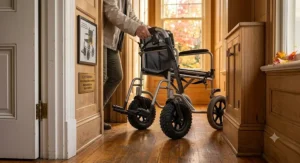
If you’ve ever hauled a wheelchair out of a trunk with one hand while steadying a parent with the other, you already know the real problem isn’t the person you’re caring for — it’s the equipment. A lightweight transit wheelchair for caregivers is a foldable, attendant-propelled chair built to be pushed rather than self-propelled, typically weighing under 14 kg (30 lbs) so one person can lift, fold, and load it without a second set of hands. That’s the textbook definition, but the lived version is messier: it’s 6 a.m. medical appointments, narrow pharmacy aisles, and a lower back that’s started complaining after eighteen months of daily transfers. Caregivers researching this topic in 2026 aren’t shopping for a medical device so much as shopping for their own spine’s future.

This guide skips the marketing copy and goes straight to what actually matters: real weight specs, real seat widths, honest pros and cons pulled from aggregated review sentiment, and a comparison of seven genuine products currently sold on Amazon.ca. We’ll also dig into the ergonomics research behind why pushing a wheelchair is harder on your body than most people assume, how attendant propelled mobility differs from self-propel chairs, and what to actually do about wheelchair back pain caregiver strain once it starts. Whether you’re comparing this year’s best caregiver wheelchair 2025 shortlist against what’s newly available for 2026, or starting your research from zero, you’ll leave this page knowing exactly which chair fits your situation.
Quick Comparison Table
| Product | Weight | Seat Width | Weight Capacity | Best For |
|---|---|---|---|---|
| Feather Transport | 5.9 kg (13 lbs) | 45.7 cm (18″) | 136 kg (300 lbs) | Lightest overall lift |
| Drive Medical Fly-Lite | 7.3 kg (16.2 lbs) | 48.3 cm (19″) | 136 kg (300 lbs) | Best all-rounder |
| Medline Ultralight | 6.7 kg (14.8 lbs) | 48.3 cm (19″) | 136 kg (300 lbs) | Best value |
| Karman S-Ergo 115TP | 10 kg (22 lbs) | 45.7 cm (18″) | 113 kg (250 lbs) | Ergonomic push handles |
| Carex Transport Chair | 11.3 kg (25 lbs) | 48.3 cm (19″) | 136 kg (300 lbs) | Widest retail availability |
| Vive Transport Wheelchair | 13.2 kg (29 lbs) | Extra-wide | 136 kg (300 lbs) | Comfort for longer sits |
| Vive Heavy Duty | 20.4 kg (45 lbs) | 50.8 cm (20″) | 181 kg (400 lbs) | Bariatric / larger users |
Looking at the spread above, the difference between the lightest chair (Feather, at 5.9 kg) and the heaviest (Vive Heavy Duty, at 20.4 kg) is roughly the weight of a full case of bottled water — which sounds trivial until you’re lifting it in and out of a hatchback every single day. Weight capacity tells a different story than lift weight: the two Vive models trade some portability for a wider seat and, in the Heavy Duty’s case, a much higher capacity, which matters more than grams saved if the user themselves is a larger-bodied adult. Budget-conscious caregivers should note that the lightest chairs (Feather, Medline) aren’t necessarily the cheapest — ultralight aluminum engineering tends to carry a premium over steel-framed models like the Carex.
💬 Just one click — help others make better buying decisions too!😊
Top 7 Lightweight Transit Wheelchairs for Caregivers: Expert Analysis
1. Feather Transport — the lightest transit chair sold today
At 5.9 kg (13 lbs), the Feather Transport is built around a single obsession: minimizing what the caregiver has to lift. The aluminum frame is engineered specifically to shed weight rather than pare down capacity, so it still carries a 136 kg (300 lb) rating on an 45.7 cm (18″) seat — numbers you’d normally expect from a chair twice as heavy. Based on the spec comparison, this is the chair for caregivers who travel frequently or who simply don’t have a second person to help wrangle equipment into a car; the trade-off is a narrower feature set, since you’re paying for weight reduction rather than padding or adjustability. Reviewers consistently note that the biggest surprise isn’t how light it feels sitting still, it’s how light it feels being folded one-handed while holding a door open. Aggregated feedback also flags the optional quick-release rear wheels as a genuine convenience rather than a gimmick — pulling the big wheels off before lifting shaves off even more perceived weight during car loading.
Pros:
- ✅ Lightest lift-weight of any chair in this roundup
- ✅ Quick-release wheels reduce lifting effort further
- ✅ Integrated caregiver hand brakes on the push handles
Cons:
- ❌ Narrower feature set than heavier competitors
- ❌ Premium engineering carries a higher price tag
Expect a premium price position, roughly in the C$700-C$950 range at the time of research — check current price, since Amazon listings shift often. For caregivers prioritizing their own back over their budget, the value case is straightforward: less weight lifted, less cumulative strain over years of use.

2. Drive Medical Fly-Lite — best all-rounder for daily caregiver use
The Fly-Lite has been a mainstay of the transport-chair category for years, and the reason is fairly simple: it hits 7.3 kg (16.2 lbs) without riggings while still offering a full 48.3 cm (19″) seat and 136 kg (300 lb) capacity, which is a genuinely hard combination to find. What most buyers overlook about this model is the deluxe back-release mechanism — the backrest folds down independently of the seat, which means the chair collapses into a slimmer profile than most competitors before you even remove the wheels. Height-adjustable, tool-free swing-away footrests make transfers noticeably easier for caregivers assisting someone with limited leg mobility, since there’s no fumbling with pins or screws mid-transfer. Aggregated review sentiment across multiple retailers is unusually consistent for a mobility product: buyers repeatedly mention smooth-rolling casters and dependable lockable rear brakes, with the recurring complaint being that the plaid nylon upholstery pattern isn’t to everyone’s taste.
Pros:
- ✅ Strong weight-to-capacity ratio for daily use
- ✅ Tool-free, height-adjustable swing-away footrests
- ✅ Backed by a limited lifetime frame warranty
Cons:
- ❌ Upholstery pattern choices are limited
- ❌ Fixed desk-length arms aren’t ideal for all transfers
Priced in the C$280-C$340 range at most Canadian retailers, this sits comfortably in the mid-range and is arguably the safest “default” pick if you don’t have a specialized need pulling you toward a lighter or wider option.
3. Medline Ultralight Transport Chair — best value under budget
Weighing in at 6.7 kg (14.8 lbs), the Medline Ultralight undercuts the Fly-Lite on weight while landing at a noticeably friendlier price point, which is exactly why it shows up so often on best caregiver wheelchair 2025 roundups and remains a strong pick heading into 2026. The 48.3 cm (19″) seat and 136 kg (300 lb) capacity match the pricier options in this list almost spec-for-spec — on paper this means you’re not sacrificing much by choosing the budget-friendlier chair, provided you don’t need the added comfort features of a premium model. The restaurant-style fixed armrests let the user pull directly up to a table or desk, a small but genuinely useful detail for caregivers managing mealtimes. Reviewers frequently mention the built-in backside storage pockets — a bottle holder, key ring, and phone pocket — as an unexpectedly practical feature for keeping essentials on hand during appointments.
Pros:
- ✅ Among the lightest chairs at this price point
- ✅ Built-in storage pockets for caregiver essentials
- ✅ Swing-away leg rests speed up transfers
Cons:
- ❌ Fixed armrests limit sideways transfer options
- ❌ Basic nylon upholstery shows wear faster than premium fabrics
At around C$220-C$310, this is the chair to recommend to a caregiver asking specifically where their money goes furthest without compromising on the weight that matters most day-to-day.
4. Karman Healthcare S-Ergo 115TP — best ergonomic push handles for caregiver comfort
This is the chair built for the caregiver’s body as much as the user’s. At 10 kg (22 lbs), it’s heavier than the ultralight options above, but the trade-off buys you a patented S-shaped seating frame plus ergonomically contoured push handles designed to reduce wrist and shoulder strain during long pushes. Here’s what to weigh: the 45.7 cm (18″) seat and flat-free polyurethane 35.6 cm (14″) rear wheels roll noticeably easier over uneven pavement than the smaller 20.3 cm (8″) wheels found on several competitors in this list, which directly reduces the pushing force a caregiver needs to generate. What the spec sheet won’t tell you, but reviewers note, is that the ergonomic handrim texture designed for self-propelling users also happens to make the caregiver’s grip on the push handles more secure in wet or gloved conditions. This chair earns its spot specifically because it’s engineered around the biomechanics of pushing, not just the comfort of sitting.
Pros:
- ✅ Ergonomically contoured, textured push handles
- ✅ Larger flat-free wheels roll easier over rough ground
- ✅ S-shaped frame reduces pressure-point risk for the user
Cons:
- ❌ Heavier lift-weight than ultralight competitors
- ❌ Lower weight capacity than most chairs on this list
Positioned as a premium option, expect a price in the C$500-C$680 range — a reasonable investment if daily pushing distance or terrain is your primary caregiver-strain concern.
5. Carex Transport Wheelchair (19″ Seat) — most widely available option
Carex is the brand most caregivers have already seen in a pharmacy aisle, and the 19-inch transport chair explains why: at 11.3 kg (25 lbs) with a steel frame, a 48.3 cm (19″) padded seat, and 136 kg (300 lb) capacity, it covers the basics competently without asking buyers to think too hard. Based on the spec comparison, the angled handlebars are a small but real upgrade over straight-bar competitors — they add shoulder room for the caregiver during pushing, which matters over a full day of appointments. The large 20.3 cm (8″) wheels and tight turning radius make it genuinely manageable in narrow hallways and elevators, a detail aggregated reviewers mention repeatedly when describing hospital and clinic use. A common complaint in user reviews is that footrest hardware occasionally arrives slightly misaligned and needs minor adjustment on setup — an annoyance rather than a dealbreaker, but worth knowing before you’re standing in a parking lot trying to assemble it.
Pros:
- ✅ Angled handlebars add caregiver shoulder room
- ✅ Tight turning radius for hallways and elevators
- ✅ Widely stocked, easy to find replacement parts
Cons:
- ❌ Steel frame is heavier than aluminum alternatives
- ❌ Footrest hardware sometimes needs on-arrival adjustment
At roughly C$200-C$280, it’s a dependable mid-tier pick, particularly for caregivers who value being able to walk into a local pharmacy or medical supply store for parts and support rather than relying purely on online service.

6. Vive Transport Wheelchair — best for longer sitting comfort
Where the previous chairs chase minimal weight, the Vive Transport Wheelchair chases comfort, and at 13.2 kg (29 lbs) it’s honest about that trade-off. The extra-wide, padded seat and armrests are genuinely noticeable upgrades for users who spend 30-plus minutes at a time in the chair rather than quick in-and-out trips. The larger 30.5 cm (12″) rear wheels smooth out bumps and small thresholds significantly better than the compact wheels found on lighter competitors, which reviewers consistently point to as the standout feature — “smoother ride” is the single most repeated phrase in aggregated feedback for this model. Locking hand brakes provide the caregiver with confident control on ramps and slight inclines, a detail worth weighing carefully if your routine involves parking-garage ramps or sloped driveways. The 300-lb capacity matches most of the field, but the actual lift-weight puts this squarely in the “comfort over portability” category.
Pros:
- ✅ Extra-wide padded seat and armrests
- ✅ Large 12-inch wheels smooth out bumps and thresholds
- ✅ Locking hand brakes aid control on inclines
Cons:
- ❌ Heavier to lift than most chairs in this roundup
- ❌ Bulkier folded footprint for storage
Priced around C$260-C$330, this is worth the extra kilograms if your loved one’s comfort during longer outings outweighs your own convenience during loading — a genuinely personal trade-off every caregiver has to weigh for themselves.
7. Vive Heavy Duty Wheelchair — best for bariatric and larger-frame users
Not every caregiver situation calls for the lightest possible chair, and the Vive Heavy Duty exists for exactly that reality: a reinforced steel frame supporting up to 181 kg (400 lbs) on a 50.8 cm (20″) seat, at 20.4 kg (45 lbs). Based on the spec comparison, this chair sacrifices the portability priorities of the rest of this list in exchange for genuinely higher capacity and a wider, more stable base — the 68.6 cm (27″) overall width still clears standard 76 cm (30″) doorways, but it’s a noticeably larger footprint than the ultralight options. The fire-resistant nylon upholstery and adjustable swing-away footrests match the feature set of the standard-capacity chairs, so caregivers aren’t sacrificing convenience features to get the added capacity. Reviewers who specifically needed a higher weight rating describe it as filling a gap that most “lightweight” marketing in this category simply ignores, since so many ultralight chairs top out around 300 lbs.
Pros:
- ✅ 400-lb weight capacity, well above most competitors
- ✅ Doorway-friendly width despite the wider seat
- ✅ Full feature parity with lighter, standard-capacity chairs
Cons:
- ❌ Heaviest chair in this roundup by a wide margin
- ❌ Not realistically a one-person lift into most trunks
Expect a price in the C$380-C$520 range. If the user’s body size is the actual constraint rather than the caregiver’s lifting capacity, this is the honest pick — no ultralight chair on this list will serve that need safely.
How to Choose an Easy to Push Wheelchair for Elderly Family Members
Finding an easy to push wheelchair for elderly parents or partners comes down to a short list of measurable factors rather than gut feeling, and working through them in order saves a lot of expensive trial and error.
- Confirm your own lifting capacity first. Before comparing chair weights, be honest about what you can comfortably lift into a trunk repeatedly — a 20 kg chair that seems fine in a showroom feels very different after the fortieth car-loading of the month.
- Match wheel size to your typical terrain. Chairs with 30 cm (12″) rear wheels roll over cracked sidewalks and thresholds with noticeably less pushing force than models with 20 cm (8″) wheels, based on the spec comparison across this roundup.
- Check seat width against the user’s actual measurement, not a generic size — a seat that’s too narrow causes pressure discomfort, while one that’s too wide reduces stability during pushing and turning.
- Prioritize hand brakes if you’ll ever face an incline. Ramps, driveways, and parking garages all demand a caregiver-operated brake, not just wheel locks meant for parking.
- Weigh capacity against the user’s actual weight, leaving meaningful headroom — a chair rated right at the user’s weight wears out faster and performs worse under real-world load.
- Factor in your vehicle’s trunk space, not just the chair’s folded width — an ultralight chair that won’t fit your specific hatchback defeats its own purpose.
- Decide how much you value comfort versus portability, since as this comparison shows, no single chair optimizes for both simultaneously.
Common Mistakes When Buying a Transit Wheelchair for Caregivers
The single most common mistake caregivers make is buying based on weight alone. A 6 kg chair that lacks decent wheels or hand brakes can end up harder to manage in practice than a 10 kg chair with better ergonomics, because pushing effort depends on far more than lift-weight. A second frequent misstep is skipping the seat-width measurement entirely and guessing based on the user’s general build — a seat that’s even 5 cm too narrow can cause real discomfort over a 30-minute outing. Caregivers also tend to underestimate how often they’ll need to fold and unfold the chair in awkward positions, like a cramped parking spot in the rain, and skip testing that motion before buying. Another overlooked factor is warranty coverage: several budget chairs carry only 90-day warranties on wheels and brakes specifically, the components most likely to wear out first under daily caregiver use. Finally, many buyers assume a higher price automatically means better ergonomics for the pusher, when in reality some of the most expensive chairs on the market optimize purely for the seated user’s comfort and do little to reduce the caregiver’s physical load.
Attendant Propelled Mobility: Transit Chairs vs Self-Propel Wheelchairs
Understanding attendant propelled mobility versus self-propulsion is the single most important distinction in this entire category, and it’s one a lot of first-time buyers get wrong. Self-propel wheelchairs have large 61 cm (24″) rear wheels with hand rims so the user can move the chair independently; transit chairs have small 20-30 cm (8-12″) wheels specifically because they’re designed to be pushed by a caregiver, which is what keeps them so much lighter and more compact. If your loved one has enough upper-body strength and wants independence, a self-propel chair is genuinely the better long-term choice — no transit chair in this roundup will let them move themselves around a room. But for caregivers whose loved one can’t reliably self-propel, or for situations where quick, compact transport matters more than independence (medical appointments, air travel, shopping trips), the transit chair category exists precisely because it solves a different problem entirely.
The trade-off is stark in practice: self-propel chairs typically weigh 40-50% more than the transit chairs in this roundup because of the larger wheel assemblies and reinforced hand rims, making them considerably harder for a single caregiver to lift and load. Conversely, transit chairs offer essentially zero independent mobility for the user — they are entirely dependent on someone else pushing, which is a meaningful lifestyle consideration for anyone who values autonomy. Caregivers managing a loved one whose mobility fluctuates day to day sometimes end up owning both types, using the transit chair for outings and appointments while keeping a self-propel chair at home.
Features That Actually Matter for Caregivers (And Ones That Don’t)
Marketing copy on wheelchair listings tends to bury the features that genuinely reduce caregiver strain under a pile of ones that mostly matter for showroom appeal. Wheel size and hand-brake quality matter enormously — they directly determine how much force you generate pushing on flat ground and how much control you have on a slope, which is the single biggest daily factor in whether your back and shoulders feel fine at the end of an outing. Swing-away, tool-free footrests matter too, since they speed up transfers and reduce the awkward bent-over positions that contribute to caregiver back strain during assisted transfers. On the other hand, upholstery pattern, cup holders, and cosmetic color options are almost entirely irrelevant to the caregiver’s physical experience, despite dominating a lot of product photography and listing copy. Seat cushioning thickness matters for the user’s comfort but has essentially no bearing on how hard the chair is to push — don’t let a plush-looking cushion distract from checking the wheel size and brake quality underneath it.

Ergonomic Push Handle Wheelchairs and Wheelchair Back Pain in Caregivers
Wheelchair back pain caregiver strain isn’t anecdotal — it’s been measured directly. Ohio State University researchers studying pushing biomechanics found that people tend to keep pushing well past the point their spine is under excessive compression, exceeding recommended safety limits by an average of 17 to 18 percent before deciding to stop, largely because there’s no built-in warning system the way there is with heavy lifting. A separate Canadian study out of Dalhousie University and Nova Scotia Health specifically examined caregiver pushing versus pulling forces on occupied wheelchairs in high-rolling-resistance conditions like grass or gravel, underscoring just how much surface type changes the physical demand on the person pushing.
This is exactly where ergonomic push handle wheelchair design earns its keep. Handles positioned at the correct height for the caregiver’s body, contoured grips that reduce wrist strain, and larger flat-free wheels that lower rolling resistance all measurably reduce the force a caregiver has to generate per push — which compounds significantly over months and years of daily use. The Karman S-Ergo 115TP in this roundup was specifically designed with this in mind, and it’s a legitimate reason to prioritize a heavier, pricier chair over an ultralight one if your daily pushing distance is significant. Occupational therapy guidance on caregiver body mechanics consistently recommends keeping the chair close to your body, maintaining an upright rather than hunched posture at the handles, and choosing equipment with well-designed grips over saving a kilogram or two of lift-weight — advice that’s easy to file away and forget under the pressure of a busy morning, but worth genuinely internalizing before strain becomes chronic.
Setting Up and Pushing Your Transit Chair Without Wrecking Your Back
Getting the setup right on day one prevents most of the strain problems caregivers develop over months of use. First, adjust the push handles or grips to a height where your elbows sit at roughly a 90-degree angle while standing upright — hunching over lower handles is one of the most common posture mistakes new caregivers make. Second, check tire pressure or wheel condition monthly; a wheel that’s even slightly underinflated or worn dramatically increases the force needed to push, turning a manageable chair into a genuinely difficult one within weeks. Third, practice the fold-and-unfold motion in a low-stakes setting at home before you need to do it quickly in a parking lot — most transit chairs fold in under 15 seconds once you know the exact sequence, but fumbling with an unfamiliar mechanism under time pressure is when back strain and dropped fingers happen. Fourth, when pushing on an incline, always engage the hand brakes rather than relying on your body weight to control speed; letting a loaded chair roll faster than a slow walking pace on any downhill grade puts real strain on your shoulders and wrists as you fight to slow it. Finally, in the first 30 days, watch for squeaking brakes or stiff folding mechanisms — catching a maintenance issue early is far easier than diagnosing it once it’s become a daily annoyance.
Real Caregiving Scenarios: Which Transit Chair Actually Fits?
Consider Maria, caring for her mother after a hip replacement, making two to three medical appointments a week using a compact sedan. Her mother weighs around 60 kg and can stand briefly for transfers but can’t walk distances. For Maria, the Feather Transport or Medline Ultralight makes the most sense — both are light enough for her to lift solo into her trunk, and her mother’s short outing durations mean the firmer, less-cushioned seat isn’t a comfort issue.
Now consider David, who cares for his father full-time and takes him on daily 45-minute walks around the neighborhood in addition to weekly outings. His father is around 95 kg and spends extended time in the chair. Here, the Vive Transport Wheelchair’s wider padded seat and larger wheels are worth the extra lift-weight, since comfort over longer durations and smoother rolling over cracked sidewalks matter more than shaving off a few kilograms.
Finally, consider Priya, a home care worker managing multiple clients across a single shift, including one client whose weight exceeds 130 kg. For her, the Vive Heavy Duty is the only realistic option on this list — no ultralight chair safely accommodates that capacity, and her professional context means she’s less focused on personally lifting the chair into her own vehicle and more focused on stability and safety during transfers between rooms.
Solving Transit Chair Caregiver Strain: Problems and Fixes
Transit chair caregiver strain tends to cluster around a handful of recurring, solvable problems. If pushing feels harder than it should, the fix is almost always wheel maintenance first — check for underinflation, debris caught in the caster housing, or worn bearings before assuming you need a different chair entirely. If your lower back aches specifically after loading the chair into your car, the fix is usually technique rather than equipment: bend at the knees rather than the waist, and consider whether quick-release wheels (like those on the Feather Transport) could reduce the lifted weight during that specific motion. If transfers themselves feel physically risky, check whether your footrests are genuinely tool-free and swing-away, since fighting with stiff or pinned footrests during a transfer is a common source of acute strain injuries. If the chair feels unstable on ramps or slight inclines, the issue is typically inadequate hand brakes rather than user error — this is a legitimate reason to upgrade rather than a skill you need to develop. And if you notice recurring wrist or shoulder soreness specifically during pushing rather than lifting, ergonomically contoured push handles genuinely do address that, rather than it being something to simply push through.
Long-Term Cost, Maintenance & Total Value
The purchase price is only the starting point for total cost of ownership on a transit wheelchair. Wheels and brakes are the components most likely to need replacement, typically after one to three years of regular caregiver use depending on terrain and frequency — budget an additional C$40-C$80 every couple of years for replacement casters or brake cables on daily-use chairs. Upholstery and cushions on budget models tend to show wear within 18-24 months of near-daily use, while premium aluminum-framed chairs generally hold their finish and stitching longer. Frame warranties matter enormously here: several chairs in this roundup, including the Drive Medical Fly-Lite and Karman S-Ergo 115TP, carry limited lifetime frame warranties, meaning the core structural investment is protected even if wear parts eventually need replacing. When you annualize the C$200-C$950 purchase price range across a realistic 3-5 year usable lifespan for most models, the actual cost per year of independent, dignified mobility for a loved one is genuinely modest compared to alternatives like recurring paid transport services or repeated short-term rentals.
Safety, CSA Standards & Funding Programs in Canada
Manual wheelchairs sold in Canada, including transit chairs, are generally tested against the international ISO 7176 series of standards covering static stability, brake effectiveness, and structural strength — look for manufacturers who explicitly reference compliance with these test methods in their documentation, since disclosure of this testing is itself part of the standard. Beyond the equipment itself, Canadian caregivers have real funding options worth investigating before paying full price. Ontario residents, for example, can apply through the Assistive Devices Program, which covers 75% of approved equipment costs for residents with long-term physical disabilities, rising to 100% for those receiving certain provincial assistance. Other provinces run parallel programs under different names and eligibility rules, and British Columbia’s health and disability supports page is a useful starting point for understanding how assistive devices are defined and funded provincially, drawing on guidance from Health Canada. Regardless of province, an occupational therapist’s assessment is typically the entry point for most funding applications, and it’s worth pursuing even if you expect to pay out of pocket, since a professional fitting assessment often catches sizing or feature mismatches before they become expensive mistakes.
Frequently Asked Questions
❓ What is the difference between a transit wheelchair and a regular wheelchair?
❓ How much should a lightweight transit wheelchair for caregivers weigh?
❓ Can one caregiver safely lift a transit wheelchair alone?
❓ Do transit wheelchairs fold to fit in small car trunks?
❓ Are transit wheelchairs covered by insurance or government programs in Canada?
Conclusion
Choosing among these seven chairs really comes down to answering one honest question: is your bigger constraint your own lifting capacity, or your loved one’s size and comfort needs? If it’s the former, the Feather Transport or Medline Ultralight will genuinely change how manageable your daily routine feels. If pushing distance and ergonomic strain are your bigger concern, the Karman S-Ergo 115TP’s contoured handles and larger wheels are worth the added weight. And if capacity is the real limiting factor, no amount of “ultralight” marketing changes the math — the Vive Heavy Duty is the honest choice. Whichever direction you land, remember that the goal here isn’t just solving today’s transport problem; it’s protecting your own back and shoulders well enough that you can keep showing up for someone else, appointment after appointment, for as long as they need you to.
✨ Don’t Miss These Exclusive Deals!
🔍 Take your caregiving routine to the next level with these carefully selected transit wheelchairs. Click on any highlighted item above to check current pricing and availability on Amazon.ca. The right chair won’t just help the person you love get where they’re going — it’ll help you keep doing this for the long haul.
Recommended for You
- Lightweight Transit Wheelchair: 7 Best Picks for Canada (2026)
- Manual Wheelchair Weight Comparison: 7 Top Picks for 2026 (Ranked)
- Best Wheelchair for Seniors in Canada 2026: 7 Expert-Reviewed Picks
Disclaimer: This article contains affiliate links. As an Amazon Associate, I earn from qualifying purchases. If you purchase products through these links, we may earn a small commission at no additional cost to you.
✨ Found this helpful? Share it with your friends! 💬🤗
