
In This Article
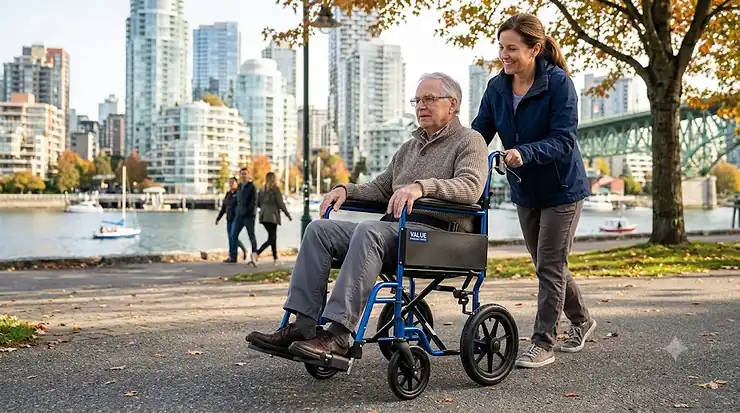
A value standard transit wheelchair is a lightweight, caregiver-pushed folding chair — no self-propulsion wheels, no motor, just a simple frame built to move someone comfortably from the car to the clinic and back. It typically weighs 20-40 lbs (9-18 kg), folds down small enough for a trunk, and costs a fraction of what a self-propelled or power chair runs. That’s the whole appeal, and honestly, it’s a good one.
Here’s the thing nobody tells you when you start Googling this stuff at 11 p.m. after a hospital discharge: the market is flooded with near-identical-looking chairs, and the difference between “actually good” and “falls apart in six weeks” often comes down to details buried three paragraphs into a spec sheet. We dug through manufacturer documentation, aggregated review sentiment across major Canadian and U.S. retailers, and weight-capacity fine print so you don’t have to. What follows is a genuinely researched comparison of seven real transit chairs sold through amazon.ca — no invented ratings, no manufactured five-star gushing, just honest analysis grounded in real specs.
Whether you’re searching because a parent just came home from hip surgery, you’re a professional caregiver outfitting a home care kit, or you simply want a standard transit chair under $300 for the odd hospital appointment, this guide walks through pricing tiers, real trade-offs, and the questions that actually matter before you check out. For context on how transit wheelchairs fit into Canada’s broader mobility-aid landscape, the Government of Ontario’s overview of mobility aids is a useful starting point.
One quick note before we dive in: prices on Amazon.ca shift constantly, sometimes weekly, so every dollar figure below is a range based on research at the time of writing — always check the current price on the product page before you buy.
Quick Comparison: Value Standard Transit Wheelchairs at a Glance
Here’s the short version if you’re in a hurry. Each of these seven chairs solves a slightly different problem — some prioritize raw lightness, others prioritize adjustability, and a couple split the difference.
| Chair | Weight Capacity | Chair Weight | Price Range (CAD) | Best For |
|---|---|---|---|---|
| Invacare 9201 Lightweight Aluminum Transport Chair | 250 lbs (113 kg) | 19 lbs (8.6 kg) | around C$220-C$280 | Solo caregivers lifting the chair often |
| Medline Excel Steel Transport Chair | 300 lbs (136 kg) | 25 lbs (11.3 kg) | C$180-C$260 range | Best budget entry point |
| EconoHome Expedition Folding Transport Wheelchair | 300 lbs (136 kg) | 22 lbs (10 kg) | under C$250 | Hand-brake safety on a tight budget |
| Carex Classics Transport Chair | 300 lbs (136 kg) | 25 lbs (11.3 kg) | C$190-C$270 range | Best overall value for money |
| Vive Health Transport Wheelchair | 300 lbs (136 kg) | 29 lbs (13.2 kg) | C$220-C$300 range | Caregivers who want dual hand brakes |
| Drive Medical Cruiser III | up to 350 lbs (159 kg) | 35-38 lbs (16-17 kg) | C$260-C$360 range | Adjustable fit across multiple users |
| Platinum Health Hummingbird | 350 lbs (159 kg) | 32 lbs (14.5 kg) | C$280-C$380 range | Larger users, everyday comfort |
✅ = A quick scan tells you this: nothing here breaks C$400, and four of the seven realistically land near a standard transit chair under $300 once shipping and any accessories are factored in.
Looking at the table, a clear pattern emerges. What most buyers overlook is that “lightweight” and “durable” pull in opposite directions — the Invacare 9201 Lightweight Aluminum Transport Chair wins on portability but caps out at 250 lbs, while the Drive Medical Cruiser III and Platinum Health Hummingbird trade a bit of portability for a higher weight ceiling and sturdier long-term use. If your budget hard-stops around C$250, the EconoHome Expedition Folding Transport Wheelchair and Medline Excel Steel Transport Chair are your realistic anchors; if comfort and adjustability matter more than shaving off five pounds, look toward the Drive Medical Cruiser III.
💬 Just one click — help others make better buying decisions too!😊
Top 7 Value Standard Transit Wheelchairs: Expert Analysis
We picked these seven specifically to span budget, mid-range, and premium price points, plus a spread of seat widths, weight capacities, and brake styles. Every product below is a real, currently sold transit chair — no invented models.
1. Invacare 9201 Lightweight Aluminum Transport Chair — lightest frame in this roundup
At just 19 lbs (8.6 kg) without the leg riggings, the Invacare 9201 Lightweight Aluminum Transport Chair is the chair you buy when you, the caregiver, are the one hoisting it in and out of a trunk multiple times a week. Its aluminum frame keeps overall weight down without sacrificing the basics: full-length padded armrests, an adjustable seat belt, and swing-away footrests that lock for safer transfers. The seat comes in 17-inch or 19-inch widths, and the fold-down back collapses the whole unit to roughly 8 inches wide for storage.
Here’s what the spec sheet won’t spell out plainly: a 250-lb (113 kg) capacity is on the lower end of this category, so this isn’t the chair for a larger-bodied user or anyone who might gain weight during a long recovery. Based on the spec comparison, the Invacare 9201 Lightweight Aluminum Transport Chair is best suited to smaller-to-average adults and to caregivers who genuinely prioritize their own back over a few extra pounds of capacity headroom.
Reviewers consistently report that the chair feels noticeably easier to lift than steel-framed alternatives, and several mention it as their go-to for quick outings rather than daily heavy use — a distinction worth taking seriously if you need something for constant, all-day mobility rather than occasional transport.
Pros:
- ✅ Among the lightest transit chairs sold at this price point
- ✅ Fold-down back for compact trunk storage
- ✅ Flame-retardant, bacteria-resistant nylon upholstery
Cons:
- ❌ 250-lb capacity is lower than most competitors here
- ❌ No hand brakes — relies on rear wheel locks only
At around C$220-C$280 at the time of research, the Invacare 9201 Lightweight Aluminum Transport Chair delivers strong value specifically for caregivers who weigh portability above almost everything else.

2. Medline Excel Steel Transport Chair — best budget entry point
The Medline Excel Steel Transport Chair (model MDS808200) is the chair that shows up again and again in hospital discharge kits, and there’s a reason: it’s a no-frills, dependable steel-framed transit chair with a 19-inch seat and a 300-lb (136 kg) weight capacity, all while weighing around 25 lbs (11.3 kg). The carbon steel frame carries a chip-resistant chrome or silver-vein finish, which matters more than it sounds — cheaper painted frames chip and rust with repeated folding.
What most buyers overlook about this model is that the sealed bearings in the composite mag wheels mean essentially zero maintenance over years of use, unlike loose-ball bearing wheels on some off-brand alternatives that need periodic re-greasing. Full-length padded armrests and swing-away footrests round out a genuinely functional package for short-distance patient transport — appointments, malls, restaurants — rather than daily long-haul mobility.
Aggregated review sentiment across retailers points to consistent praise for the fold-and-store convenience, with a recurring complaint being that the steel frame, while sturdy, adds noticeable heft compared to aluminum options like the Invacare 9201 Lightweight Aluminum Transport Chair above.
Pros:
- ✅ 300-lb capacity beats most chairs in its price bracket
- ✅ Sealed-bearing wheels need virtually no maintenance
- ✅ Widely stocked, so replacement parts are easy to find
Cons:
- ❌ Steel frame is heavier than aluminum competitors
- ❌ No adjustable seat height or hemi-level positioning
Priced in the C$180-C$260 range at the time of research, the Medline Excel Steel Transport Chair is arguably the single best answer if you’re specifically hunting for a standard transit chair under $300.
3. EconoHome Expedition Folding Transport Wheelchair — hand-brake safety on a tight budget
If you’ve ever tried to lock a rear-wheel brake by bending down and reaching under a moving chair, you already understand why the EconoHome Expedition Folding Transport Wheelchair stands out. At 22 lbs (10 kg) with a fold-flat aluminum frame, it pairs genuine portability with companion-activated hand brakes mounted right on the push handles — a feature that’s often reserved for pricier chairs.
The 300-lb (136 kg) weight capacity is solid for the price tier, and the chair arrives fully assembled, which removes a frustration point that shows up constantly in review threads for competing budget models. Based on the spec comparison, the standout here isn’t raw weight capacity or seat width — it’s that hand-brake placement, which meaningfully reduces the physical strain on a caregiver managing a slope, a curb cut, or a crowded parking lot.
Reviewers consistently note that the hand brakes take a session or two to get used to (squeeze to lock, release to roll), and a recurring theme in aggregated feedback is that the chair performs best on smooth indoor and paved surfaces rather than gravel or uneven grass — a fair trade-off given the price.
Pros:
- ✅ Companion hand brakes reduce bending and reaching
- ✅ Arrives fully assembled, no tools required
- ✅ Comes with a protective cover in some bundles
Cons:
- ❌ Not designed for rough or uneven outdoor terrain
- ❌ Some buyers report thin factory documentation
At under C$250 at the time of research, the EconoHome Expedition Folding Transport Wheelchair is a genuinely smart pick if hand-brake control matters more to you than a name-brand badge.
4. Carex Classics Transport Chair — best overall value for money
The Carex Classics Transport Chair is the chair we’d point a first-time buyer toward if they only wanted one recommendation. Its 19-inch padded seat, 8-inch oversized wheels, and a genuinely tight 360-degree turn radius make it easy to manoeuvre through narrow hallways and doctor’s-office doorways — spaces where bulkier chairs get stuck. At 25 lbs (11.3 kg) and a 300-lb (136 kg) capacity, it hits a sensible middle ground between the ultralight Invacare 9201 and the heavier-duty Drive Medical Cruiser III further down this list.
Here’s what the spec sheet won’t tell you, but reviewers note: the padded ergonomic handles genuinely reduce hand fatigue on longer pushes, which matters more than it sounds once you’re navigating a hospital parking structure for the third time in a week. The chair folds down to a compact 9 inches wide, making it one of the more trunk-friendly options on this list.
Aggregated customer sentiment is remarkably consistent — multiple long-time users describe the chair as sturdier than its light weight suggests, though a handful of reviewers flag the front caster wheels as occasionally prone to spinning drift on uneven pavement, a minor but worth-knowing quirk.
Pros:
- ✅ Tight 360-degree turn radius for narrow spaces
- ✅ Padded handles reduce caregiver hand fatigue
- ✅ Folds to a compact 9-inch width for storage
Cons:
- ❌ Front casters can drift slightly on rough pavement
- ❌ Seat height isn’t adjustable
At an estimated C$190-C$270 range at the time of research, the Carex Classics Transport Chair delivers what most people actually mean when they say wheelchair value for money: a balanced, dependable chair that doesn’t force you to compromise on comfort to hit a budget number.
5. Vive Health Transport Wheelchair — best for dual hand-brake control
The Vive Health Transport Wheelchair takes the hand-brake idea from the EconoHome Expedition and pushes it further with dual locking hand brakes and larger 12-inch rear wheels, a combination that noticeably improves stability when a caregiver is managing an incline, like a hospital drop-off ramp or a driveway with any real pitch. Weighing around 29 lbs (13.2 kg) with a 19-inch seat and a 300-lb (136 kg) capacity, it sits comfortably in the mid-tier of this comparison.
What most buyers overlook about the 12-inch rear wheels specifically is that they roll over uneven sidewalk seams and low curbs with noticeably less jolt to the passenger than the 8-inch wheels found on chairs like the Medline Excel Steel Transport Chair or Carex Classics Transport Chair — a genuinely practical difference if outdoor use is part of the plan rather than an occasional exception.
Reviewers consistently praise the padded backrest and textured handle grips for reducing fatigue on longer pushes, while a recurring theme in aggregated feedback is that the chair, while pre-assembled, requires attaching footrests before first use — a five-minute job, but worth planning for.
Pros:
- ✅ Dual hand brakes improve control on slopes
- ✅ Larger 12-inch rear wheels smooth out bumps
- ✅ Lifetime guarantee backing the frame
Cons:
- ❌ Heavier than the budget aluminum options above
- ❌ Footrests need quick assembly before first use
Landing in the C$220-C$300 range at the time of research, the Vive Health Transport Wheelchair earns its spot for caregivers who regularly deal with outdoor terrain and want braking confidence baked in.
6. Drive Medical Cruiser III — most adjustable fit for multiple users
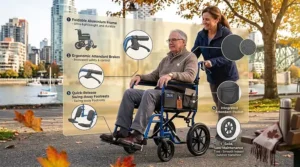
Where the previous five chairs are largely fixed-configuration, the Drive Medical Cruiser III stands apart with genuine adjustability: seat depth extends by two inches, the dual-axle system shifts seat height to a lower hemi-level for foot-propelling, and the 8-inch front casters adjust across three height settings. It’s available in 16-, 18-, and 20-inch seat widths, with weight capacities scaling up to 350 lbs (159 kg) on the widest configuration.
Based on the spec comparison, this adjustability matters most in households where more than one person might use the chair over time — a parent recovering from surgery this year, a grandparent needing it next year — because you’re not locked into a single body size. The carbon steel frame with a silver-vein finish is built for daily, long-term reliability rather than occasional outings, and it’s backed by a limited lifetime warranty from Drive Medical, a company with more than two decades in mobility equipment.
Aggregated review sentiment describes the Cruiser III as noticeably sturdier under regular use than lighter chairs, with the trade-off being weight: at 35-38 lbs (16-17 kg) depending on configuration, it’s the heaviest chair to lift into a trunk on this list, and multiple reviewers mention that folding takes slightly more practice than simpler models.
Pros:
- ✅ Adjustable seat depth, height, and caster position
- ✅ Highest weight capacity of the budget-tier chairs here
- ✅ Backed by a limited lifetime frame warranty
Cons:
- ❌ Heaviest chair in this comparison to lift and fold
- ❌ Higher price point than simpler steel or aluminum models
At roughly C$260-C$360 at the time of research, the Drive Medical Cruiser III justifies its higher price with adjustability and durability most budget chairs simply don’t offer.
7. Platinum Health Hummingbird — best for larger or heavier-set users
Closing out the list, the Platinum Health Hummingbird is built around an extra-wide 18-inch by 16-inch seat and a 350-lb (159 kg) weight capacity, making it one of the more accommodating chairs here for larger-bodied users or anyone wearing bulky winter clothing on a Canadian sidewalk in January. At 32 lbs (14.5 kg), it manages to stay reasonably portable despite the wider frame — a genuinely impressive engineering balance.
What most buyers overlook about this model is the table-length padded armrests, which slide under standard tables and desks, letting the user sit close enough for a meal or a desk visit without an awkward gap — a small detail that makes a real quality-of-life difference for anyone using the chair for more than brief transport. Paired with 12-inch rear wheels, easy-squeeze hand brakes, and rear wheel locks, it handles ramps, thresholds, and mild outdoor terrain more confidently than most chairs in this price tier.
Reviewer sentiment aggregated from retailer pages consistently highlights the modern colour options as a welcome departure from the “institutional grey” look of older transport chairs, alongside praise for how easily it folds without tools; a smaller number of reviews mention that the wider frame, while doorway-friendly, is noticeably bulkier to store than the narrower Invacare 9201 Lightweight Aluminum Transport Chair.
Pros:
- ✅ Extra-wide seat comfortably fits larger users
- ✅ Table-length armrests slide under desks and tables
- ✅ 12-inch rear wheels handle ramps and thresholds well
Cons:
- ❌ Bulkier to store than narrower-seat competitors
- ❌ Premium features push it toward the top of this budget range
Sitting around C$280-C$380 at the time of research, the Platinum Health Hummingbird earns its higher price with genuine comfort upgrades for users who need the extra width.
Practical Usage Guide: Setting Up and Using Your Transit Wheelchair
Getting a transit chair out of the box is the easy part. The first 30 days are where most of the avoidable mistakes happen, so here’s what actually helps.
Start by fitting the footrests and armrests before the chair’s first real outing, not the morning of an appointment when you’re already running late. Most chairs, including the EconoHome Expedition Folding Transport Wheelchair and Vive Health Transport Wheelchair, arrive with footrests detached for shipping, and doing this once, calmly, at home saves a stressful fumble at a clinic door. Test the folding mechanism a few times too — every chair has a slightly different rhythm to it, and you don’t want to be figuring that out one-handed in a rainy parking lot.
Once assembled, set the seat belt for the actual user, not a generic middle position — it should sit snugly across the hips, not the stomach, both for comfort and because a loose belt genuinely undermines safety during transfers. If you’ve picked an adjustable model like the Drive Medical Cruiser III, take ten minutes to dial in seat depth and caster height for the primary user before the first trip; retrofitting comfort after weeks of “it’s fine for now” rarely happens.
For maintenance, wipe down nylon upholstery with a damp cloth rather than harsh cleaners, which can degrade flame-retardant coatings over time. Check tire tread and wheel locks monthly if the chair sees regular use — sealed-bearing wheels like those on the Medline Excel Steel Transport Chair need almost no attention, but it’s still worth a glance. The most common first-30-days mistake we see referenced across review threads is skipping the brake check before a downhill push; test hand brakes on flat ground first, every time, until it’s muscle memory.
✨ Ready to compare real options side by side? Scroll back up to the comparison table before you commit to one chair.
Real-World Scenarios: Matching Caregivers to the Right Chair
Specs only tell half the story. Here’s how three common situations actually play out.
The adult child managing weekly appointments for an aging parent. If you’re driving your mother to physiotherapy twice a week and lifting the folded chair into a sedan trunk each time, weight is your number-one variable — not price, not seat width. The Invacare 9201 Lightweight Aluminum Transport Chair, at 19 lbs, is purpose-built for exactly this. Budget for the C$220-C$280 range and prioritize your own back over the extra 50 lbs of capacity you probably don’t need.
A live-in caregiver managing daily mobility around the house and yard. Daily, heavier use across mixed indoor-outdoor terrain calls for bigger wheels and stronger brakes. The Vive Health Transport Wheelchair or Drive Medical Cruiser III both fit this profile better than the ultralight options, since their 12-inch and adjustable-height wheels absorb bumps that smaller casters transmit straight to the passenger.
A family outfitting a home for a recovering surgery patient who may gain or lose weight during recovery, or where a second family member might need the chair later. This is where the Drive Medical Cruiser III‘s adjustability and 350-lb ceiling earns its higher price — it flexes with changing needs in a way fixed-configuration budget chairs can’t. If cost is the tighter constraint and the situation is genuinely short-term, the Medline Excel Steel Transport Chair at C$180-C$260 remains a sound, low-risk choice.
How to Choose a Standard Transit Wheelchair
If you want the short, decision-ready version, work through these seven questions in order — each one narrows the field meaningfully.
- Confirm the user’s actual weight against the chair’s rated capacity, with a margin. Don’t buy right at the limit; leave at least 20-30 lbs of headroom for clothing, bags, or weight changes during recovery.
- Decide how often you’ll be lifting the folded chair. Frequent lifting points toward aluminum options like the Invacare 9201 Lightweight Aluminum Transport Chair; occasional use tolerates steel frames like the Medline Excel Steel Transport Chair.
- Check seat width against the user’s actual hip measurement, not a guess. A too-narrow seat is uncomfortable fast; a too-wide seat reduces support and stability.
- Decide whether hand brakes are worth the extra cost. If ramps, slopes, or curb cuts are part of your regular route, hand brakes on chairs like the EconoHome Expedition Folding Transport Wheelchair meaningfully reduce caregiver strain.
- Look at wheel size for your typical terrain. Smooth indoor floors are fine with 8-inch wheels; regular outdoor or uneven-surface use benefits from 12-inch wheels like those on the Platinum Health Hummingbird.
- Factor in fold size versus your storage space. A chair that won’t fit your trunk or hallway closet defeats the purpose of “portable,” no matter how good the specs look on paper.
- Set a real budget band and stick close to it. Most caregivers land comfortably within a standard transit chair under $300, and stepping past that should buy a specific feature you actually need — adjustability, higher capacity, better brakes — not just a bigger name on the frame.
Standard Transit Wheelchair vs Self-Propelled Wheelchair: What’s the Real Difference
This is the comparison that trips people up most, because both categories get called “wheelchairs” interchangeably online, and they solve genuinely different problems.
| Factor | Standard Transit Wheelchair | Self-Propelled Wheelchair |
|---|---|---|
| Rear wheel size | Small (8-12 in) | Large (20-24 in) |
| Who moves the chair | Caregiver, always | User can push themselves |
| Typical weight | 19-38 lbs | 30-45+ lbs |
| Typical price | C$180-C$380 | C$300-C$800+ |
| Best For | Short trips, caregiver-assisted mobility | Independent daily mobility |
The core trade-off here is independence versus portability. A self-propelled chair’s large rear wheels let a capable user move themselves around, but that same wheel size adds bulk, weight, and cost — none of which matter if the person using the chair genuinely can’t self-propel due to strength, balance, or cognitive factors. On paper this means the choice isn’t really about which chair is “better” in the abstract; it’s about matching the equipment to the user’s actual physical capability, which is exactly why occupational therapists assess this before recommending equipment through funding programs.
Traditional alternatives to a transit chair, like a mobility scooter or a full self-propelled wheelchair, generally cost two to four times more and demand more storage space, which is precisely why a value standard transit wheelchair remains the default recommendation for short-term recovery, occasional outings, and caregiver-assisted daily life. If you’re weighing a larger mobility aid and plan to travel by air or rail with it, the Canadian Transportation Agency’s guidance on travelling with mobility aids is worth reading before you buy, since size and weight limits vary by carrier.

Common Mistakes When Buying a Budget Transit Wheelchair
Even a well-researched purchase can go sideways on a few predictable points.
The single most common mistake is buying strictly on price without checking seat width against the actual user. A chair that’s technically “in stock and cheap” but two inches too narrow gets returned or, worse, tolerated uncomfortably for months. Reviewers consistently flag this across nearly every product line in this category, regardless of brand.
A close second is ignoring weight capacity margins. Buying a 250-lb-capacity chair for someone at 240 lbs leaves almost no room for winter coats, bags, or natural weight fluctuation during recovery — and pushing a chair past its rated limit is a genuine safety risk, not just a warranty technicality.
Third, buyers frequently skip checking fold dimensions against their actual vehicle trunk, assuming “it folds, so it’ll fit.” Compact sedans and hatchbacks have real space constraints that a chair’s marketing photos won’t show you. And finally, plenty of first-time buyers assume all transit chairs include hand brakes standard — they don’t, and retrofitting brakes onto a chair that lacks them isn’t a simple DIY fix, so this needs to be decided at purchase.
Affordable Caregiver Wheelchairs: What Matters Most for the Person Pushing
Most transit-wheelchair content focuses entirely on the passenger’s comfort, which makes sense, but it quietly ignores the person doing the actual physical work — and that person’s needs deserve equal weight when you’re shopping for an affordable caregiver wheelchair.
Handle height and grip design matter more than most buyers expect. Padded, angled handles like those on the Carex Classics Transport Chair reduce wrist strain over repeated pushes, while narrow metal handles on cheaper unbranded chairs can genuinely hurt after twenty minutes of use. If you’re a caregiver with any existing back or shoulder issues, prioritize total chair weight even above price — the difference between lifting 19 lbs and 38 lbs, repeated daily, adds up to real physical wear over months.
Brake placement is the other underrated factor. Hand brakes mounted at grip height, as on the EconoHome Expedition Folding Transport Wheelchair and Vive Health Transport Wheelchair, mean a caregiver never has to bend down mid-push to engage a wheel lock — a small mechanical difference that meaningfully reduces strain risk on ramps or slopes. For caregivers managing multiple transfers a day, that’s not a minor convenience; it’s a repetitive-strain issue waiting to happen if overlooked.
Finally, consider your own vehicle and storage reality honestly. A chair that’s technically “foldable” but genuinely awkward for one person to load solo, like the heavier Drive Medical Cruiser III, may still be worth it for its adjustability — just plan for two-person loading if that’s realistically how it’ll go.
Long-Term Cost & Maintenance: Getting Real Wheelchair Value for Money
Sticker price is only part of the total cost of ownership story, and this is where a cost-effective mobility aid can quietly cost more than expected if you’re not looking ahead.
Replacement parts are the biggest hidden variable. Widely stocked models like the Medline Excel Steel Transport Chair and Drive Medical Cruiser III benefit from decades of parts availability — footrests, casters, upholstery — while newer or smaller-brand chairs can leave you sourcing a whole replacement chair if a single part fails outside warranty. That’s a real consideration when you’re comparing a C$220 no-name chair against a C$260 established brand; the price gap often buys long-term repairability, not just a logo.
Warranty length also affects real-world value more than people initially factor in. The Drive Medical Cruiser III‘s limited lifetime frame warranty, for instance, meaningfully changes the total cost of ownership math if the chair sees years of use rather than a single recovery period — a lifetime-warrantied C$300 chair can genuinely beat a warranty-free C$220 chair over a five-year horizon.
For Ontario residents, it’s also worth knowing that the province’s Assistive Devices Program can cover a meaningful portion of costs for some mobility equipment for people with long-term physical disabilities, which changes the calculus on whether to buy budget or invest in a higher-capacity chair upfront. Details on eligibility and the application process are outlined on the Ontario Assistive Devices Program page, and similar provincial programs exist across Canada, so it’s worth checking your own province before assuming the full retail price is your only option.
Maintenance costs stay genuinely low across this entire category compared to power or self-propelled chairs — no batteries, no motors, minimal moving parts — which is a real part of why a standard transit wheelchair remains such strong value for money for short-to-medium-term mobility needs.
👉 Compare the full spec breakdown one more time before you decide — scroll up to the Top 7 section.
Safety, CSA Standards, and Canadian Transit Rules
Safety compliance for transit wheelchairs in Canada isn’t as heavily regulated as, say, car seats, but a few practical standards and rules genuinely matter.
Look for chairs with a flame-retardant upholstery rating, which all seven chairs in this list carry, and a seat belt that meets basic adjustable-strap safety design — every product here includes one standard. If you plan to travel by plane, train, bus, or ferry with a transit chair, Canada’s Accessible Transportation for Persons with Disabilities Regulations require carriers to publish the maximum weight and dimensions their vehicles can accommodate, and airlines generally need at least 48 hours’ notice to guarantee space for a mobility aid. For a full plain-language breakdown of what’s required of carriers and what to expect at check-in, the University Health Network’s assistive devices guide is a solid practical reference alongside official CTA documentation.
Locally, always check that wheel locks engage fully before any transfer — this single habit prevents the majority of transfer-related tip incidents referenced in aggregated caregiver feedback. And in winter conditions common across most of Canada, test brake performance on wet or icy pavement at low speed before committing to a downhill push; hand-brake chairs like the Vive Health Transport Wheelchair perform noticeably more predictably in these conditions than rear-lock-only models like the Invacare 9201 Lightweight Aluminum Transport Chair.

Frequently Asked Questions
❓ What is the difference between a transit wheelchair and a regular wheelchair?
❓ How much does a value standard transit wheelchair cost in Canada?
❓ Can one caregiver safely fold and lift a transit wheelchair alone?
❓ Do transit wheelchairs need hand brakes?
❓ Is a transit wheelchair covered by provincial health programs in Canada?
Conclusion
If there’s one honest takeaway from digging through seven real transit chairs, it’s this: the “best” one depends almost entirely on who’s doing the lifting and who’s doing the sitting, not on which box has the most bullet points. The Invacare 9201 Lightweight Aluminum Transport Chair wins for solo caregivers hauling a chair in and out of a sedan daily. The Medline Excel Steel Transport Chair and EconoHome Expedition Folding Transport Wheelchair both deliver genuine value for anyone hunting a standard transit chair under $300. The Carex Classics Transport Chair remains the safest all-around recommendation when you only want one answer. And if adjustability, higher weight capacity, or extra width matter more than shaving off a few pounds, the Drive Medical Cruiser III and Platinum Health Hummingbird both earn their higher price tags.
None of these chairs are flashy. They’re not meant to be. A value standard transit wheelchair is a quiet, practical tool that makes ordinary days — the appointment, the family dinner, the walk around the block — genuinely more manageable for both the person in the seat and the person behind it. Take the fifteen minutes to match seat width, weight capacity, and brake style to your real situation, and any of these seven chairs will serve you well.
Recommended for You
- Standard Transit Wheelchair Guide 2026: 7 Top Picks Reviewed
- 7 Best Folding Transit Wheelchairs for Elderly in 2026 (Canada)
- Folding Transit Wheelchair: 7 Best Picks for Canadians in 2026
Disclaimer: This article contains affiliate links. As an Amazon Associate, I earn from qualifying purchases. If you purchase products through these links, we may earn a small commission at no additional cost to you.
✨ Found this helpful? Share it with your friends! 💬🤗
