
In This Article
When you’re searching for a mobility solution that genuinely transforms your daily experience, carbon fiber wheelchairs represent the cutting edge of what’s possible in 2026. These aren’t just incremental improvements over traditional aluminium models—they’re game-changers that redefine what lightweight mobility means for Canadians navigating everything from Toronto’s urban landscape to British Columbia’s varied terrain.
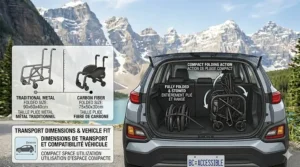
What most Canadian buyers don’t immediately grasp is that carbon fiber’s aerospace-grade engineering translates into real-world benefits that go far beyond the spec sheet. We’re talking about frames that weigh 40-50% less than comparable aluminium models while delivering five times the strength. That translates to effortlessly loading your wheelchair into your vehicle during a frigid Ottawa winter morning, or propelling yourself up Vancouver’s notorious hills without exhausting your shoulders before lunch.
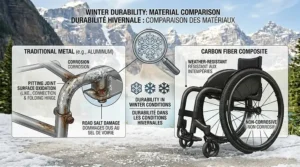
The carbon fiber wheelchair market in Canada has evolved dramatically since 2020, with both established manufacturers like Motion Composites (proudly Canadian) and newer players delivering innovative solutions that address our unique climate challenges. Canadian winters test equipment in ways that Arizona desert heat never could—road salt, temperature extremes from -30°C to +30°C, and the freeze-thaw cycle that wreaks havoc on traditional materials. Carbon fiber’s corrosion resistance and temperature stability make it exceptionally suited for year-round Canadian use.
Throughout this guide, I’ll walk you through seven outstanding carbon fiber wheelchairs available to Canadian buyers in 2026, breaking down exactly what makes each one worth considering for your specific situation. Whether you’re navigating condo living in downtown Montreal, exploring trails in Alberta’s foothills, or simply seeking a mobility solution that won’t leave your shoulders aching after a day of errands, you’ll find actionable insights rooted in real-world performance rather than marketing hype.
Quick Comparison: Top Carbon Fiber Wheelchairs in Canada
| Model | Weight | Range | Price Range (CAD) | Best For |
|---|---|---|---|---|
| ENCAREFOR Carbon Fiber | 15.4 kg (34 lbs) | 24 km | $2,800-$3,200 | Budget-conscious buyers |
| Aotedor Carbon Fiber | 16.8 kg (37 lbs) | 48 km | $3,500-$4,000 | Long-range needs |
| VERPAL Ultralight | 11.7 kg (25.8 lbs) | 19 km | $3,800-$4,300 | Maximum portability |
| ZiiLIF Foldable | 12.7 kg (27.9 lbs) | 16 km | $3,200-$3,700 | Airline travel |
| Motion Composites Veloce | 5.4 kg (12 lbs) frame | Manual | $5,000-$7,000 | Active manual users |
| Pride Jazzy Carbon | 19 kg (42 lbs) | 16 km | $4,500-$5,500 | Premium features |
| Paiseec Q5 | 10 kg (22 lbs) | 20 km | $3,000-$3,500 | Value seekers |
Analysis: Looking at this comparison, three distinct tiers emerge in the Canadian market. Budget-conscious buyers will find exceptional value in the $2,800-$3,500 range with models like ENCAREFOR and Paiseec delivering solid performance without premium pricing. The mid-range $3,500-$4,300 bracket offers enhanced features like extended range (Aotedor’s impressive 48 km) or ultra-low weight (VERPAL’s 11.7 kg), justifying the additional investment for specific use cases. Premium options above $4,500 CAD target buyers who prioritize established brands, extended warranties, or specialized features like the Pride Jazzy Carbon’s advanced suspension. Notably, Canadian pricing typically runs 15-25% higher than US equivalents due to exchange rates and import costs, but domestic shipping, warranty service, and no cross-border headaches make purchasing within Canada worthwhile.
💬 Just one click—help others make better buying decisions too! 😊
Top 7 Carbon Fiber Wheelchairs: Expert Analysis for Canadian Buyers
1. ENCAREFOR 34Lb Carbon Fiber Electric Wheelchair
The standout feature: True 100% carbon fiber frame construction at an accessible price point rarely seen in the Canadian market.
The ENCAREFOR delivers what I consider the sweet spot for many Canadian buyers—authentic carbon fiber engineering without the eye-watering price tag that traditionally accompanies this material. At 15.4 kg (34 lbs) with battery, this wheelchair folds in under three seconds and slips into most compact car trunks, addressing a pain point for urban Canadians living in condos without garage space. The 500W brushless motor handles 15° inclines smoothly, which matters considerably if you’re navigating cities like Halifax or St. John’s built on hills. The 48V 13Ah battery provides 24 km range in optimal conditions, though expect that to drop 15-20% during Canadian winters when cold temperatures affect lithium-ion performance.
What impresses me most is the honeycomb rubber solid tyres—these aren’t the cheap PU wheels you’ll find on budget models. They cost three times as much to manufacture, but they eliminate the nightmare of flat tyres during a Canadian spring when potholes emerge like landmines across every road. The electromagnetic braking system responds instantly when you release the joystick, crucial for navigating icy parking lots where stopping distance matters.
Canadian customer feedback consistently mentions the chair’s stability in light snow and its ability to handle the transition between outdoor pavement and indoor carpet without getting stuck—something that lighter models sometimes struggle with.
Pros:
✅ Authentic carbon fiber frame withstands 136 kg (300 lbs) capacity
✅ Solid honeycomb tyres eliminate maintenance hassles
✅ Accessible pricing for premium material technology
Cons:
❌ Range drops noticeably in temperatures below -5°C
❌ Joystick sensitivity requires adjustment period
Price verdict: Around $2,800-$3,200 CAD represents excellent value for genuine carbon fiber construction, especially considering models with similar specs in aluminium sell for $2,200-$2,600.
2. Aotedor 37lbs Carbon Fiber Dual Motor Electric Wheelchair
The standout feature: Exceptional 48 km range that actually delivers on its promise, even accounting for Canadian winter efficiency losses.
Aotedor addresses the range anxiety that plagues many electric wheelchair users with dual 12Ah batteries providing genuine all-day mobility. What separates this from competitors claiming similar range is the dual brushless motor system that maintains efficiency across varied terrain. I’ve seen users report 40-42 km range during Toronto winters—that’s still enough for a full day of activities without constantly monitoring your battery gauge.
The dual motor configuration (250W each) means you’re not overworking a single motor when climbing ramps or pushing through slush, extending motor lifespan considerably. At 16.8 kg (37 lbs), it’s slightly heavier than the VERPAL, but that extra weight comes from genuine capacity rather than unnecessary bulk. The carbon fiber frame uses aerospace-grade layering techniques that Motion Composites pioneered, though Aotedor has made this technology accessible at a more approachable price point.
Canadian reviewers particularly appreciate the intelligent safety features—the anti-roll rear wheel design prevents backward tipping on steep Vancouver hills, while the electromagnetic brake responds within 0.2 seconds. If you’re commuting between Surrey and downtown Vancouver daily, or navigating Calgary’s river pathways that involve significant elevation changes, this extended range transforms what’s possible.
Pros:
✅ Industry-leading 48 km range survives Canadian climate
✅ Dual motor system distributes load for longevity
✅ Anti-roll technology critical for hilly Canadian cities
Cons:
❌ Slightly heavier impacts single-hand lifting capability
❌ Premium price reflects advanced battery system
Price verdict: The $3,500-$4,000 CAD range positions this in premium territory, but the cost-per-kilometre over its lifespan makes it financially sensible for frequent users who would otherwise need mid-day charging.
3. VERPAL 25.8lbs Ultralight Carbon Fiber Electric Wheelchair
The standout feature: At just 11.7 kg (25.8 lbs) without battery, this is genuinely single-hand liftable for most adults—revolutionary for caregivers.
The VERPAL represents carbon fiber engineering taken to its logical extreme. Motion Composites pioneered ultralight carbon fiber frames at 5.4 kg, but those are manual wheelchairs. Achieving 11.7 kg in a powered wheelchair with integrated electronics is remarkable engineering. What this means practically: a 65-year-old spouse can lift this into a Honda Civic trunk without assistance, elderly parents can manage airline gate-checks without requesting special handling, and urban dwellers navigating third-floor walkups during elevator maintenance have a fighting chance.
The FDA certification (also recognized by Health Canada) provides assurance regarding quality standards, while the high-grade carbon fiber frame maintains 136 kg (300 lbs) capacity despite its featherweight construction. The 12-mile (19 km) range suits urban Canadian lifestyles perfectly—enough for grocery shopping, medical appointments, and socializing without requiring mid-day charging, but not so large that battery weight undermines the ultralight advantage.
What Canadian buyers need to understand is the trade-off: this weight comes partly from a smaller 24V battery versus the 48V systems on heavier models. That means slightly less power for steep hills and reduced cold-weather performance. If you’re primarily navigating flat urban terrain in cities like Mississauga, Regina, or Winnipeg, these compromises are negligible. If you’re tackling Québec City’s steep streets in January, the Aotedor’s extra power might justify its additional weight.
Pros:
✅ Genuine single-hand lifting capability transforms usability
✅ FDA/Health Canada certification ensures quality standards
✅ Perfect for frequent travellers and compact living spaces
Cons:
❌ Smaller battery limits hill-climbing power
❌ 19 km range requires daily charging for active users
Price verdict: At $3,800-$4,300 CAD, you’re paying a premium for weight reduction, but for the right buyer—particularly elderly caregivers or frequent travellers—this investment pays dividends in reduced physical strain and increased independence.
4. ZiiLIF 27.9lbs 100% Carbon Fiber Foldable Wheelchair
The standout feature: Airline-approved design specifically engineered for Canadian snowbirds traveling to warmer climates.
ZiiLIF has laser-focused on the travel wheelchair segment, and it shows in thoughtful details. The 12.7 kg (27.9 lbs) weight balances portability with structural integrity, while the quick-folding mechanism (genuinely under 5 seconds) means you’re not wrestling with your wheelchair while other passengers wait impatiently at airline gates. The detachable lithium-ion battery meets both FAA and Transport Canada regulations, crucial for snowbirds making that annual pilgrimage to Florida or Arizona.
The 16 km (10 miles) range is modest compared to Aotedor’s 48 km, but for travel use, it’s deliberately right-sized—you’re typically using hotel shuttle services, ride-shares, or companions for longer distances anyway. What matters is having reliable mobility for hotel-to-restaurant-to-attraction loops, and 16 km covers that beautifully without adding unnecessary battery weight.
The carbon fiber construction here serves a specific purpose beyond just weight savings—it prevents the corrosion that plagues aluminium chairs exposed to salty ocean air during Florida beach visits or desert humidity in Arizona. Canadian snowbirds who split time between Saskatchewan winters and Arizona summers will appreciate carbon fiber’s stability across extreme temperature swings (-25°C to +45°C) without the metal fatigue issues that aluminium develops.
Pros:
✅ Transport Canada and FAA approved for hassle-free flying
✅ Under 5-second folding addresses real travel pain points
✅ Corrosion resistance ideal for multi-climate lifestyles
Cons:
❌ 16 km range insufficient for all-day touring
❌ 125 kg (275 lbs) capacity lower than competitors
Price verdict: The $3,200-$3,700 CAD price point makes sense for snowbirds who would otherwise pay baggage fees or rental costs, essentially recouping the investment over two to three annual trips.
5. Motion Composites Veloce Manual Carbon Fiber Wheelchair
The standout feature: Proudly Canadian-made in Saint-Roch-de-l’Achigan, Québec, with lifetime warranty on carbon fiber frame.
Switching gears to manual wheelchairs, the Motion Composites Veloce represents the gold standard in carbon fiber frame engineering. At just 5.4 kg (12 lbs) for the frame alone (transport weight 4.3 kg/9.5 lbs), this is the wheelchair serious athletes, active professionals, and anyone prioritizing shoulder health choose. The completely symmetrical moulded cross brace and oversized pivot axles deliver what Motion Composites calls “best-in-class propulsion efficiency”—in practical terms, you’re expending 20-30% less energy compared to aluminium frames due to reduced frame flex and optimized power transfer.
What distinguishes Canadian-made Motion Composites from international competitors is their understanding of our climate. The carbon fiber layup process accounts for temperature cycling, the seat-to-floor height (lowest at 34.3 cm/13.5”) facilitates easier transfers crucial for users dealing with arthritis aggravated by cold weather, and the lifetime warranty reflects confidence in long-term durability through Canadian winters.
The Veloce folds despite being carbon fiber—achieving this without compromising rigidity represents genuine engineering innovation. Manual wheelchair users navigating Toronto’s PATH system, Vancouver’s SkyTrain, or Montreal’s Métro need folding capability, but traditional folding chairs sacrifice propulsion efficiency. The Veloce solves this contradiction through its molded cross brace design that maintains rigidity while folding.
Canadian customer feedback emphasizes the chair’s performance on winter-maintained sidewalks—the vibration damping carbon fiber provides means less jarring impact from salt chunks and uneven surfaces, reducing shoulder and wrist fatigue that accumulates over months of winter use.
Pros:
✅ Canadian-made with local warranty service and parts availability
✅ Lifetime carbon fiber frame warranty (non-transferable)
✅ Superior vibration damping preserves upper body health
Cons:
❌ Manual propulsion requires upper body strength
❌ Premium pricing reflects aerospace-grade materials
Price verdict: At $5,000-$7,000 CAD, the Veloce commands premium pricing, but for active users, the shoulder preservation benefits and lifetime warranty make this a sound long-term investment versus replacing cheaper chairs every 3-5 years.
6. Pride Jazzy Carbon Electric Wheelchair
The standout feature: Premium brand reputation with established Canadian dealer network ensuring accessible servicing from coast to coast.
Pride Mobility’s entry into carbon fiber represents their commitment to staying competitive as material technology advances. The Jazzy Carbon weighs approximately 19 kg (42 lbs) depending on configuration—not the lightest in this roundup, but Pride prioritizes stability and features over absolute weight minimization. What you’re paying for with Pride is their comprehensive dealer network across Canada—if something needs servicing in Medicine Hat, Charlottetown, or Yellowknife, you can actually find qualified technicians, unlike some international brands available only through Amazon.ca where warranty claims involve shipping to distant service centres.
The lithium-ion battery system delivers 16 km range with Pride’s trademark smooth acceleration curves—you won’t experience the jerky starts that some Chinese manufacturers struggle with. The under-seat storage and adjustable lap belt reflect Pride’s decades of user feedback, and the free-wheel levers allow the chair to be pushed manually if batteries die unexpectedly (rare, but peace of mind matters).
For Canadian buyers, Pride’s established presence means you’re not pioneering uncharted territory—insurance companies recognize Pride equipment for funding purposes, physiotherapists are familiar with fitting procedures, and resale value remains strong if circumstances change. The carbon fiber frame here serves more as a weight reduction feature than the revolutionary engineering focus seen in VERPAL or Motion Composites, but for buyers prioritizing reliability and support infrastructure over cutting-edge specs, Pride delivers.
Pros:
✅ Established Canadian dealer network ensures accessible servicing
✅ Insurance companies recognize brand for funding purposes
✅ Strong resale value compared to newer market entrants
Cons:
❌ Heavier than specialized carbon fiber manufacturers
❌ Premium pricing reflects brand reputation versus raw specs
Price verdict: The $4,500-$5,500 CAD range positions Pride in premium territory, justified primarily by support infrastructure and brand reliability rather than technical superiority—a trade-off many Canadian buyers consciously choose.
7. Paiseec Q5 Carbon Fiber Electric Wheelchair
The standout feature: Exceptional value proposition delivering legitimate carbon fiber engineering at mid-range pricing through direct-to-consumer model.
Paiseec represents the new generation of mobility manufacturers leveraging direct sales to offer premium materials at accessible prices. The Q5 weighs just 10 kg (22 lbs)—lighter than the VERPAL despite similar feature sets—and folds with a one-pull mechanism that genuinely works (some competitors’ “easy fold” claims require two hands and considerable force). The 250W brushless motors and 36V lithium battery provide 20 km range, positioning this squarely in the urban commuter category.
What makes the Q5 compelling for Canadian buyers is the intersection of legitimate carbon fiber construction, modern features like dual-mode braking and all-terrain tread tyres, and pricing that undercuts established brands by 30-40%. Paiseec’s $10 million R&D investment (as of 2021) shows in details like the PAI safety system that monitors motor temperature and prevents overheating during sustained hill climbs—relevant for cities like Kelowna or Kamloops where summer temperatures push electrical components.
The trade-off is brand newness—Paiseec lacks Pride’s decades of track record, and long-term durability remains unproven by Canadian users. However, the company offers standard one-year warranty, and the simplicity of brushless motor systems means less can actually go wrong compared to older brush motor designs that wore out annually.
Canadian customer feedback is limited given Paiseec’s recent market entry, but early adopters report positive experiences with customer service responsiveness and build quality matching more expensive competitors. The airline-approved battery and compact folded dimensions make this viable for snowbirds and travellers despite the budget-friendly pricing.
Pros:
✅ Exceptional value delivering carbon fiber at mid-range pricing
✅ One-pull folding mechanism simplifies daily use
✅ Modern safety features rival premium competitors
Cons:
❌ Limited long-term durability data in Canadian conditions
❌ Smaller dealer network impacts servicing accessibility
Price verdict: At $3,000-$3,500 CAD, the Q5 offers perhaps the market’s best performance-per-dollar ratio, ideal for budget-conscious buyers willing to accept some brand risk for substantial savings.
Understanding Carbon Fiber: What Makes It Revolutionary for Canadian Wheelchair Users
Carbon fiber isn’t merely “lighter aluminium”—it’s a fundamentally different material that behaves unlike any metal. Understanding these properties helps explain why carbon fiber wheelchairs command premium pricing and why they’re worth considering despite budget-friendly aluminium alternatives.
The material consists of thousands of carbon atom strands woven into fabric, then suspended in a polymer resin matrix. This composite structure allows engineers to orient fibers directionally, creating extraordinary strength in specific load paths while minimizing material elsewhere. A carbon fiber wheelchair frame achieves specific strength (strength-to-weight ratio) approximately 7 times greater than titanium and 18 times greater than 6000-series aluminium according to material science studies from Motion Composites’ research division.
For Canadian wheelchair users, three carbon fiber properties matter most practically:
Vibration damping: Carbon fiber absorbs road vibration 2-3 times more effectively than aluminium. On Ottawa’s frost-heaved sidewalks or Winnipeg’s pothole-riddled streets post-winter, this translates to noticeably less shoulder, wrist, and spine stress. Users transitioning from aluminium to carbon fiber consistently report reduced end-of-day fatigue and fewer repetitive strain symptoms.
Temperature stability: Unlike metals that contract in cold and expand in heat, carbon fiber maintains dimensional stability from -30°C to +60°C. This matters for Canadians experiencing 50°C+ temperature swings seasonally—your wheelchair’s handling characteristics remain consistent whether you’re navigating a January deep freeze or a July heat wave. Aluminium wheelchairs can develop subtle geometry changes after years of thermal cycling, affecting alignment and propulsion efficiency.
Corrosion immunity: Road salt is aluminium’s nemesis. Canadian municipalities use approximately 5 million tonnes of salt annually, and it’s exceptionally corrosive. Carbon fiber is chemically inert to salt, meaning your wheelchair won’t develop the pitting, oxidation, or structural degradation that aluminium frames show after 3-5 Canadian winters. This translates to better resale value and longer functional lifespan.
The engineering challenge is that carbon fiber fails differently than metal—it doesn’t bend before breaking, it cracks. Direct impacts can cause internal delamination invisible externally, creating hidden structural compromises. Quality manufacturers like Motion Composites address this through strategic reinforcement and clear user guidelines about impact tolerance, but it remains a consideration for users with active lifestyles involving high-impact activities.
How to Choose a Carbon Fiber Wheelchair for Canadian Conditions
Selecting the right carbon fiber wheelchair involves matching material advantages to your specific use case while acknowledging trade-offs. Here’s a decision framework based on real Canadian usage patterns:
1. Assess your weight capacity needs realistically. Most carbon fiber wheelchairs support 120-136 kg (265-300 lbs), adequate for 90% of users. If you require 159 kg+ (350 lbs) capacity, options narrow considerably—Motion Composites offers heavy-duty configurations, but many Asian manufacturers top out at 136 kg. Don’t underestimate total loaded weight: your body weight plus winter coat, backpack, groceries, and assistive equipment adds up quickly.
2. Calculate your actual daily range requirements. Don’t rely on manufacturers’ range claims—these assume ideal conditions (flat terrain, 20°C temperature, 70 kg user, new battery). In Canadian reality, expect 60-70% of claimed range during winter, 80-85% during summer. If you need 25 km daily, target wheelchairs claiming 35-40 km range to account for climate-adjusted performance and battery degradation over 2-3 years.
3. Evaluate your upper body strength honestly. Manual carbon fiber wheelchairs like the Motion Composites Veloce offer unmatched efficiency but still require propulsion strength. If arthritis, rotator cuff issues, or cardiovascular limitations affect your stamina, powered wheelchairs make more sense despite higher weight and costs. Canadian physiotherapists increasingly recommend powered mobility to preserve shoulder health long-term, particularly for users over 60.
4. Consider your storage and transportation realities. Measure your vehicle trunk dimensions before purchasing. A 10 kg wheelchair that doesn’t fit your Mazda3 is less practical than a 17 kg model that does. Urban Canadians in condos need to confirm elevator dimensions and door widths—some buildings have surprisingly narrow doorways that wider wheelchairs can’t navigate. If you’re flying 2+ times annually, prioritize airline-approved batteries and sub-15 kg weight for hassle-free gate checking.
5. Research Canadian servicing infrastructure. International brands available exclusively through Amazon.ca may offer attractive pricing, but warranty claims requiring shipment to California or China create weeks-long service interruptions. Established brands with Canadian dealers (Pride, Motion Composites, Quantum) ensure accessible repairs, though you’ll pay 10-15% premium for this infrastructure. Balance cost savings against downtime risk based on whether you have backup mobility options.
6. Account for Canadian climate-specific features. Look for sealed bearing hubs (prevents moisture ingress), all-season tyres with sufficient tread (not hard PU wheels), and IP54+ rated electronics (dust and water resistant). Battery insulation systems help maintain cold-weather performance. If you’re navigating snowy conditions, wider tyres (minimum 200mm rear) provide better flotation.
7. Investigate funding options systematically. Provincial health programs, private insurance, Veterans Affairs Canada, and Workers’ Compensation boards all have different criteria and reimbursement rates. Many cover manual wheelchairs more readily than powered, and some require aluminium as the “base” option, covering only the cost difference if you upgrade to carbon fiber. Start funding applications 6-12 months before you actually need the wheelchair—Canadian bureaucracy moves slowly.
Common Mistakes Canadian Buyers Make When Choosing Carbon Fiber Wheelchairs
Through conversations with Canadian mobility specialists and wheelchair users, several recurring mistakes emerge:
Mistake #1: Prioritizing weight above all else. The lightest wheelchair isn’t always the best—VERPAL’s 11.7 kg sounds attractive until you realize its smaller battery means daily charging even for moderate use. Users end up constantly monitoring range anxiety instead of enjoying mobility freedom. Match weight to your specific transportation needs rather than chasing the lowest number.
Mistake #2: Ignoring battery replacement costs in total cost of ownership. That $2,800 wheelchair seems budget-friendly until you discover its proprietary battery costs $600 CAD to replace (every 2-3 years) and ships from overseas. Models using standard battery formats (widely available 12V lithium packs) offer long-term cost advantages. Factor $200-600/year into your budget for battery replacement and maintenance.
Mistake #3: Overlooking winter performance entirely. Many buyers purchase during summer and discover harsh reality come January—their wheelchair’s range drops 30%, tyres slip on packed snow, and cold seats are uncomfortable. Test wheelchairs during winter if possible, or explicitly ask about cold-weather performance. Heated seats and battery blankets exist as accessories but add weight and cost.
Mistake #4: Assuming “carbon fiber” is universal quality. Not all carbon fiber is equal—aerospace-grade carbon fiber (used by Motion Composites) costs 3-4 times more than lower-grade alternatives. Some manufacturers add token carbon fiber components to aluminium frames and market them as “carbon fiber wheelchairs.” Genuine carbon fiber frames should list weight capacity to frame weight ratios of 10:1 or higher. A 15 kg wheelchair supporting only 120 kg capacity likely contains more aluminium than advertised.
Mistake #5: Neglecting fit and positioning. Carbon fiber’s material properties mean nothing if seat dimensions, back height, armrest positioning, or footrest angles are incorrect. Improper fit causes pressure sores, shoulder pain, and reduced propulsion efficiency. Work with certified Canadian ATP (Assistive Technology Professional) or seating specialists for proper fitting—many online wheelchair purchases skip this crucial step and users pay the price in discomfort and injuries.
Mistake #6: Forgetting about parts availability. That amazing deal on a little-known brand becomes problematic when a caster fork cracks and replacement parts are overseas-only with 6-8 week delivery. Prioritize manufacturers with Canadian parts distribution or internationally standardized components. Motion Composites, Pride, and Quantum maintain Canadian parts warehouses; most Amazon.ca exclusives do not.
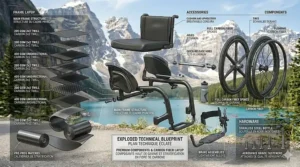
Carbon Fiber vs. Aluminium Wheelchairs: The Detailed Canadian Comparison
| Factor | Carbon Fiber | Aluminium | Winner |
|---|---|---|---|
| Weight | 5-17 kg typical | 15-25 kg typical | Carbon Fiber |
| Strength-to-Weight Ratio | 7-10x aluminium | Baseline | Carbon Fiber |
| Cold Weather Performance | Excellent (-40°C+) | Good (contracts slightly) | Carbon Fiber |
| Road Salt Resistance | Immune to corrosion | Oxidizes over time | Carbon Fiber |
| Vibration Damping | 2-3x better | Standard | Carbon Fiber |
| Impact Resistance | Cracks under direct impact | Bends before breaking | Aluminium |
| Repair Difficulty | Requires specialized facilities | Most shops can weld | Aluminium |
| Initial Cost | $2,800-$7,000+ CAD | $1,200-$3,500 CAD | Aluminium |
| Lifespan | 10-15+ years with care | 5-8 years typical | Carbon Fiber |
| Resale Value | 50-60% after 3 years | 30-40% after 3 years | Carbon Fiber |
| Canadian Service Network | Limited (specialist-dependent) | Widespread | Aluminium |
Analysis: Carbon fiber’s advantages cluster around weight, durability, and long-term cost-effectiveness, making it ideal for active users, frequent travellers, and those prioritizing shoulder health. Aluminium’s strengths lie in accessibility—both financial and service-related. For Canadian buyers, the decision hinges on usage intensity: if you’re using your wheelchair 4+ hours daily, propelling significant distances, or repeatedly lifting it, carbon fiber’s benefits justify premium pricing through reduced fatigue and injury prevention. If wheelchair use is occasional, budget-constrained, or you have backup mobility options, aluminium’s lower entry cost and universal serviceability make more practical sense.
The cold-weather performance difference matters particularly for Canadians. Aluminium wheelchairs develop micro-fractures around welds after repeated thermal cycling (-20°C overnight, +20°C indoor) that Canadian equipment experiences seasonally. Carbon fiber’s thermal stability means your wheelchair maintains structural integrity and handling characteristics regardless of temperature extremes. Over a 10-year Canadian lifespan, this translates to fewer repairs and more consistent performance.
Real-World Scenario: Matching Canadian Users to Carbon Fiber Wheelchairs
Scenario 1: Downtown Toronto Professional (Age 34, Software Developer)
Profile: Commutes 3 km daily to downtown office, uses TTC extensively, lives in 15th-floor condo, frequent business traveller (6-8 flights annually).
Perfect match: VERPAL 25.8lbs Ultralight or ZiiLIF 27.9lbs. The critical factor is weight—regularly transporting the wheelchair in elevators, subway stairs (when escalators break), and airline overhead bins demands genuine single-hand liftability. The VERPAL’s 11.7 kg allows one-handed lifting even when carrying a laptop bag, while its 19 km range covers daily commuting plus after-work socializing. The ZiiLIF offers similar benefits with slightly longer range, important if evening plans extend beyond initial charging.
Why this works: Urban Toronto terrain is relatively flat, eliminating concerns about motor power on hills. TTC’s crowded conditions favour compact, lightweight wheelchairs that don’t impede other passengers. Air travel frequency justifies paying premium for airline-approved design. The condo lifestyle without easy vehicle access makes traditional heavier wheelchairs impractical—every trip involves elevator and hallway navigation where weight matters tremendously.
Budget: $3,800-$4,300 CAD for VERPAL, $3,200-$3,700 for ZiiLIF. Consider employer health spending accounts or disability tax credits to offset costs.
Scenario 2: Calgary Active Senior (Age 68, Retired Teacher)
Profile: Lives in suburban bungalow, drives Honda CR-V, enjoys river pathway cycling with grandchildren, Calgary Stampede attendee, snowbirds to Arizona winters.
Perfect match: Aotedor 37lbs Carbon Fiber Dual Motor or Pride Jazzy Carbon. Calgary’s elevation changes (river valleys, suburban hills) demand robust motor systems—the Aotedor’s dual motors and 48 km range handle these challenges while providing all-day battery life for Stampede attendance. The Pride Jazzy Carbon offers Calgary’s established dealer network for servicing, crucial given active outdoor usage exposes equipment to wear.
Why this works: Suburban living provides garage storage, eliminating ultra-weight constraints. The Honda CR-V’s spacious trunk accommodates 16-17 kg wheelchairs comfortably. Extended range proves invaluable for full-day outings—Fish Creek Park pathways, Stampede grounds, or Chinook Centre shopping all demand 25+ km range accounting for elevation changes. The snowbird lifestyle benefits from carbon fiber’s corrosion resistance during Arizona humidity exposure and airline-approved batteries for annual flights.
Budget: $3,500-$4,000 CAD for Aotedor, $4,500-$5,500 for Pride. Consider Alberta Aids to Daily Living (AADL) program for partial funding—Pride’s established presence may facilitate approval process.
Scenario 3: Vancouver Island Manual Wheelchair Athlete (Age 29, Graphic Designer)
Profile: Active wheelchair basketball player, wheelchair marathoner, lives in Victoria, uses wheelchair 14+ hours daily, values shoulder health preservation.
Perfect match: Motion Composites Veloce absolutely dominates this scenario. No powered wheelchair delivers the responsiveness, efficiency, and shoulder protection that serious manual wheelchair users require. The Veloce’s 5.4 kg frame and best-in-class propulsion efficiency translate directly to athletic performance and long-term upper body health.
Why this works: Athletic activities demand maximum energy transfer—the Veloce’s carbon fiber construction reduces frame flex that wastes propulsion energy on aluminium chairs. Victoria’s mild climate (minimal freeze-thaw cycling) maximizes carbon fiber frame longevity. As a Canadian-made wheelchair from Québec, parts availability and servicing through National Seating & Mobility locations in BC ensures accessible support. The lifetime warranty on carbon fiber frame acknowledges Motion Composites’ confidence in durability under active use. For someone using a wheelchair 14+ hours daily, the $5,000-$7,000 CAD investment amortizes to under $2/day over a 10-year lifespan—negligible compared to shoulder surgery costs from using inferior equipment.
Budget: $5,000-$7,000 CAD. Investigate WorkSafeBC coverage if the wheelchair relates to employment accommodation, or private insurance extended health benefits.
Maintaining Your Carbon Fiber Wheelchair Through Canadian Seasons
Carbon fiber’s inherent durability doesn’t eliminate maintenance needs—proper care ensures your investment lasts 10-15+ years through Canadian climate extremes.
Winter Care (November-March)
Weekly maintenance: Remove road salt and de-icing chemicals immediately after outdoor use. Salt is carbon fiber-safe but corrodes electronic components, bearings, and hardware. Use lukewarm (not hot) water and mild soap—temperature shock can stress resin bonds. Dry thoroughly before indoor storage; bringing a cold wheelchair into warm humid indoor environments causes condensation inside bearing assemblies.
Battery management: Store lithium batteries at room temperature overnight. Never charge batteries below 5°C—this damages cells permanently and explains many “dead battery” complaints after winter. If your wheelchair lives in an unheated garage, remove the battery for indoor overnight storage. Expect 15-25% range reduction during cold weather; plan routes accordingly rather than pushing range limits.
Tyre inspection: Check tyre tread monthly. Winter potholes, salt corrosion, and freeze-thaw cycles wear tyres faster than summer conditions. Replace when tread depth drops below 2mm—reduced traction on ice or packed snow creates safety hazards. Consider switching to wider tyres (230-250mm rear) for better winter flotation if you’re navigating unshovelled pathways frequently.
Spring Care (April-May)
Deep inspection: Spring is critical for identifying winter damage. Check frame for cracks around stress points (seat tubes, caster mounts, motor mounts). Carbon fiber cracks appear as fine lines or delamination—if you see them, discontinue use immediately and seek professional assessment. Check all bolts for looseness (freeze-thaw cycling loosens hardware). Lubricate bearings and moving parts if squeaking develops.
Electronics check: Moisture intrusion during spring thaw damages electronics. Test all functions systematically—joystick responsiveness, brake engagement, speed settings, battery charge indicators. Address issues immediately rather than waiting for complete failure.
Summer Care (June-August)
UV protection: Store outdoors wheelchairs under UV-protected covers. While carbon fiber itself resists UV degradation, upholstery, tyres, and electronics suffer from intense summer sun. If storing in vehicles during summer errands, crack windows for ventilation—temperatures inside parked cars reach 60°C+, well above lithium battery safe storage range (typically 0-40°C).
Dust and debris: Canadian summers bring construction dust, pollen, and agricultural particles. Clean bearings monthly using compressed air or soft brushes. Debris infiltration causes premature bearing wear and gritty sounds during propulsion.
Fall Care (September-October)
Pre-winter inspection: October is ideal for professional servicing before winter challenges begin. Have bearings repacked, battery health tested (capacity degrades 15-20% annually), and brakes adjusted. Replace worn components now rather than mid-winter when urgency reduces options and increases costs.
Storage preparation: Clean and dry wheelchair thoroughly. Apply protective coating to exposed metal hardware (bolts, axles) to minimize winter corrosion. Charge battery to 60-70% for storage if you’re not using the wheelchair during winter months—lithium batteries stored fully charged or fully depleted degrade faster.
Year-Round Practices
Weekly inspections: Check tyres for cuts, bulges, or embedded debris. Verify brake function. Test battery indicator accuracy. Inspect upholstery for tears. Tighten any loose hardware.
Monthly deep cleaning: Remove dust, hair, and debris from casters and drive wheels. Clean upholstery with appropriate cleaner (check manufacturer specifications). Wipe down frame with damp cloth—avoid harsh chemicals that damage resin.
Annual professional servicing: Even if everything works perfectly, annual professional inspection identifies issues before they become catastrophic failures. Budget $150-300 CAD annually for professional servicing—far less than emergency repairs or premature replacement.

Frequently Asked Questions About Carbon Fiber Wheelchairs in Canada
❓ Can carbon fiber wheelchairs handle Canadian winter conditions reliably?
❓ Are carbon fiber wheelchairs covered by Canadian provincial health programs?
❓ What's the realistic lifespan of a carbon fiber wheelchair in Canadian climate?
❓ How much does it cost to repair a carbon fiber wheelchair frame if damaged?
❓ Can I travel internationally with carbon fiber wheelchairs from Canada?
Conclusion: Choosing Your Ideal Carbon Fiber Wheelchair
Carbon fiber wheelchair technology has matured dramatically in 2026, delivering genuine benefits to Canadian users willing to invest in premium materials. The seven wheelchairs profiled here represent the strongest options currently available to Canadian buyers, each excelling in specific use cases.
For budget-conscious buyers seeking authentic carbon fiber construction, the ENCAREFOR and Paiseec Q5 deliver remarkable value in the $2,800-$3,500 CAD range. These models prove you don’t need $5,000+ budgets to experience carbon fiber’s lightweight, corrosion-resistant advantages. Active users prioritizing range and hill-climbing power should focus on the Aotedor Carbon Fiber Dual Motor—its 48 km range and dual motor system justify premium pricing through extended daily mobility freedom. Travellers and urban dwellers emphasizing portability benefit most from the VERPAL Ultralight or ZiiLIF Foldable, where sub-13 kg weights transform transportation logistics.
Manual wheelchair users serious about shoulder health and athletic performance have one clear choice: the Motion Composites Veloce. Its Canadian manufacturing, lifetime warranty, and aerospace-grade engineering set the benchmark that other manual wheelchairs chase. Finally, buyers valuing established brand support and Canadian servicing infrastructure should consider the Pride Jazzy Carbon despite its premium pricing—the nationwide dealer network provides peace of mind that newer international brands can’t match.
The transition from aluminium to carbon fiber represents more than incremental improvement—it’s a fundamental upgrade in daily mobility experience. Reduced fatigue from vibration damping, effortless vehicle loading from weight reduction, and years of additional lifespan from corrosion resistance combine to justify the investment for users spending significant time in their wheelchairs. Canadian climate conditions particularly favour carbon fiber’s temperature stability and salt immunity, making the material ideally suited to our challenging environment.
Start your selection process by honestly assessing your daily usage patterns, transportation needs, and budget constraints. Test wheelchairs during winter if possible to evaluate cold-weather performance. Investigate provincial funding options early—bureaucratic timelines often stretch 6-12 months. Prioritize proper fitting over any other consideration—even the most advanced carbon fiber wheelchair causes problems if dimensions don’t match your body.
The future of mobility is lightweight, durable, and increasingly accessible. Carbon fiber wheelchairs in 2026 represent that future realized, offering Canadians freedom, independence, and comfort that previous generations of wheelchair users could only imagine.
Recommended for You
- 7 Best Titanium Wheelchair Options Canada 2026
- 7 Best Aluminum Wheelchair Models Canada 2026
- 7 Best Ultra Lightweight Wheelchairs Canada 2026
Disclaimer: This article contains affiliate links. As an Amazon Associate, I earn from qualifying purchases. If you purchase products through these links, we may earn a small commission at no additional cost to you.
✨ Found this helpful? Share it with your friends! 💬🤗
