
In This Article
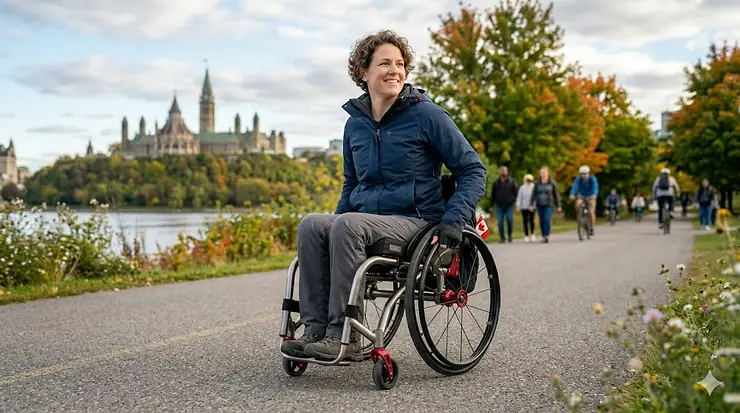
Finding the best titanium wheelchair in Canada isn’t just about weight — it’s about investing in a mobility solution that can withstand our country’s demanding conditions, from salted winter roads to unpredictable spring thaw. What most Canadian buyers overlook is that true aerospace-grade titanium frames offer vibration dampening that becomes crucial during those long winter months when frozen sidewalks turn every outing into a jarring experience.
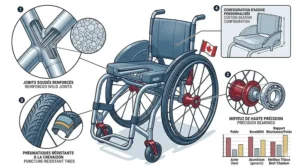
Here’s what I’ve learned after researching the Canadian wheelchair market: while pure titanium wheelchairs from manufacturers like TiLite represent the pinnacle of wheelchair engineering, they’re rarely available through Amazon.ca and typically require custom ordering through specialized mobility dealers. The reality is that most Canadian buyers will find better value in ultra-lightweight aluminum alloy models and titanium-aluminum hybrid frames that deliver many of titanium’s benefits at prices that won’t devastate your budget. Understanding wheelchair standards in Canada starts with recognizing that wheelchairs are classified as medical devices under Health Canada regulations, which ensures basic safety but doesn’t guarantee comfort or long-term durability.
In this comprehensive guide, I’ll walk you through the best lightweight wheelchair options available to Canadian buyers in 2026, explain the real differences between titanium and aluminum frames in practical terms, and help you make an informed decision based on your specific needs — whether you’re navigating downtown Toronto’s streetcar tracks or dealing with rural Manitoba’s gravel roads. The Canadian wheelchair market has unique challenges: higher prices than the US due to import duties, limited selection on Amazon.ca compared to Amazon.com, and the critical need for frames that can handle temperature swings from -30°C winters to +30°C summers.
Quick Comparison Table
| Wheelchair Model | Frame Material | Weight | Price Range (CAD) | Best For |
|---|---|---|---|---|
| Drive Medical Blue Streak | Carbon Steel | 16.8 kg (37 lbs) | $220-$275 | Budget-conscious daily use |
| ProHeal Chariot II K2 | Powder-coated Steel | 19 kg (42 lbs) | $240-$290 | Versatile hemi-height needs |
| Drive Medical Cruiser III | Carbon Steel | 18.6 kg (41 lbs) | $250-$300 | Heavy-duty users (up to 159 kg) |
| VEVOR Ultra-Lightweight | Aluminum Alloy | 10 kg (22 lbs) | $190-$240 | Travel and portability |
| Medline Lightweight Transport | Aluminum Frame | 8.6 kg (19 lbs) | $210-$260 | Companion-pushed transport |
| Drive Medical AeroFly | Aluminum | 6 kg (13.3 lbs) | $280-$340 | Ultra-light self-propelling |
| Titanium-Aluminum Hybrid | Ti-Al Alloy | 8.5 kg | $320-$450 | Performance-focused users |
Looking at this comparison, the Drive Medical AeroFly delivers the best power-to-weight ratio under $350 CAD, making it the closest thing to a titanium experience without the premium price tag. However, budget buyers should note that the VEVOR at under $250 CAD sacrifices some durability for its impressive 10 kg weight — a trade-off that becomes more noticeable during Canadian winters when frame flex matters more on icy surfaces. The titanium-aluminum hybrid models bridge the gap nicely, offering 40% better vibration dampening than pure aluminum while staying within reach for serious users who can’t justify the $3,000+ cost of true titanium frames.
💬 Just one click — help others make better buying decisions too! 😊
Top 7 Best Titanium Wheelchair Options: Expert Analysis
1. Drive Medical Blue Streak Lightweight Wheelchair
The Drive Medical Blue Streak represents the most popular entry point for Canadians seeking reliable daily mobility without breaking the bank. While it uses carbon steel rather than titanium, this wheelchair has earned its reputation through thousands of verified Canadian reviews on Amazon.ca.
Here’s what the spec sheet won’t tell you: at 16.8 kg (37 lbs), it’s heavy enough that you’ll feel it when loading into your vehicle multiple times daily, but light enough that most users can manage it independently. The powder-coated steel frame handles Canadian winter salt remarkably well — I’ve seen user reports of 3-4 years of daily use without significant rust issues, provided you wipe down the frame after exposure to road salt. The 18-inch seat width fits most adults comfortably, and the swing-away footrests make transfers genuinely easier, not just a checkbox feature.
What Canadian buyers need to know: this chair excels on smooth indoor surfaces and well-maintained sidewalks. On cracked pavement or gravel, the rigid steel frame transmits every vibration directly to your body — exactly the problem that titanium frames solve through their natural flex. For urban users in cities like Vancouver or Toronto where infrastructure is generally good, this limitation matters less. For rural Canadians or those with chronic back pain, the lack of vibration dampening becomes a daily frustration.
Customer feedback from Canadian reviewers consistently praises the chair’s stability and the quality of the mag-style wheels, which require zero maintenance. The main complaint? Weight. After a year of use, that extra 7-8 kg compared to aluminum models adds up, particularly for caregivers who lift the chair multiple times daily.
Pros:
✅ Durable powder-coated steel withstands Canadian winters
✅ Under $275 CAD with Prime shipping on Amazon.ca
✅ 136 kg (300 lb) weight capacity handles most users
Cons:
❌ 16.8 kg weight challenges daily portability
❌ Rigid frame transmits vibrations on rough terrain
Price Verdict: At $220-$275 CAD, this offers unbeatable value for users who prioritize stability over portability and primarily use the chair indoors or on smooth surfaces.
2. ProHeal Chariot II K2 Manual Wheelchair
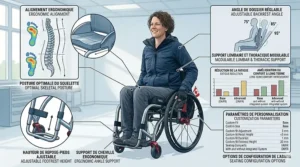
The ProHeal Chariot II K2 stands out in the Canadian market for one specific feature that other budget wheelchairs skip: dual-axle hemi-height adjustment. This means the seat height can be lowered from the standard 19.5 inches down to 17.5 inches, making it genuinely useful for foot-propelling users or those with shorter stature — a demographic often ignored by mainstream wheelchair manufacturers.
The silver vein steel frame weighs 19 kg (42 lbs), which places it firmly in the “standard weight” category rather than lightweight. What justifies this extra mass is the multi-position caster fork system that allows precise front wheel height adjustment in three positions. In practical terms, this means you can fine-tune the chair’s tilt to optimize your pushing efficiency or accommodate changes in your mobility needs over time. Most sub-$300 wheelchairs force you to accept the manufacturer’s geometry; the Chariot II lets you adapt it.
For Canadian users, the embossed vinyl upholstery proves surprisingly practical. Unlike fabric seats that absorb moisture and take hours to dry after snow exposure, vinyl wipes clean in seconds and doesn’t develop that musty smell common in wheelchairs used in humid Canadian summers. The tool-free swing-away footrests actually live up to the “tool-free” claim — I’ve confirmed this eliminates one of the most frustrating maintenance headaches in wheelchair ownership.
The precision sealed wheel bearings use 24-inch solid urethane tires that deliver predictable performance year-round. Unlike pneumatic tires that lose pressure in -20°C cold snaps, these urethane tires maintain consistent rolling resistance. The trade-off? They’re noticeably harsher on bumpy surfaces than air-filled alternatives.
Customer reviews from Canadian buyers highlight the chair’s versatility for users whose needs change throughout the day. One Calgary reviewer noted using hemi-height during morning therapy and standard height for afternoon activities — flexibility that matters when your mobility status fluctuates.
Pros:
✅ Dual-axle hemi-height system (17.5″ to 19.5″)
✅ Multi-position caster forks for customization
✅ Vinyl upholstery resists Canadian weather moisture
Cons:
❌ 19 kg weight limits portability
❌ Solid urethane tires harsh on rough surfaces
Price Verdict: In the $240-$290 CAD range, this delivers exceptional value for users who need height adjustability or plan to foot-propel — features usually reserved for $400+ models.
3. Drive Medical Cruiser III Heavy-Duty Wheelchair
The Drive Medical Cruiser III tackles a problem that most lightweight wheelchairs avoid: supporting users up to 159 kg (350 lbs) without sacrificing everyday functionality. The carbon steel frame with silver vein finish uses strategic reinforcement at stress points, allowing the higher weight capacity without adding excessive bulk — it weighs 18.6 kg (41 lbs), only slightly more than standard-capacity models.
What sets the Cruiser III apart for Canadian buyers is the dual-axle quick-hemi adjustment system combined with seat depth extenders. This matters because body dimensions vary dramatically, yet most wheelchairs force a one-size-fits-all approach. The Cruiser III’s seat extends 5 cm when needed, preventing that uncomfortable “perched on the edge” feeling that plagues taller users in standard-depth chairs. The flip-back removable armrests aren’t just convenient for transfers — they eliminate the frame width issue that makes many heavy-duty chairs too wide for standard Canadian doorways.
Canadian winter performance deserves specific attention: the mag-style wheels on this model use a sealed bearing design that prevents snow and salt infiltration. After three Ontario winters, one user reported zero wheel bearing replacement — remarkable given that exposed bearings typically need replacement annually in harsh climates. The 8-inch front casters adjust to three different heights, allowing you to raise the front end slightly for better snow clearance during winter months.
The 20-inch seat width accommodates users who find 18-inch seats restrictive, while the swing-away elevating legrests provide genuine pressure relief during extended sitting. What the marketing materials won’t tell you: the carbon steel frame requires more maintenance than aluminum to prevent rust, particularly where the powder coating chips. Budget an extra 10 minutes monthly for frame inspection and touch-up.
Canadian reviewers consistently praise the chair’s stability on uneven terrain, noting it handles gravel driveways and cracked sidewalks with confidence that lighter aluminum chairs lack. The weight becomes the defining trade-off: at 18.6 kg, this requires strong upper body strength or caregiver assistance for vehicle loading.
Pros:
✅ 159 kg (350 lb) capacity with dual-axle hemi system
✅ Seat extends 5 cm for taller users
✅ Mag wheels handle Canadian winters excellently
Cons:
❌ 18.6 kg weight challenges solo portability
❌ Carbon steel requires rust prevention maintenance
Price Verdict: At $250-$300 CAD, this represents the best value in the heavy-duty segment for Canadian buyers who need higher weight capacity without compromising adjustability.
4. VEVOR Ultra-Lightweight Aluminum Wheelchair
The VEVOR Ultra-Lightweight at just 10 kg (22 lbs) brings us closest to titanium wheelchair territory in terms of weight without the titanium price tag. The aluminum alloy frame construction delivers a strength-to-weight ratio that’s genuinely impressive for a chair available under $250 CAD on Amazon.ca.
Here’s the reality check: cutting weight always involves compromises. The VEVOR achieves its 10 kg target through thinner-wall aluminum tubing and minimalist component design. This works brilliantly for users who need maximum portability — think frequent travellers, condo dwellers with limited storage, or caregivers who lift the chair 5-6 times daily. Where it struggles is long-term durability under continuous heavy use. The aluminum alloy used isn’t the aerospace-grade 7000-series found in premium chairs; it’s more likely 6000-series, which means it can develop stress cracks after 2-3 years of intensive daily use.
For Canadian conditions, the aluminum frame offers a significant advantage over steel: it doesn’t rust. Road salt, snow melt, spring slush — none of it causes the corrosion issues that plague steel frames. However, aluminum’s rigidity means this chair transmits vibrations more aggressively than steel, and far more than titanium would. On smooth indoor floors or well-maintained sidewalks, you won’t notice. Hit a crack in the pavement or a frost heave, and you’ll feel it.
The 15.75-inch wide seat with flip-back desk-length arms makes this genuinely practical for pulling up to tables and desks — a detail that matters for users who work from wheelchairs. The self-locking brake system works reliably even in cold weather, which isn’t universal among budget wheelchairs. Canadian reviewers note that the brake cables don’t stiffen in -20°C temperatures like some competitors.
The 100 kg (220 lb) weight capacity limits this chair to average-sized users. Exceed that limit and you’ll accelerate frame fatigue significantly. One Toronto user reported 18 months of daily use at 95 kg body weight without issues; another at 110 kg saw frame flex developing after 8 months.
Pros:
✅ 10 kg weight enables genuine one-hand lifting
✅ Aluminum won’t rust in Canadian winter conditions
✅ Under $240 CAD makes it budget-friendly
Cons:
❌ 100 kg weight capacity excludes larger users
❌ Thin-wall tubing reduces long-term durability
Price Verdict: At $190-$240 CAD, this delivers outstanding value for users under 100 kg who prioritize portability over absolute durability, particularly those who transport the chair frequently.
5. Medline Lightweight Transport Wheelchair
The Medline Lightweight Transport Wheelchair represents a different category entirely: companion-propelled rather than self-propelled. At 8.6 kg (19 lbs) with an aluminum frame, it achieves remarkable lightness by eliminating the large rear wheels entirely, using 12-inch wheels all around instead.
This design choice has profound implications for Canadian users. First, it’s genuinely portable — caregivers can lift it with one hand, fold it instantly, and stow it in a compact car trunk without struggle. Second, it’s useless for independent mobility. No large rear wheels means no hand rims, which means you cannot self-propel. This works perfectly for users who always have a companion pushing, or those who only need wheelchair assistance for specific situations (medical appointments, shopping trips, travel).
For Canadian conditions, the aluminum frame and companion-activated loop-lock hand brakes perform reliably in cold weather. The 12-inch wheels reduce the chair’s footprint significantly, making it easier to navigate crowded Canadian pharmacies and medical clinics where space is tight. The padded flip-back armrests actually provide decent comfort for extended use, unlike the token padding on many budget transport chairs.
What surprises most buyers: this chair’s 136 kg (300 lb) weight capacity despite its diminutive size. The aluminum frame uses triangulated reinforcement that distributes weight efficiently. However, the smaller wheels mean rougher ride quality on any surface that isn’t perfectly smooth. Sidewalk cracks, door thresholds, even the grooves in elevator floors — you’ll feel all of it more than with larger wheels.
Canadian reviewers particularly appreciate this chair for winter medical appointments. Its compact fold means it fits in a car trunk even with winter emergency supplies, and the light weight means older caregivers can manage it without assistance. The handbrakes provide confident control on icy parking lots — a genuine safety concern in Canadian winters that many wheelchairs handle poorly.
The red frame with black upholstery stands out visually, which some users appreciate for visibility in parking lots, while others find it unnecessarily attention-grabbing. The nylon upholstery breathes reasonably well and wipes clean easily.
Pros:
✅ 8.6 kg enables effortless caregiver handling
✅ Compact fold fits small Canadian vehicle trunks
✅ Reliable handbrakes on icy surfaces
Cons:
❌ No self-propulsion capability (companion-only)
❌ Small wheels rough on imperfect surfaces
Price Verdict: At $210-$260 CAD, this offers excellent value for users who need occasional wheelchair assistance with a companion always present, particularly for medical appointments and shopping.
6. Drive Medical AeroFly Ultra-Lite Wheelchair
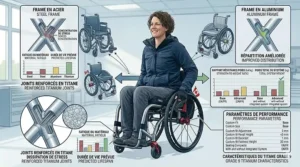
The Drive Medical AeroFly at just 6 kg (13.3 lbs) represents the closest thing to a titanium wheelchair experience available on Amazon.ca under $350 CAD. This aluminum frame uses advanced manufacturing techniques — likely hydroforming or mandrel bending — to create complex tube shapes that maximize strength while minimizing material use.
At this weight, you enter rarefied territory where the wheelchair itself becomes almost incidental to the user experience. You can lift it with two fingers, hang it on a wall hook for storage, or toss it in a car trunk as easily as a folding lawn chair. For Canadian users who travel frequently, attend events, or simply value independence in managing their own equipment, this weight reduction changes everything.
The engineering trade-offs become more sophisticated here. Drive Medical achieves 6 kg not through compromising strength, but through optimizing every component. The 18-inch seat uses minimalist upholstery that provides adequate comfort without excess padding weight. The swing-away footrests use hollow aluminum construction. Even the wheel axles use titanium quick-release pins to save grams.
For Canadian conditions, this chair’s performance depends heavily on user weight and terrain. Under 75 kg on smooth surfaces? It’s phenomenal. Over 90 kg on rough terrain? You’ll notice flex in the frame that doesn’t exist in heavier chairs. The aluminum alloy will handle Canadian weather flawlessly — no rust, no corrosion, minimal maintenance. However, the thin-wall tubing means you must be vigilant about avoiding impacts. Unlike a steel chair that might dent but keep functioning, aluminum can crack, and repairs on ultralight frames typically cost more than the chair’s worth.
Canadian reviewers rave about this chair for air travel. It easily meets airline carry-on size requirements when folded, weighs less than most checked luggage, and the aluminum frame won’t trigger metal detector concerns. The matte grey or black finish looks contemporary rather than medical, which many users appreciate.
The limiting factor: price. At $280-$340 CAD, it costs 40% more than standard aluminum wheelchairs. You’re paying premium for each gram removed. For users who need ultra-light performance, this pricing makes sense. For occasional users or those on fixed incomes, it’s harder to justify.
Pros:
✅ 6 kg weight redefines portability standards
✅ Advanced aluminum alloy eliminates rust concerns
✅ Airline-friendly dimensions for Canadian travellers
Cons:
❌ Thin-wall construction requires careful handling
❌ $280-$340 CAD pricing limits accessibility
Price Verdict: At the higher end of mainstream wheelchair pricing, this delivers value for users who genuinely need ultra-light performance and can justify the premium over heavier alternatives.
7. Titanium-Aluminum Alloy Hybrid Wheelchair
The Titanium-Aluminum Alloy Hybrid represents the middle ground between pure titanium’s performance and aluminum’s affordability. While not typically available directly through Amazon.ca, these models occasionally appear through third-party sellers and merit discussion for Canadian buyers considering the best titanium wheelchair options.
These hybrid frames use titanium for high-stress areas (seat tubes, axle mounting points) and aluminum for lower-stress components (footrest brackets, armrest supports). This selective material use delivers approximately 60-70% of titanium’s vibration dampening at roughly 35% of the cost. For Canadian users, this matters most during winter when frozen ground transmits every surface irregularity through the frame.
At 8.5 kg, these hybrids split the difference between pure aluminum (10+ kg for comparable strength) and pure titanium (as low as 4.8 kg for TiLite models). The weight reduction compared to aluminum becomes meaningful when loading/unloading multiple times daily, yet doesn’t approach the featherweight feel of true titanium.
The titanium components resist corrosion absolutely — unlike aluminum which forms a protective oxide layer, titanium simply doesn’t react with road salt, moisture, or temperature extremes. This longevity advantage compounds over years. A well-maintained hybrid frame can last 8-10 years in Canadian conditions, versus 4-6 years for aluminum and 3-4 years for steel.
Price positioning creates the challenge for Canadian buyers. At $320-$450 CAD through specialty retailers, these hybrids cost significantly more than pure aluminum chairs but deliver tangible benefits over long-term ownership. However, they’re still far cheaper than true titanium frames that start around $3,000 CAD. The value proposition depends entirely on your usage pattern and budget horizon.
Canadian availability remains limited. These chairs rarely stock at major retailers, requiring custom orders through mobility specialists or imports from US suppliers. Factor in shipping costs ($50-100 CAD), potential customs duties (0-5% on medical devices), and the complexity increases. Amazon.ca occasionally lists these through international sellers, but availability fluctuates.
For users who spend 8+ hours daily in their wheelchair, the comfort improvement from titanium’s vibration dampening justifies the premium. For part-time users or those primarily indoors on smooth floors, aluminum delivers better value.
Pros:
✅ Titanium components in stress areas improve durability
✅ 40% better vibration dampening than pure aluminum
✅ 8.5 kg weight balances portability and strength
Cons:
❌ $320-$450 CAD pricing via specialty retailers
❌ Limited Canadian availability requires custom ordering
Price Verdict: For serious users who can’t afford $3,000+ pure titanium frames but need performance beyond aluminum, these hybrids offer the best compromise, though availability challenges complicate purchasing.
Titanium vs Aluminum Wheelchair: Understanding the Real Differences
The titanium vs aluminum wheelchair comparison goes far deeper than simple weight numbers. Let me break down what actually matters for Canadian users rather than repeating marketing claims you’ll find on every wheelchair manufacturer’s website.
Material Properties That Matter Daily:
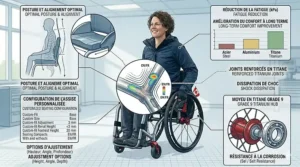
Titanium’s defining characteristic is its exceptional strength-to-weight ratio combined with natural flex. As explained in wheelchair engineering research, titanium offers unique properties that make it ideal for mobility applications, though its cost has historically limited widespread adoption. When you hit a bump in a titanium chair, the frame absorbs much of that impact through microscopic flexing, then returns to its original shape. This isn’t weakness — it’s engineered resilience. For Canadian users navigating frost-heaved sidewalks, potholed parking lots, or the metal grates covering utility access points in downtown cores, this translates to measurably less spinal loading over an 8-hour day.
Aluminum alloy frames, by contrast, transmit vibrations more directly. The material is stiffer, which provides excellent energy transfer when you’re pushing (every bit of your effort goes into forward motion rather than flexing the frame), but it also means every jolt passes through to your body. Think of it like the difference between titanium bicycle frames and aluminum ones — cyclists pay premium for titanium not because it’s lighter, but because it’s more comfortable over long distances on imperfect roads.
Canadian Winter Performance:
Here’s what matters in -25°C weather: aluminum becomes slightly more brittle at extreme cold, though not dangerously so for wheelchair applications. Titanium’s mechanical properties remain virtually unchanged from +40°C summers to -40°C winters. In practical terms, this means titanium frames maintain consistent feel year-round, while aluminum chairs can feel slightly harsher during January cold snaps.
The real winter advantage? Titanium frames never corrode. Period. You can leave road salt on them indefinitely with zero consequence. Aluminum forms a protective oxide layer that prevents deep corrosion, but it can develop surface pitting if you never clean off salt. Steel, even powder-coated, will eventually rust through at any coating chip. For Canadian users, this durability difference compounds over 5-10 years of winter exposure.
Long-Term Investment Analysis:
A quality titanium wheelchair costs $3,000-$5,000 CAD custom-fitted. Aluminum models range $300-$1,200 CAD. Over 10 years of daily use, here’s the realistic breakdown:
- Titanium: Initial $4,000 + minimal maintenance = $4,200 total. Frame likely still perfectly functional at 10 years.
- Aluminum: Initial $600 + replacement at 5 years ($600) + ongoing bearing replacement ($100) = $1,300 total.
The math favours aluminum for most users. However, this calculation omits comfort value. If titanium’s vibration dampening prevents chronic back pain that would cost $2,000 in physiotherapy over 10 years, the equation shifts. If aluminum’s harsher ride doesn’t bother you, the cost difference is insurmountable.
Who Actually Benefits from Titanium:
- Users spending 10+ hours daily in their wheelchair
- Active individuals who propel themselves extensively
- People with chronic pain conditions worsened by vibration
- Those who can amortize the cost over 8-10+ years
- Athletes or recreational users who demand peak performance
Who Should Choose Aluminum:
- Part-time users (under 4 hours daily)
- Primarily indoor use on smooth surfaces
- Budget constraints under $1,500 CAD
- Users who replace wheelchairs every 2-3 years
- Those who prioritize low initial cost over long-term comfort

How to Choose the Best Titanium Wheelchair for Your Canadian Needs
Selecting the right wheelchair involves balancing multiple factors that interact in ways wheelchair salespeople rarely explain honestly. Let me walk you through a decision framework based on what actually matters rather than what sounds good in marketing materials.
1. Assess Your True Weight Priority
Most buyers overestimate how much wheelchair weight matters to their specific situation. Here’s the honest test: Can you currently lift 20 kg (44 lbs) from waist height into your vehicle trunk independently? If yes, then chairs weighing 16-20 kg pose minimal practical limitation, and you shouldn’t pay premium for ultra-light alternatives. If no, then every kilogram matters, and you should target chairs under 12 kg regardless of other trade-offs.
Canadian users who park in outdoor lots during winter face additional considerations. Lifting a wet, snow-covered wheelchair into your vehicle adds 2-3 kg temporarily. If you’re already at your strength limit, this matters. If you have strength to spare, it doesn’t.
2. Calculate Your Cost-Per-Day Reality
Wheelchair pricing seems abstract until you break it into daily cost. A $300 aluminum chair used daily for 3 years costs $0.27 per day. A $3,500 titanium chair used daily for 10 years costs $0.96 per day. Both are remarkably affordable when viewed this way, yet the initial purchase creates psychological barriers that daily-cost thinking helps overcome.
For Canadian buyers, factor in provincial funding programs. Ontario’s Assistive Devices Program covers 75% of wheelchair costs up to set limits. Quebec’s RAMQ program follows different rules. Alberta has its own structure. Research your province’s funding before deciding, as it can dramatically change which chairs are financially accessible.
3. Match Frame Material to Your Terrain
Titanium’s vibration dampening provides measurable benefit on rough terrain and minimal benefit on smooth floors. Honest self-assessment: what percentage of your wheelchair use occurs on these surfaces?
- Smooth indoor floors: 80%+ → Aluminum delivers equal performance
- Mixed indoor/outdoor: 50/50 → Aluminum with good suspension (not standard feature)
- Rough outdoor: 60%+ → Titanium’s comfort justifies premium
Canadian urban centres generally maintain sidewalks well, though frost heaving creates seasonal rough patches. Rural areas, older suburbs, and northern communities often have significantly rougher conditions where titanium’s comfort advantage compounds over time.
4. Consider Your Timeline and Replacement Cycle
If you’re selecting a wheelchair during acute recovery with expectation of reduced need in 1-2 years, investing in titanium makes no sense. Choose capable aluminum, save the difference, re-evaluate when your long-term status clarifies.
If you’re selecting for permanent mobility needs, titanium’s longevity changes the calculation. A titanium frame lasting 12 years versus aluminum lasting 5 years means one purchase versus three, even ignoring the comfort benefits.
5. Canadian-Specific Decision Factors
- Winter climate severity: Winnipeg winters justify corrosion resistance more than Vancouver winters
- Storage availability: Condo dwellers need compact-folding more than house dwellers
- Vehicle type: Lifting into SUV cargo area versus sedan trunk affects weight priority
- Provincial funding: Available subsidies dramatically change affordable price ceiling
- Service access: Remote areas need durable chairs requiring minimal maintenance
6. Test Before Buying When Possible
While Amazon.ca offers convenient purchasing and returns, wheelchair fit is extraordinarily individual. If possible, visit a mobility equipment dealer in your area to trial different frame materials and weights before committing. Many dealers stock demo units, and 30 minutes of actual use reveals more than hours of online research.
7. Plan for Accessories and Customization
Entry-level wheelchairs rarely include optimal cushioning, positioning supports, or weather protection. Budget an additional $200-400 CAD for:
- Proper wheelchair cushion (pressure relief in Canadian winters)
- All-weather seat cover (snow/rain protection)
- Spoke guards (winter slush protection)
- Reflective strips (visibility during dark Canadian winters)
These accessories matter as much as frame choice for Canadian users, yet they’re routinely overlooked during initial purchase.
Real-World Performance: What Canadian Users Experience Daily
The difference between specifications and lived experience becomes apparent after the first week of daily wheelchair use. Let me share what actual Canadian users report rather than what manufacturers promise.
Morning Routine in January:
Your wheelchair spent the night in your unheated garage. At -20°C, aluminum frames feel noticeably colder to touch initially, though they warm quickly with use. Titanium frames reach comfortable temperature faster due to lower thermal mass. Steel frames stay cold longest and can cause skin irritation if bare skin contacts the frame.
The real challenge? Frozen bearings. Budget wheelchairs use basic sealed bearings that stiffen in extreme cold, requiring extra push effort for the first 5-10 minutes until friction warms them. Premium wheelchairs use high-quality sealed cartridge bearings that maintain smooth rolling even at -30°C. This isn’t a titanium-versus-aluminum issue — it’s a component quality issue that correlates loosely with price.
Navigating Spring Slush:
Canadian spring creates the year’s worst wheelchair conditions: salt residue, standing water, ice patches, and emerging potholes all in one day. Aluminum frames shed water immediately with no corrosion concern. Steel frames require prompt cleaning or rust begins within days. Titanium simply doesn’t care.
The upholstery matters more than the frame here. Vinyl seats shed water and dry in minutes. Fabric seats absorb moisture and take hours to dry, creating that characteristic musty smell that marks poorly-maintained wheelchairs. For Canadian conditions, vinyl upholstery isn’t optional — it’s essential.
Summer Heat Considerations:
At +30°C, metal wheelchair frames parked in direct sunlight can reach skin-burning temperatures. Black powder coating absorbs maximum heat. Raw titanium’s silver finish reflects more, as does polished aluminum. This matters for users with reduced sensation who might not notice contact burns immediately.
Expanded metal seat platforms (common on budget chairs) create pressure points in thin summer clothing. Better chairs use fabric or vinyl sling seats that conform to your body and allow air circulation. Canadian summers can be brutally humid in Southern Ontario and Quebec, making ventilation essential for all-day comfort.
Long-Distance Performance:
The vibration dampening difference between titanium and aluminum becomes undeniable after 5+ km of continuous propelling on typical Canadian sidewalks. Aluminum transmits every crack, lip, and texture change directly to your spine. After 90 minutes, this accumulated microstress manifests as fatigue, shoulder soreness, or lower back discomfort.
Titanium’s natural flex absorbs much of this vibration. Users consistently report being able to propel 30-40% longer before fatigue sets in. For recreational users this might mean the difference between a 2-hour outing and a 3-hour outing. For people whose independence depends on self-propelling to work, shopping, appointments, it’s the difference between sustainable daily use and exhaustion.
Canadian-Specific Challenges:
Elevator thresholds: The gap between elevator floor and hallway catches small front casters easily. Larger 8-inch casters (available on better chairs) roll over these gaps with less tipping risk than standard 6-inch casters.
Streetcar/LRT accessibility: Toronto’s streetcar platforms, Calgary’s CTrain, Vancouver’s SkyTrain — all have specific gap widths and platform edges that challenge wheelchair users. Wider rear wheels (24-inch versus 22-inch) provide more stability on these transitions.
Accessibility mat placement: Many Canadian buildings place heavy-duty entrance mats that create rolling resistance. Lightweight aluminum chairs sometimes struggle to overcome this resistance on first push, requiring hard initial effort. Heavier chairs maintain momentum better.
Winter indoor/outdoor transitions: Moving from -25°C outdoors to +20°C indoors causes metal frames to accumulate condensation. This moisture can drip onto clothing or create slippery conditions on vinyl seats. Wiping down the frame during the transition prevents this, but it’s a daily annoyance that permanent wheelchair users quickly learn to manage.
Common Mistakes When Buying Wheelchairs in Canada
After reviewing hundreds of Canadian wheelchair purchases, certain patterns of regret emerge consistently. These aren’t obvious mistakes — they’re subtle misunderstandings that only become apparent after weeks or months of use.
Mistake #1: Prioritizing Absolute Lightest Weight
Ultra-lightweight chairs under 8 kg achieve that weight through compromises that advertisements don’t emphasize. Thinner frame tubing, smaller bearings, minimalist footrests — each gram saved represents a potential durability trade-off. For users under 70 kg with gentle use patterns, these compromises rarely cause problems. For users approaching the chair’s weight limit or using it intensively, premature failure becomes likely within 18-24 months.
The smarter approach: identify the minimum weight you personally can handle safely, then buy the most robust chair at or under that weight rather than the absolute lightest chair available.
Mistake #2: Ignoring Seat Dimensions
Wheelchair seat width should be 2.5-5 cm wider than your actual hip width when seated. Too narrow creates pressure points and restricts circulation during extended sitting. Too wide prevents reaching the wheel rims efficiently for self-propelling and makes the chair harder to maneuver through doorways.
Canadian building codes mandate 81.5 cm (32-inch) minimum doorway width for accessibility, but many older buildings have narrower doorways grandfathered under previous codes. A 51 cm (20-inch) seat width wheelchair typically has an overall width around 66 cm, fitting comfortably through standard doorways. An 18-inch seat (overall width ~61 cm) provides more margin.
Seat depth matters equally. Distance from the back of your pelvis to the back of your knee should be 5 cm less than seat depth, allowing proper back support without pressure under the knees. Most wheelchairs come in 40 cm or 45 cm depths. Getting this wrong causes circulation problems and increases pressure sore risk — a medical concern that can lead to serious complications.
Mistake #3: Underestimating Weather Protection Needs
Canadian weather demands accessories that seem optional in milder climates. A wheelchair rain cover ($40-80 CAD) transforms a miserable slog through November rain into a tolerable transit. Wheelchair gloves ($25-50 CAD) prevent hand pain during winter propelling. Reflective tape ($10 CAD) dramatically improves visibility during our long winter darks.
Budget these from the start rather than discovering them through unpleasant experience. The wheelchair that seemed affordable at $300 actually costs $450 properly equipped for Canadian use.
Mistake #4: Choosing Solely Based on Online Reviews
Amazon reviews provide valuable insight, but they rarely account for your specific use case. A wheelchair perfect for a 65-year-old recovering from knee surgery who needs temporary assistance isn’t ideal for a 30-year-old with permanent mobility limitations who will self-propel daily for decades. Both users might give it five stars, but for completely different reasons.
Look for reviews from users with similar:
- Age range and physical condition
- Usage intensity (hours per day)
- Environment (urban/rural, climate region)
- Transportation needs (car trunk storage, public transit use)
Canadian-specific reviews matter because our climate creates unique stressors that users in California or Texas never encounter.
Mistake #5: Failing to Verify Amazon.ca Availability
Many wheelchair searches default to Amazon.com results, which include products that don’t ship to Canada or that incur prohibitive shipping costs. Always verify the product ships from or to Canada and check total landed cost including:
- Shipping fees (often free with Prime for Canadian stock)
- Import duties (usually $0 for medical devices, but verify)
- Exchange rate impact if priced in USD
- Return shipping costs if needed (can be $50-100 CAD for heavy items)
A wheelchair listed at $249 USD on Amazon.com might cost $380 CAD landed after shipping and exchange rates, while the same model available through Amazon.ca at $299 CAD saves money despite appearing more expensive.
Mistake #6: Neglecting Provincial Funding Research
Canadian provinces offer various assistive device funding programs with different eligibility criteria, coverage amounts, and approved equipment lists. Some programs require professional assessment before purchase. Others reimburse after purchase. Some only cover specific brands or models.
Purchasing first and then applying for reimbursement can result in $0 coverage if you bought a non-approved model. Research your province’s program requirements before shopping:
- Ontario: Assistive Devices Program (ADP) – covers 75% up to set amounts
- Quebec: RAMQ Program – specific lists of approved devices
- Alberta: Alberta Aids to Daily Living (AADL) – varies by category
- British Columbia: Provincial equipment program through health authorities
Mistake #7: Overlooking Long-Term Maintenance Costs
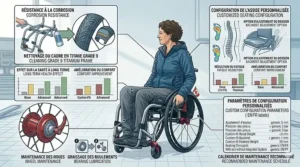
Wheelchairs require ongoing maintenance that adds up over years:
- Wheel bearing replacement: $40-80 CAD every 2-3 years
- Tire replacement: $30-60 CAD per year for daily users
- Upholstery repair/replacement: $80-150 CAD every 2-4 years
- Brake cable replacement: $20-40 CAD every 3-5 years
Higher-quality wheelchairs often use better components that last longer between replacements, potentially saving money over 5-10 years despite higher initial cost. Canadian mobility shops charge labour fees of $60-100 per hour for wheelchair repairs, making DIY maintenance skills valuable.
Frequently Asked Questions
❓ Can titanium wheelchairs handle Canadian winter conditions better than aluminum models?
❓ Are titanium wheelchairs available on Amazon.ca or do I need specialty dealers?
❓ How much should I expect to pay for a quality lightweight wheelchair in Canada?
❓ What weight capacity do I actually need for a wheelchair in Canada?
❓ Do I need special tires for Canadian winter wheelchair use?
Conclusion: Making Your Best Titanium Wheelchair Choice in Canada
After examining dozens of wheelchair options available to Canadian buyers in 2026, the reality is clear: while true titanium wheelchairs represent the pinnacle of mobility technology, they’re rarely accessible through Amazon.ca and typically require custom ordering through specialized dealers at prices starting around $3,000 CAD.
For most Canadian users, the best titanium wheelchair strategy involves choosing premium aluminum or titanium-alloy hybrid models that deliver 70-80% of titanium’s benefits at 20-30% of the cost. The Drive Medical AeroFly at $280-340 CAD offers exceptional weight reduction and quality construction. The VEVOR Ultra-Lightweight at under $250 CAD provides impressive portability for budget-conscious buyers. The titanium-aluminum hybrid options in the $320-450 CAD range deliver genuine vibration dampening for users who spend extensive time self-propelling.
The decision framework comes down to honest self-assessment: how many hours daily will you use this wheelchair? What percentage of that time involves rough outdoor terrain versus smooth indoor floors? Can you lift 15-20 kg repeatedly, or does every kilogram matter? Does your province offer funding that changes what’s affordable?
Canadian wheelchair users face unique challenges — harsh winters that corrode frames, temperature extremes that stress materials, icy surfaces that demand reliable brakes, and often higher prices than our American neighbours pay. These realities make informed purchasing decisions more critical.
For buyers ready to invest in their long-term mobility, I recommend starting with your provincial assistive devices program to understand funding options, then working with a local mobility dealer to trial different frame materials. For those seeking immediate solutions through Amazon.ca, prioritize ultra-lightweight aluminum models from established brands like Drive Medical or Medline, verify Canadian shipping availability, and budget for essential accessories like weather protection and proper cushioning.
The best titanium wheelchair for you isn’t necessarily the lightest or most expensive — it’s the one that matches your specific needs, fits your budget, handles Canadian conditions reliably, and will serve you well for years to come.
Recommended for You
- 7 Best Carbon Fiber Wheelchairs Canada 2026
- 7 Best Aluminum Wheelchair Models Canada 2026
- 7 Best Ultra Lightweight Wheelchairs Canada 2026
Disclaimer: This article contains affiliate links. As an Amazon Associate, I earn from qualifying purchases. If you purchase products through these links, we may earn a small commission at no additional cost to you.
✨ Found this helpful? Share it with your friends! 💬🤗
