
In This Article
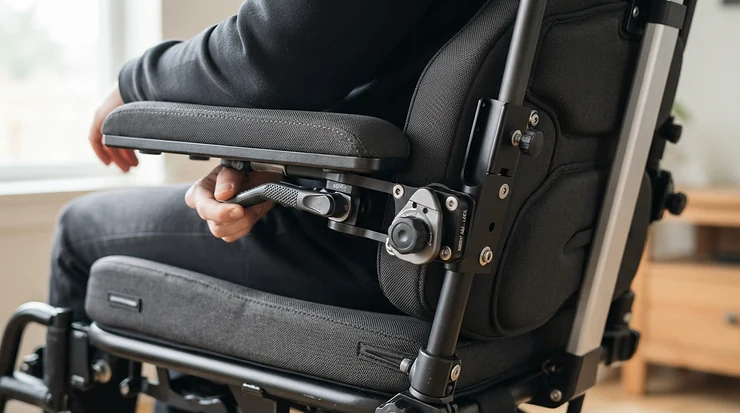
Picture a February morning in Winnipeg. The sidewalk is a rutted ribbon of packed snow, the curb cut is hiding under a windrow left by the plow, and your battery gauge is sulking in the cold. A standard chair would give up. A properly specified heavy duty power wheelchair keeps going.
The motorized wheelchair has Canadian roots. The first one put into production was invented by George Klein of the National Research Council of Canada, to help injured veterans after the Second World War. Toughness was in the design brief from day one.
Today the category has split into two worlds. Lightweight folding chairs are built for malls and airports. The other world is the heavy duty power wheelchair: reinforced frames, bigger drive wheels, higher-amp electronics and weight ratings of 450 to 600 lb (204 to 272 kg). Hunting for a rugged power wheelchair Canada can actually live with is a different job from shopping the lightweight shelf.
I researched current specs, dealer sell sheets and Canadian regulatory material to compare seven real models. I haven’t used any of them, and I won’t pretend otherwise. What follows is spec-based analysis, honest about where the evidence runs thin.
Quick Comparison: Heavy Duty Power Wheelchair Models at a Glance
| Model | Weight Capacity | Drive Layout | Standout Spec | Approx. Price Range (CAD) | Best For |
|---|---|---|---|---|---|
| Pride Jazzy EVO 614HD | 450 lb (204 kg) | Not stated in listings I found | Full independent ATX suspension | C$5,000–C$7,000 | Rough sidewalks |
| Golden Compass HD | 450 lb (204 kg) | Centre-wheel | 5-year frame term (Canadian sell sheet) | C$5,500–C$8,000 | Stability-first users |
| Merits Vision Super P327 | 450 lb (204 kg) | Mid-wheel | 12″ knobby tires, full suspension | C$5,500–C$7,000 | Mixed indoor/outdoor |
| Merits Atlantis P710 | 600 lb (272 kg) | Rear-wheel | 300W in-line motors | C$5,500–C$7,000 | Highest capacity |
| Quantum Q6 Edge HD | 450 lb (204 kg) | Mid-wheel | 4-pole motors, power seating options | C$9,000–C$15,000 | Clinical seating needs |
| Permobil M300 Corpus HD | 450 lb (204 kg) | Not stated here | Reinforced Corpus seating | C$12,000–C$20,000 | Complex positioning |
| Merits Travel-Ease HD | 450 lb (204 kg) | Folding frame | Folds for transport | C$4,000–C$6,000 | Vehicle transport |
Price ranges are my estimates from dealer listings, some originally in USD or GBP. Check current price before you budget.
Read that table with one eye on the right-hand column. The Atlantis P710 is the capacity champion at 600 lb, while the Q6 Edge HD and M300 Corpus HD cost more because you are paying for clinical-grade seating, not just muscle. The Travel-Ease HD trades some of that bulk for portability, which only matters if you load a chair into a vehicle often.
💬 Just one click — help others make better buying decisions too!😊
Top 7 Heavy Duty Power Wheelchair Models: Expert Analysis
1. Pride Jazzy EVO 614HD — best all-rounder for rough sidewalks
The headline here is full independent front and rear Active-Trac ATX suspension. Each wheel can move on its own, which matters when one tire drops into a pothole and the other doesn’t.
The spec sheet is solid. It carries a 450 lb (204 kg) rating, 13.75″ (35 cm) perforated drive tires, and 3″ (7.6 cm) of ground clearance. A 60-amp Dynamic LiNX controller with an adjustable speed dial caps speed at 7.8 km/h, with a 22″ (56 cm) turning radius. In practice, the big wheels roll over cracks that stall smaller rims, and the speed dial lets a nervous driver start slowly.
Here is what most buyers overlook: the manufacturer lists up to 13 miles (21 km) at 450 lb but 21.5 miles (34.6 km) at 200 lb. A heavier driver should plan on roughly 40% less than the glossy number, and colder weather will shave off more.
On reviews, the retailer pages I found carried almost no feedback, just one 4-star rating on a single listing. That is not a pattern, so check dealer and amazon.ca feedback yourself.
Pros:
- ✅ Full independent suspension tackles uneven pavement
- ✅ Large 13.75″ drive tires and 3″ clearance
- ✅ Adjustable speed dial suits new drivers
Cons:
- ❌ Range drops sharply at maximum user weight
- ❌ At 255 lb (116 kg), it needs a ramp or lift
Expect roughly C$5,000–C$7,000. The value verdict: strong for outdoor-heavy use.

2. Golden Compass HD — simplest stability-first design
Golden Technologies’ GP620 is a centre-wheel chair, and its whole personality is forward stability. The maker argues it has fewer moving parts than a sprung base and is very hard to tip when you mount or dismount.
Per Golden Canada’s sell sheet, it carries 450 lb (204 kg), travels up to 12 miles (19.3 km) per charge at maximum weight, and weighs 226 lb (103 kg) assembled. Each battery weighs 37 lb (17 kg). Captain seats come in 18, 20, 22 and 24 inch widths. The warranty is also instructive: five years on the frame, but only 13 months on the drive train and electronics, and 12 months on batteries.
My take, based on the specs: the lack of a springy suspension is a feature indoors and a compromise outdoors. Simplicity means fewer things to fail, but your spine will feel a broken sidewalk more than it would in a fully suspended chair. It suits someone who values a planted feel over a plush one.
I couldn’t verify meaningful customer review data, so I’m not going to characterize sentiment.
Pros:
- ✅ Centre-wheel layout feels stable on transfers
- ✅ Five-year frame term per Canadian sell sheet
- ✅ Real-world 12-mile range quoted at full load
Cons:
- ❌ No sprung suspension for rough pavement
- ❌ Electronics and drive train covered only 13 months
Estimated C$5,500–C$8,000 depending on seating. Good value if stability beats comfort on your list.
3. Merits Vision Super P327 — knobby tires for gravel and grass
The standout feature is the 12″ knobby tire package on a mid-wheel-drive frame with full suspension. Knobby tread bites into gravel, turf and packed snow edges where smooth tires skate.
The rating is 450 lb (204 kg), dropping to 400 lb (181 kg) with the power seat option, an important detail if you plan to add seat elevation. The base weighs 121 lb (55 kg), the battery pack 76 lb (34 kg), and the total comes to roughly 243 lb (110 kg). One retailer lists a limited lifetime frame warranty, but confirm what the Canadian distributor actually covers.
Based on the spec comparison, mid-wheel drive pivots near its own centre, so tight Canadian condo hallways stay manageable. The trade-off is that knobby tires hum on hard indoor floors and can mark soft flooring. Treat this as an outdoor-leaning chair that is tolerable inside.
No verifiable review volume turned up in my research, so the honest answer on user sentiment is “unknown.”
Pros:
- ✅ Knobby 12″ tires grip loose terrain well
- ✅ Mid-wheel layout gives tight turning
- ✅ Seat and base lighter than many rivals
Cons:
- ❌ Power seat option cuts capacity to 400 lb
- ❌ Knobby tread is noisy on indoor floors
Estimated C$5,500–C$7,000. Solid value for mixed use.
4. Merits Atlantis P710 — 600 lb capacity at a mid-range price
If your priority is sheer rating, this is the one. The Atlantis is a super heavy duty power wheelchair rated at 600 lb (272 kg), built around 24V, 300W in-line motors, 12″ (30 cm) rear drive wheels and pneumatic tires.
The maker says the motors handle 10° ramps comfortably. Treat that as a ceiling, not a daily target: commonly cited accessible-ramp slopes are far gentler, around 1:12 (about 4.8°). Seat and back are extra wide and extra tall for bariatric comfort. Dealer listings show 304 lb (138 kg) total with batteries, 43 lb (20 kg) per battery, and a heaviest component of 154 lb (70 kg).
Practical meaning: rear-wheel drive tracks straight and feels natural, but it needs a wider turning arc than mid-wheel designs. Pneumatic tires cushion bumps but can go flat, and cold lowers tire pressure. And that 154 lb (70 kg) piece means a van lift or ramp is non-negotiable. Motor coverage is one year limited, so ask about extended terms.
Review data? Nothing reliable surfaced beyond a single 5-star rating on one dealer page.
Pros:
- ✅ Highest weight rating in this roundup
- ✅ Extra-wide seat and tall back
- ✅ Pneumatic tires smooth out bumps
Cons:
- ❌ Heaviest single piece is 154 lb
- ❌ Motor warranty is only one year limited
Estimated C$5,500–C$7,000. Excellent value for capacity-driven needs.
5. Quantum Q6 Edge HD — clinical seating on a rugged base
This is the prescription-grade option. The Q6 Edge HD pairs Mid-Wheel 6 drive, with all six wheels staying on the ground, with ATX suspension and standard 4-pole motors, all rated for 450 lb (204 kg).
Pride’s own spec sheet lists up to 4.7 mph (7.6 km/h), 3″ (7.6 cm) of base ground clearance and 14″ (36 cm) drive wheels, solid as standard or pneumatic as an option. The real draw is the seating ecosystem: TRU-Balance 3 HD power tilt and recline rated to 450 lb, plus optional iLevel seat elevation for about 10″ (25 cm) of lift.
What the spec sheet won’t tell you is the human factor. Complex positioning only works if a clinician fits it, which is why this model usually travels through an authorized dealer and a seating assessment. If you simply need a tough chair, you might be paying for features you won’t use.
I found manufacturer and dealer marketing, not independent review data.
Pros:
- ✅ Six-wheel contact for strong stability
- ✅ Power positioning options built for 450 lb
- ✅ Optional iLevel seat elevation
Cons:
- ❌ Premium pricing once seating is configured
- ❌ Usually requires dealer assessment
Estimated C$9,000–C$15,000 configured. Worth it only if clinical seating is the real requirement.

6. Permobil M300 Corpus HD — reinforced seating for complex needs
Permobil built this for people who need serious positioning and serious strength. Its factory description cites stronger actuators, more powerful motors, a strengthened suspension and a reinforced seating system, supporting up to 450 lb (204 kg).
The Corpus system offers power tilt of 0 to 45° and recline of 85 to 150°, while the HD base is extended and widened. Permobil’s heavy duty table lists a 5 mph (8 km/h) top speed, a 26″ (66 cm) base width, and a weight of 425 to 447 lb (193 to 203 kg) including batteries depending on battery group.
Here’s the honest analysis: that is a heavy chair. Transport means a ramped van, not a hatchback. The wide base also matters for older Canadian doorways, where a 26″ frame leaves little margin. But for users who spend long hours seated and need pressure and posture management, the seating is the whole point.
Customer review data wasn’t verifiable in my research; funding and dealer fit matter more than online ratings here.
Pros:
- ✅ Wide tilt and recline range for positioning
- ✅ Strengthened suspension, actuators and motors
- ✅ Corpus seating suits long daily use
Cons:
- ❌ Very heavy at roughly 425–447 lb with batteries
- ❌ Expensive and dealer-dependent
Estimated C$12,000–C$20,000 configured. Expensive, but the right fit for complex clinical needs.
7. Merits Travel-Ease HD — folds when you need to travel
Folding and heavy duty rarely share a sentence, which is what makes this one interesting. Merits lists a 450 lb (204 kg) rating on a foldable steel frame with a shipping weight of 110 lb (50 kg).
I’ll be upfront: the published specs are thin. I couldn’t confirm motor wattage, range, suspension or drive wheel size from the pages I found. That limits how much real-world interpretation I can honestly offer. The logic of the design is clear, though. A hinge adds a potential stress point, and at 450 lb you want to ask the dealer how the fold joint was tested and what the warranty covers.
For someone who loads a chair into a car regularly, being able to fold it matters more than any torque figure. For daily rough-terrain use, I’d lean toward a fixed-frame model.
On reviews, there was nothing I could verify, so check current buyer feedback on amazon.ca before deciding.
Pros:
- ✅ Folds for vehicle transport
- ✅ 450 lb rating in a portable format
- ✅ Steel frame suggests sturdy build
Cons:
- ❌ Key specs unpublished, so confirm with dealer
- ❌ Fold joint is an extra stress point
Estimated C$4,000–C$6,000. Value depends on how often you travel with it.
What Is a Heavy Duty Power Wheelchair?
A heavy duty power wheelchair is an electric-powered wheelchair built with a reinforced frame, stronger motors, higher-amperage electronics and larger drive wheels to safely support higher user weights, typically 400 to 600 lb (181 to 272 kg), while still handling daily indoor and outdoor use. It is often called a bariatric power chair.
Dealers describe the category as having larger motors, longer frames and more torque than lighter chairs. The ceiling varies: most models I found top out at 450 lb, while a few reach 600 lb or beyond. Never buy a chair at the edge of its rating if you can avoid it, because weight capacity includes what you carry: a coat, a bag, groceries.

Heavy Duty Electric Wheelchair Buying Guide: How to Choose
This heavy duty electric wheelchair buying guide boils the decision down to seven steps. Work through them in order.
- Measure your true load. Add body weight, clothing, bags and any equipment. Pick a rating with a cushion, since range and climbing ability both degrade near the limit.
- Match drive layout to your space. Mid-wheel turns tightest, front-wheel drive climbs curbs confidently, rear-wheel drive tracks straight.
- Prioritize suspension if you drive outdoors. Rough pavement transmits straight into your back without it.
- Read the range footnote. Most brands test at maximum weight under ideal conditions. Cold and hills subtract from that.
- Check electronics, not just frame. Controller amperage and motor build matter more than marketing.
- Plan transport. Know the heaviest single piece and whether your vehicle or ramp can handle it.
- Confirm service access. A chair that is 800 km from the nearest technician is a long wait in January.
Motor Wattage and Torque: What the Numbers Mean
Motor wattage and torque are the two numbers buyers fixate on, and they are also the two numbers least comparable across brands. The Atlantis P710 advertises 300W in-line motors, but nobody publishes a torque curve you can set side by side with another maker’s.
So read around the headline. Controller amperage is a better clue to how hard the electronics can push: the Pride Jazzy EVO 614HD lists a 60-amp controller, and older Pride bariatric specs show 90-amp units. The Q6 Edge HD advertises 4-pole motors as standard, a construction detail associated with smoother, more efficient output.
In practice, torque shows up on hills and when starting from a stop in snow. Based on the spec comparison, if you regularly face a steep driveway, ask the dealer for the manufacturer’s rated climb angle for your user weight and ask to demo a similar slope. A motor that handles a 10° ramp at 300 lb may struggle at 450.
Suspension Systems on Power Wheelchairs
Suspension systems on power wheelchairs decide whether your afternoon outing feels like a gentle drive or a jackhammer.
The Pride Jazzy EVO 614HD and Quantum Q6 Edge HD both use ATX suspension, designed for varied terrain. On the Q6 Edge HD, Pride describes front omni-casters and a semi-independent rear caster beam keeping all six wheels down. The Vision Super P327 advertises full suspension too. The Golden Compass HD takes the opposite philosophy, trading springs for fewer moving parts.
Neither approach is universally better. Sprung designs soak up bumps and keep wheels in contact with the ground, but add parts to inspect and lubricate. Simpler designs wear slower but let you feel every crack.
A short test drive over a rough surface tells you more than any brochure. If a dealer can’t arrange one, that’s information too.
Canadian Climate Durability Testing: What Winter Does to Your Chair
There is no single stamp for “survives Canada.” The nearest thing is ISO 7176-9, which tests how rain, dust, condensation and temperature changes affect the basic functioning of electric wheelchairs. Crucially, it does not include requirements for resistance to corrosion.
That gap is the whole story for road-salt country. A chair can pass a cold-room test and still have its fasteners, bearings and connectors eaten alive by a few salty winters. Ask dealers about corrosion-resistant hardware and sealed connectors, since a standard won’t promise them.
Cold also drains batteries faster. Occupational therapists recommend charging power chairs every night in winter, and rehab clinics note that snow and salt corrode moving parts such as joints, bearings and axles. A waterproof joystick cover is cheap insurance.
Put it all together, and “Canadian climate durability testing” is mostly a checklist you run yourself: check ratings, ask about corrosion, plan for reduced range, and keep the chair clean.
Rugged Power Wheelchair Canada: Regulations, Licensing and Safety
Buying a rugged power wheelchair Canada can rely on starts with the paperwork. Under Health Canada’s framework, Class II, III and IV medical devices must hold a valid medical device licence before sale, and distributors need an establishment licence. Health Canada’s medical device licence guidance tells buyers to ask manufacturers or distributors for licence copies.
I couldn’t confirm the exact class for every model here, so ask the seller directly. Reputable Canadian dealers will answer without hesitation.
Beyond licensing, check these basics:
- Warranty terms in Canada. US warranties don’t always carry across the border.
- Parts and service. A local technician matters more than a longer frame warranty.
- Provincial funding rules. Programs vary widely by province, and several require an assessment before purchase.
Buying an unlicensed import from a random online seller may leave you without service or recourse. Take the extra week to verify.
Durable Power Wheelchair for Daily Outdoor Use: Setup and Maintenance Guide
A durable power wheelchair for daily outdoor use needs a routine as much as it needs good engineering. Here is a simple plan.
First 30 days:
- Check tire pressure on pneumatic wheels weekly, because cold drops pressure.
- Tighten fasteners after the first two weeks of use.
- Learn your battery’s real range by tracking it, not trusting the brochure.
Every season:
- Rinse off salt, then dry thoroughly and wipe connectors.
- Inspect cables and joystick boots for cracks.
- Lubricate pivots as the manufacturer directs.
Common mistakes:
- Charging in an unheated garage, where cold slows charging and drains cells faster.
- Skipping the speed dial adjustment in snow.
- Ignoring unusual noises from motors or bearings.
Based on the Jazzy EVO 614HD and Compass HD specs, both offer easy access to controller and batteries, which makes routine checks less annoying. Ask your dealer for a written service schedule.

Real-World Scenarios: Matching the Chair to Your Life
Scenario 1: Rural Saskatchewan, gravel driveway, 420 lb driver. The Vision Super P327 looks like the best match on paper, with knobby 12″ tires and full suspension, but it sits close to its 450 lb limit, so range and climbing would be pushed. Stepping to the Atlantis P710 gives real headroom at a similar price.
Scenario 2: Urban Toronto, condo hallways, mixed pavement. Mid-wheel turning matters here, and the Q6 Edge HD or Vision Super P327 make sense. If clinical positioning is needed, funding may influence the choice.
Scenario 3: Frequent traveller who loads a chair into a car. The Travel-Ease HD is the only folding option in this roundup. Confirm specs first, since the published detail is limited.
None of these is a verdict. Test drives and an assessment from an occupational therapist or seating specialist should be the final step.
Problem → Solution Guide for Heavy Duty Power Wheelchair Owners
Problem: Range collapses in winter. Charge nightly, keep the chair indoors, and plan shorter trips. Consider a second battery set if your dealer offers it.
Problem: Wheels spin on ice. Ask about winter tire options on your model. Traction aids exist, though some can affect warranties, so check first.
Problem: Rust on connectors and bolts. Rinse and dry after salty outings, and ask the dealer about corrosion-protection options.
Problem: Can’t transport the chair. Check the heaviest single piece before you buy. The Atlantis P710 has a 154 lb (70 kg) component, and the M300 Corpus HD weighs 425 to 447 lb with batteries.
Problem: Seat discomfort after hours of use. This is a seating issue, not a motor issue. The Q6 Edge HD and M300 Corpus HD exist for exactly this reason.
Heavy Duty Power Wheelchair vs Standard Power Wheelchair
| Feature | Heavy Duty Power Wheelchair | Standard Power Wheelchair | Best For |
|---|---|---|---|
| Weight rating | 450–600 lb typical | Around 300 lb typical | HD for higher loads |
| Frame | Reinforced, wider and longer | Lighter | Standard for tight spaces |
| Drive wheels | Often 12″–14″ | Often 9″–10″ | HD for rough terrain |
| Portability | Heavy, needs ramp or lift | Often easier to move | Standard for travel |
| Cost | Higher | Lower | Standard for budgets |
Notice how the trade-offs run in both directions. Standard models, like Drive’s 300 lb Titan X23, are lighter and easier to transport, but they simply aren’t rated for higher loads. A heavy duty power wheelchair gives you structural headroom and bigger wheels, at the price of weight and bulk.
If you’re under 300 lb, a standard chair may be perfectly adequate. If you’re near or above that, buying standard to save money isn’t thrift, it’s a safety risk.
Long-Term Cost and Maintenance
Sticker price is only part of ownership. Batteries wear out, tires need replacing, and service isn’t free. In Ontario, the Assistive Devices Program helps eligible residents with long-term physical disabilities pay for wheelchairs, and income isn’t considered. Be aware that ADP documentation states it doesn’t pay for batteries for power wheelchairs, and repairs aren’t covered either. Vendors describe coverage as up to 75% of approved price; verify details with ADP directly.
| Cost Factor | What to Expect | Best For Planning |
|---|---|---|
| Purchase (est.) | C$4,000–C$20,000 depending on model | Compare early |
| Batteries | Recurring replacement cost | Budget yearly |
| Tires | Wear faster outdoors | Ask pneumatic vs solid |
| Service | Dealer labour and parts | Prefer local dealers |
The table says the cheapest chair can become the most expensive if parts and service are hard to get. A model like the Atlantis P710, with its one-year motor warranty, rewards buyers who budget for repairs. The Compass HD‘s five-year frame term is reassuring, but electronics are covered for only 13 months.
Common Mistakes When Buying a Heavy Duty Power Wheelchair
- Buying at the limit. A 440 lb user in a 450 lb chair is asking for premature wear.
- Trusting headline range. Footnotes say the figure was measured at full load under test conditions.
- Ignoring weight of components. Delivery is easy; getting it up the porch isn’t.
- Skipping the test drive. Suspension feel can’t be read off a spec sheet.
- Forgetting winter. Salt, snow and cold hit batteries, tires and connectors.
- Ignoring service. A distant technician is a long wait.
Avoid these and you’ve dodged most of the regrets I see described in buyer discussions.

FAQ
❓ How much weight can a heavy duty power wheelchair hold?
❓ Are heavy duty electric wheelchairs allowed on Canadian buses and trains?
❓ How long do batteries last in a durable power wheelchair for daily outdoor use?
❓ Is a mid-wheel or rear-wheel drive better for a heavy duty power wheelchair?
❓ Where can I buy a rugged power wheelchair in Canada?
Conclusion
A heavy duty power wheelchair is not a bigger standard chair. It is a different engineering answer, and in Canada, where road salt, snow and long distances stress every component, those differences matter.
Here’s the short version of what the research suggests. For all-round outdoor ability, the Pride Jazzy EVO 614HD has the strongest suspension story. If simplicity and stability are the priority, the Golden Compass HD earns a look. The Merits Vision Super P327 targets rougher ground with knobby tires. When capacity is the issue, the Merits Atlantis P710 stands alone at 600 lb. If clinical seating drives the decision, the Quantum Q6 Edge HD and Permobil M300 Corpus HD are the specialists. And for people who travel, the Merits Travel-Ease HD is worth investigating once its specs are confirmed.
Whatever you shortlist, test drive on rough ground, ask hard questions about corrosion, service and warranty, and plan for a smaller winter range.
✨ Ready to compare current options?
🔍 Click any highlighted model above to check current pricing and availability. Your next heavy duty power wheelchair should handle Canadian winters with confidence! 🍁
Recommended for You
- Small Turning Radius Power Wheelchair For Home Use: 7 Best (2026)
- Mid-Wheel Drive Vs Rear-Wheel Drive Power Wheelchair: 7 Best Of 2026
- Mid-Wheel Drive Power Wheelchair: 7 Best Picks For Canada 2026
Disclaimer: This article contains affiliate links. As an Amazon Associate, I earn from qualifying purchases. If you purchase products through these links, we may earn a small commission at no additional cost to you.
✨ Found this helpful? Share it with your friends! 💬🤗
