

In This Article
A rigid frame wheelchair is a manual chair built around a single, welded (non-folding) frame instead of a hinged X-frame. Because there’s no folding mechanism to flex or rattle, every push of the rims translates more directly into forward motion — which is why most active wheelchair users eventually gravitate toward one.
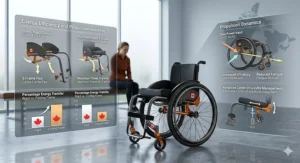
If you’ve spent any time pushing a heavy hospital-style folding chair through a slushy Toronto sidewalk in February, you already know why this matters. A rigid frame wheelchair typically weighs 6–11 kg (13–24 lbs) less than a comparable folding chair, which translates directly into less shoulder strain over a Canadian winter of icy curb cuts and unshovelled ramps.
Manual wheelchairs are more common in Canada than most people realize — Statistics Canada data puts the number of community-dwelling manual wheelchair users at roughly 198,000 adults, a figure that’s been trending upward as the population ages.
In this guide, I’ll walk you through seven rigid frame wheelchair options that Canadian shoppers can find through Amazon.ca or Canadian-authorized mobility dealers, plus a full rigid vs folding wheelchair comparison, real-world performance notes for our climate, and a province-by-province look at funding programs that can knock thousands off the final price. Whether you’re a first-time buyer comparing rigid wheelchair advantages against your current folding chair, or you’re chasing every gram of weight savings for a lightweight rigid wheelchair upgrade, there’s something here for you.
Quick answer — what is a rigid frame wheelchair? It’s a manual wheelchair with a fixed, welded frame (no folding cross-brace), removable wheels for transport, and a fixed or quick-release backrest — designed to be lighter, stiffer, and more energy-efficient than a folding chair, at the cost of needing more trunk space to store and transport.
Quick Comparison Table
| Wheelchair | Frame Weight | Price Range (CAD) | Best For | Amazon.ca |
|---|---|---|---|---|
| Karman S-Ergo 115 | ~12.7 kg (28 lbs) | $450–$650 | First-time rigid users | Yes |
| Karman Flexx | ~9 kg (20 lbs) | $700–$950 | Highly adjustable budget rigid | Yes |
| Per4Max Sport | ~8.6 kg (19 lbs) | $1,400–$1,900 | Everyday active users | Limited/dealer |
| Quickie 7 (Sunrise Medical) | ~10 kg (22 lbs) | $1,800–$2,600 | Mid-range performance | Dealer/ADP |
| Ki Mobility Catalyst 5 | ~9.5 kg (21 lbs) | $1,600–$2,400 | Custom-fit growth users | Dealer/ADP |
| TiLite Aero Z | ~6.1 kg (13.5 lbs) | $3,200–$4,500 | Titanium ultralight seekers | Dealer/ADP |
| Motion Composites Apex | ~6.4 kg (14 lbs) | $3,000–$4,200 | Carbon-fibre performance chairs | Dealer/ADP |
Looking at the table, you’ll notice a clear split: the two Karman models on Amazon.ca sit in the “rigid-style” entry-level tier, while the titanium and carbon-fibre chairs (TiLite, Motion Composites) live almost exclusively in the world of accredited Canadian mobility dealers because they’re custom-built to measure. The middle tier — Per4Max, Quickie, and Ki Mobility — is where most Canadians land, since these chairs balance weight savings with availability through provincial Assistive Devices Programs. If your main goal is shaving weight without a five-figure price tag, the Karman Flexx is the obvious starting point for online shoppers.
💬 Just one click — help others make better buying decisions too! 😊
Top 7 Rigid Frame Wheelchairs: Expert Analysis
1. Karman S-Ergo 115 Ultra-Lightweight Wheelchair
The Karman S-Ergo 115 is one of the most widely stocked “rigid-style” chairs on Amazon.ca, and it’s the chair I’d point a first-time buyer toward.
Its aluminum frame weighs around 12.7 kg (28 lbs), and the seat uses Karman’s signature S-shaped ergonomic upholstery, which redistributes pressure across the sit bones rather than concentrating it — something that matters a lot if you’re sitting for 6+ hours during a Canadian workday. The fixed footrest design (rather than swing-away) is what gives this chair its “rigid feel” when propelling: less flex means more of your push translates into forward roll, which is noticeable the first time you go up a parkade ramp.
What most Canadian buyers overlook about this model is the seat-to-floor height options — getting this wrong means your feet either drag on icy pavement or your knees jam under tables, and returns on bulky wheelchairs through Amazon.ca can take 2–3 weeks in winter.
Canadian reviewers consistently mention that the chair arrives well-packed and the rear wheels hold air pressure well through temperature swings, though a few note the armrests feel a bit narrow for users in heavier winter coats.
✅ Lightweight aluminum frame for easier transfers
✅ S-Ergo seating reduces pressure sore risk
✅ Frequently Prime-eligible on Amazon.ca
❌ Fixed footrest isn’t ideal for users who need frequent transfers
❌ Limited width options compared to custom rigid chairs
Price & verdict: Around $450–$650 CAD at the time of research. For the price, this is the best entry point into rigid-style propulsion — just confirm seat width before ordering, since exchanges can be slow outside major cities.

2. Karman Flexx Ultra-Lightweight Adjustable Wheelchair
The Flexx steps things up considerably. At roughly 9 kg (20 lbs), it uses aircraft-grade T6 aluminum tubing and offers adjustable center-of-gravity positioning — a feature normally reserved for $2,000+ custom chairs.
In practice, that center-of-gravity adjustment is the single biggest factor in how “tippy” or stable a rigid chair feels on a camber (those sloped sidewalks so common in older Canadian neighbourhoods like Montreal’s Plateau or Halifax’s North End). Sliding the axle forward makes the chair more maneuverable for indoor use; sliding it back adds stability for outdoor rolling on uneven pavement or gravel cottage roads.
What stands out here is the quick-release axle system — in my experience, this is the difference between loading your chair into a Honda Civic trunk in two seconds versus wrestling with it in -15°C parking lots while your hands go numb.
Canadian buyers on Amazon.ca frequently mention the adjustability as the standout feature, with several noting it took some trial and error to find the ideal camber and axle position.
✅ Adjustable center of gravity for stability or agility
✅ Quick-release axles for car transport
✅ Significant weight savings over folding chairs
❌ Assembly and adjustment has a learning curve
❌ Cushion sold separately on most listings
Price & verdict: Roughly $700–$950 CAD. This is the sweet spot for Canadians who want genuine rigid-chair performance without committing to a custom order — and it’s one of the few true rigid options reliably shippable across most provinces via Amazon.ca.
3. Per4Max Sport Rigid Wheelchair
Per4Max is a Canadian-favourite brand among the active wheelchair community, and the Sport model (around 8.6 kg / 19 lbs) is built with a swept dual-tube frame similar in spirit to the higher-end titanium chairs, but in 7000-series aluminum.
The dual-tube swept frame design absorbs vibration from rough pavement — which matters more than people expect once you’ve rolled across a few winters of frost-heaved asphalt in Ottawa or Winnipeg. Aluminum also doesn’t get brittle in cold the way some composite materials can, so performance stays consistent from a -25°C parking lot to a 22°C indoor mall.
What most buyers overlook: Per4Max chairs are typically ordered through Canadian rehab equipment dealers rather than general Amazon.ca listings, largely because they’re built to individual measurements (seat width, depth, and back height are all customized). That’s actually good news for ADP funding, since custom-measured chairs are usually what provincial programs require for full or 75% reimbursement.
Canadian users on rehab forums consistently praise the frame’s responsiveness, with the most common complaint being a multi-week lead time for custom builds.
✅ Custom-fit to your measurements
✅ Frame designed for ADP/insurance documentation
✅ Strong reputation for durability in cold climates
❌ Not typically sold through Amazon.ca directly
❌ Longer lead time than off-the-shelf chairs
Price & verdict: Around $1,400–$1,900 CAD through a dealer, often partially covered by provincial funding. If full Amazon.ca convenience matters more to you than custom fit, the Karman Flexx above is the better online option.
4. Quickie 7 (Sunrise Medical)
The Quickie 7 is arguably the best-known rigid chair name in North America, and for good reason — Sunrise Medical has been refining this dual-tube aluminum frame for decades.
At around 10 kg (22 lbs), the Quickie 7 sits in an interesting middle ground: light enough to feel like a genuine rigid performance chair, but durable enough that Canadian rehab clinics issue it as a long-term daily driver. The frame’s swept-in tube design means the rear wheels sit closer to your body, shortening the distance your arms travel on each push — small detail, but over thousands of pushes a day, it adds up to noticeably less shoulder fatigue.
The spec sheet won’t tell you this, but the Quickie 7’s wheel camber options (0°, 2°, 4°, 6°) make a real difference for Canadian users navigating narrow grocery store aisles in winter when everyone’s bundled up and aisles feel even tighter — more camber widens your turning radius advantage but makes the chair wider overall, something to weigh if you live in an older Canadian home with narrow doorways.
Canadian rehab clinic reviewers describe the Quickie 7 as a dependable “no surprises” chair, with occasional notes that replacement parts sometimes need to be special-ordered outside major cities.
✅ Decades-proven dual-tube aluminum frame
✅ Multiple camber and axle configurations
✅ Wide network of Canadian rehab dealers for service
❌ Heavier than titanium/carbon competitors
❌ Generally not stocked on Amazon.ca — dealer order only
Price & verdict: Roughly $1,800–$2,600 CAD depending on configuration, often eligible for provincial ADP contributions. A strong all-rounder if you value parts availability across Canada over raw weight savings.
5. Ki Mobility Catalyst 5
The Catalyst 5 is Ki Mobility’s flagship rigid frame, built around what they call “Flex Front Technology” — essentially a front frame section designed to absorb shock without sacrificing rigidity at the rear axle.
For Canadian users, this matters most on the kind of broken, frost-heaved sidewalks you’ll find every spring during thaw season — the front-end flex takes the edge off small bumps that would otherwise transmit straight up through a fully rigid frame into your spine. Weighing in around 9.5 kg (21 lbs), it’s positioned for users who need a chair that can grow with them — the frame accommodates seat width and depth adjustments after the initial fit, which is especially relevant for younger users whose bodies change over a few years.
What stands out in Canadian clinical settings is how often occupational therapists recommend the Catalyst line specifically because its modular components simplify the documentation required for ADP and similar provincial programs.
Reviewers on Canadian mobility forums note the frame holds its rigidity well over years of daily use, though some mention the proprietary axle hardware can be pricier to replace than generic parts.
✅ “Flex Front” reduces vibration without losing rigidity
✅ Adjustable as the user’s body changes over time
✅ Strong fit with Canadian provincial funding documentation
❌ Proprietary parts can cost more to replace
❌ Custom order only — no Amazon.ca listing
Price & verdict: Around $1,600–$2,400 CAD before funding contributions. A smart pick for growing users or anyone prioritizing long-term adjustability over instant online ordering.
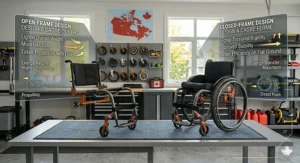
6. TiLite Aero Z
The TiLite Aero Z is the titanium benchmark that other rigid chairs get compared against — and at roughly 6.1 kg (13.5 lbs) for the frame alone, it’s genuinely in a different weight class.
Titanium’s real advantage in Canadian conditions isn’t just the weight — it’s vibration absorption and corrosion resistance. Road salt is brutal on aluminum and steel hardware over a Canadian winter, and titanium frames simply shrug off years of salt exposure that would slowly pit and corrode cheaper metals. The mono-tube frame design also makes this one of the easiest rigid chairs to load into a sedan, since the whole frame stays rigid as a single unit when you lift it.
What most buyers overlook is that TiLite’s “Tru-Fit” adjustment system lets an authorized Canadian dealer fine-tune seat height in small increments after delivery — useful if your needs change slightly once you’ve actually lived with the chair through a season.
Long-term Canadian owners frequently mention that, years later, the titanium frame still looks and performs like new despite heavy winter use, with the main downside being the upfront cost.
✅ Exceptional weight savings (titanium frame)
✅ Outstanding corrosion resistance against road salt
✅ Post-delivery fit adjustments via Tru-Fit system
❌ Highest price point in this list
❌ Custom order through accredited Canadian dealers only
Price & verdict: Roughly $3,200–$4,500 CAD, frequently the chair recommended when ADP/insurance covers a significant portion. While Canadian pricing runs higher than equivalent US listings, ordering through a Canadian dealer avoids cross-border duties, customs delays, and warranty complications that can arise from importing a titanium chair privately.
7. Motion Composites Apex
Closing out the list is the Motion Composites Apex, a carbon-fibre rigid frame built by a Quebec-based manufacturer — making it one of the few chairs on this list that’s actually designed and assembled in Canada.
At around 6.4 kg (14 lbs), the Apex uses carbon fibre’s natural vibration-damping properties, which Motion Composites engineers specifically to smooth out the kind of high-frequency vibration you get from rolling over cobblestones, brick sidewalks, or — very relevant here — the textured “bumpy” tactile paving strips installed at most Canadian curb cuts and transit platforms.
Being Canadian-made also means shorter lead times for custom orders compared to importing a titanium chair from the US, and Motion Composites has a dealer network across most provinces for warranty service — something worth factoring in if you live somewhere with limited access to specialized repair shops.
Canadian users frequently highlight the smoother ride on textured surfaces as the standout feature, with the main critique being that carbon fibre frames require more careful handling during transfers and loading to avoid stress-point damage.
✅ Carbon fibre dampens vibration on textured surfaces
✅ Designed and built in Canada — shorter lead times
✅ Strong Canada-wide dealer service network
❌ Requires careful handling to avoid frame stress points
❌ Premium pricing similar to titanium competitors
Price & verdict: Around $3,000–$4,200 CAD. If supporting Canadian manufacturing matters to you and you’re already in the premium tier, the Apex is a compelling alternative to importing a US-made titanium chair.
How to Choose a Rigid Frame Wheelchair in Canada
- Confirm your seat width and depth first. Get measured by an occupational therapist if at all possible — this single step prevents the majority of returns and discomfort complaints.
- Decide your budget tier before browsing. Entry-level Amazon.ca rigid-style chairs ($450–$950 CAD) versus dealer-custom rigid chairs ($1,400–$4,500 CAD) are genuinely different products, not just different price points.
- Check ADP or provincial funding eligibility early. Many provinces require an authorized assessment before purchase for funding to apply — buying first and applying after can disqualify you.
- Think about your transport situation. If the chair needs to fit in a small car trunk, prioritize quick-release axles and frames under 10 kg.
- Factor in Canadian climate durability. Titanium and carbon fibre resist road salt corrosion better than basic aluminum over many winters.
- Plan for service access in your region. Rural and northern users should weigh dealer network coverage heavily — a chair that needs frequent factory service isn’t ideal if the nearest dealer is hours away.
- Don’t skip the cushion and backrest budget. A $2,000 rigid frame paired with a worn-out cushion still won’t be comfortable — set aside $150–$400 CAD for proper seating support.
Rigid vs Folding Wheelchair: Which Is Right for You?
This is the comparison most first-time buyers actually need to make before they even start looking at specific models.
Weight and propulsion efficiency is where rigid frames win decisively. Because a folding chair’s X-frame has moving joints, energy from every push gets absorbed by tiny amounts of flex in those joints. A rigid frame transfers that energy directly to the wheels — over a full day of pushing, users consistently report less fatigue.
Storage and transport is where folding chairs still have an edge for some people. A folding chair collapses into a flat package that slides into most car trunks as-is. A rigid frame requires popping off the rear wheels (a 2-second job once you’re used to it, but it’s an extra step) and the frame itself stays a fixed size — bulkier for elevators, smaller cars, or apartment hallways.
Durability in Canadian winters favours rigid frames again. Fewer moving parts means fewer joints for road salt, slush, and grit to work into — folding mechanisms are notorious for stiffening up or squeaking after a winter of exposure if not cleaned regularly.
Cost genuinely depends on tier. Entry-level folding chairs can be cheaper than entry-level rigid chairs, but once you compare performance rigid chairs against performance folding chairs, rigid frames are often lighter for similar money because there’s less hardware to manufacture.
The bottom line: if you’re a daily, active user — commuting, working, or living an outdoor lifestyle — the rigid wheelchair advantages in weight and efficiency tend to outweigh the storage convenience of folding chairs. If you’re an occasional user who mainly needs the chair for transport to appointments and it’ll spend most of its life in a car trunk or closet, a folding chair may still make more sense.
What to Expect: Real-World Performance in Canadian Conditions
Spec sheets describe wheelchairs in a vacuum — dry, flat, room-temperature warehouse floors. Canadian sidewalks are rarely any of those things.
Cold temperatures (-10°C to -25°C): Tire pressure drops noticeably in deep cold, which makes a chair feel sluggish even on clean pavement. Check tire pressure weekly during winter months — a quick top-up with a bike pump restores most of the lost efficiency.
Slush and road salt: This is the single biggest long-term wear factor for rigid frame wheelchairs in Canada. Salt residue accelerates corrosion on bearings, axles, and caster forks. A quick wipe-down after slushy outings extends component life significantly.
Spring thaw / frost heave: Sidewalks crack and buckle every spring as the ground shifts. Chairs with some frame flex (like the Ki Mobility Catalyst 5’s Flex Front, or carbon fibre frames like the Apex) noticeably reduce the jarring impact compared to fully rigid aluminum.
Indoor-outdoor temperature swings: Moving from a -15°C parking lot into a heated mall causes condensation to form on metal components. Letting the chair acclimate for a few minutes before wiping it down prevents moisture from sitting in bearing seals.
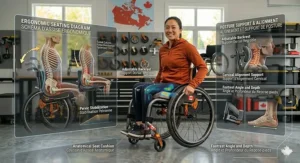
Setup, Maintenance & Winter Care Guide
Getting a new rigid frame wheelchair set up correctly in the first 30 days makes a measurable difference in long-term comfort and chair longevity.
First-week setup: Confirm axle position and camber with your OT or dealer before you’ve “broken in” bad propulsion habits around an incorrectly positioned axle — this is much harder to retrain after a few months.
Monthly maintenance: Check and tighten axle bolts (vibration loosens them over time), inspect caster wheel bearings for grit buildup, and wipe down the frame — especially the underside, where road salt accumulates unseen.
Winter storage: If you have a backup chair for icy days, store your primary rigid frame somewhere it can dry out fully between uses — a damp underground parkade is one of the worst storage spots for a metal-framed chair over a winter.
Common first-30-days mistakes: New users often over-tighten quick-release axles trying to eliminate every bit of wheel wobble, which can actually damage the locking mechanism. A small amount of play is normal and by design.
Cold-weather grip: Push rims get noticeably colder and slipperier in winter. Coated or textured push rims (available as an add-on for most models above) make a real difference for users who roll outdoors regularly between November and March.
Canadian Funding, Regulations & Safety Standards
One of the biggest financial factors Canadian buyers overlook is that manual wheelchairs and other medical/assistive devices are zero-rated for GST/HST — meaning no sales tax applies when purchased with a medical prescription, which can represent meaningful savings on a $2,000+ rigid chair.
Provincial Assistive Devices Programs are the next major factor. Ontario’s Assistive Devices Program covers up to 75% of the cost of mobility equipment like wheelchairs for eligible residents with long-term physical disabilities, and similar programs exist in other provinces under different names — British Columbia, Alberta, Manitoba, and others all run comparable cost-sharing programs, though coverage levels and eligibility criteria vary dramatically across the country.
Critically, these provincial programs require a valid provincial health card and typically require the disability to be long-term or permanent, with an authorized assessor (often an occupational therapist or physiotherapist) completing the application before purchase — which is why step 3 in our “how to choose” section above is so important.
For safety standards, look for wheelchairs that meet ISO 7176 testing standards (the international standard most reputable manufacturers, including those listed above, design to), and confirm any electrical mobility accessories carry CSA Group certification if you’re pairing a manual chair with power-assist add-ons.
Beyond the chair itself, accessibility of the spaces you’ll roll through matters just as much. The Rick Hansen Foundation Accessibility Certification program rates buildings and public spaces across Canada for meaningful accessibility, and checking whether your workplace, gym, or local community centre carries this certification can save you from discovering inaccessible entrances after you’ve already invested in a new chair.
Common Mistakes When Buying a Rigid Frame Wheelchair
- ❌ Ordering by general “size” instead of measured seat width/depth — the single most common cause of returns.
- ❌ Buying before applying for provincial funding — many programs require pre-approval, and buying first can void eligibility.
- ❌ Ignoring winter tire pressure maintenance — leads to a chair that “feels broken” within a few months when it’s actually just underinflated.
- ❌ Choosing the lightest possible frame without considering durability — ultralight titanium and carbon frames need more careful handling during transfers.
- ❌ Forgetting to budget for a proper cushion and backrest — these are often sold separately and are essential for comfort.

FAQ
❓ What is a rigid frame wheelchair?
❓ Are rigid frame wheelchairs covered by insurance in Canada?
❓ Can I order a rigid wheelchair from Amazon.ca and ship it to a rural area?
❓ Do rigid wheelchairs perform well in Canadian winters?
❓ What's the main difference between titanium and aluminum rigid frames?
Conclusion
Choosing between a rigid frame wheelchair and a folding chair ultimately comes down to how you live: if daily efficiency, weight savings, and long-term durability through Canadian winters matter most, a rigid frame is hard to beat. The Karman S-Ergo 115 and Karman Flexx offer an accessible entry point through Amazon.ca for Canadians who want to feel the difference rigid propulsion makes without committing to a custom order, while the Per4Max, Quickie 7, Ki Mobility Catalyst 5, TiLite Aero Z, and Motion Composites Apex represent the custom-fit tier most active users eventually graduate toward — often with meaningful help from provincial funding programs.
Whatever you choose, get measured properly, check your provincial Assistive Devices Program before you buy, and budget for a proper cushion. Those three steps alone will save most Canadian buyers both money and discomfort.
✨ Don’t Miss These Exclusive Deals!
🔍 Take your mobility setup to the next level with these carefully selected products. Click on any highlighted item to check current pricing and availability on Amazon.ca. These rigid frame wheelchairs can help you roll into 2026 with less effort and more independence!
Recommended for You
- Wheelchair Hockey Chair: 7 Best Picks for Canadians (2026)
- 7 Best Wheelchairs for Active Seniors in Canada 2026 — Stay Independent
- Best Tennis Wheelchair Canada 2026: 7 Expert Picks
Disclaimer: This article contains affiliate links. As an Amazon Associate, I earn from qualifying purchases. If you purchase products through these links, we may earn a small commission at no additional cost to you.
Found this helpful? Share it with your friends! 💬🤗
