
In This Article
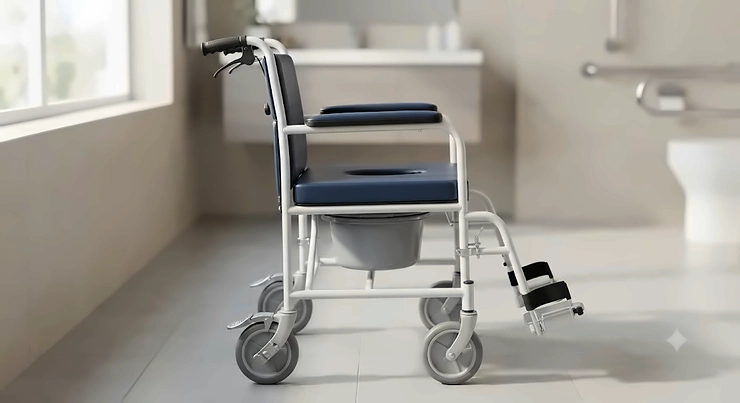
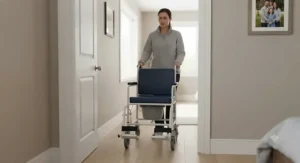
Nobody plans for the day a bathroom becomes the hardest room in the house. But if you’re caring for a parent, partner, or client who can no longer walk safely to the toilet or shower, an attendant commode wheelchair quickly stops being a “nice-to-have” and becomes the piece of equipment your whole routine hinges on. Unlike a self-propelled model built for someone with strong arms and good grip, an attendant commode wheelchair is designed to be pushed — smaller caster wheels, a caregiver-height push handle (on some models), and a frame built to survive daily contact with water and cleaning agents. It’s a humble-looking chair that quietly prevents falls, protects backs, and restores a bit of dignity to a task that’s otherwise exhausting for everyone involved.

This guide walks through seven real, currently sold models available through Amazon.ca, ranging from lean budget options to sturdier rehab-grade chairs. We’ll break down what the specs actually mean day-to-day, where each chair earns its keep, and where it falls short — based on manufacturer documentation and the patterns that show up again and again in aggregated customer feedback. According to Statistics Canada, millions of Canadians already provide unpaid care to an adult with a long-term condition, so if this feels overwhelming, you’re in very good company.
Quick Comparison Table
Before diving into full reviews, here’s a snapshot to help you narrow things down fast.
| Model | Best For | Price Range (CAD) | Weight Capacity |
|---|---|---|---|
| Drive Medical Aluminum Rehab Shower Commode Chair | Supervised self-propelling | C$450–C$600 | 300 lbs |
| Medline Aluminum Shower Commode Wheelchair | All-around attendant pushing | C$300–C$400 | 300 lbs |
| Medline Aluminum Padded Shower Chair Commode | Budget-conscious buyers | Under C$300 | 300 lbs |
| KMINA PRO Shower Commode Wheelchair | Narrow bathroom doorways | C$350–C$450 | 300+ lbs |
| DMI Rolling Shower Chair, Commode, Transport Chair | Classic no-frills attendant use | Under C$250 | 250 lbs |
| Vive Shower Commode Transport Chair | One-person caregiving | C$350–C$450 | 300 lbs |
| HOMCOM 3-in-1 Shower Commode Wheelchair | Tight bathrooms, compact storage | C$250–C$350 | 330 lbs |
Looking at the table, weight capacity barely separates these seven chairs — most cluster around the 300-pound mark, so it’s really the wheel configuration, seat width, and folding footrest that decide which one fits your bathroom and your caregiving routine. Buyers on a tighter budget will notice the DMI Rolling Shower Chair, Commode, Transport Chair and Medline Aluminum Padded Shower Chair Commode sit lowest on price without sacrificing the core aluminum frame that keeps rust at bay. If your hallway or bathroom door is unusually narrow, the KMINA PRO Shower Commode Wheelchair and HOMCOM 3-in-1 Shower Commode Wheelchair are worth studying first, since both were engineered with compact footprints in mind.
💬 Just one click — help others make better buying decisions too!😊
Top 7 Attendant Commode Wheelchairs: Expert Analysis
Every product below is a real, currently available model. Specs come from manufacturer documentation and retailer listings; review sentiment is described honestly as aggregated feedback patterns, not invented quotes. Prices shift constantly on Amazon.ca, so treat every figure here as a rough range and always check current pricing before buying.
1. Drive Medical Aluminum Rehab Shower Commode Chair — best for supervised self-propelling
The standout here is the pairing of small front locking casters with large 24-inch rear wheels, which means a partially able user can help propel themselves while a caregiver still keeps a hand on the push grips for safety. The rust-resistant aluminum frame supports up to 300 lbs, the padded seat and backrest measure a generous 18″ x 17″, and the seat cut-out is designed to sit directly over a standard toilet, so you’re not juggling two separate chairs for shower day and toilet day. Based on the spec comparison with the rest of this list, this is the closest thing here to a true rehab-grade chair, which makes it a strong fit for stroke recovery, post-surgical patients, or anyone whose mobility fluctuates week to week. Reviewers consistently note that the flip-back armrests make lateral transfers noticeably easier than fixed-arm models, though a recurring theme in feedback is that assembly instructions could be clearer for first-time buyers. What most buyers overlook about this model is that the 24-inch wheels also make it usable as a genuine transport chair around the house, not just inside the bathroom.
Pros:
- ✅ Large rear wheels support supervised self-propelling
- ✅ Flip-back armrests simplify side transfers
- ✅ Doubles as a transport chair around the home
Cons:
- ❌ Assembly can be fiddly for first-time users
- ❌ Bulkier footprint than compact attendant-only models
At around C$450–C$600, this sits at the premium end of the lineup, but the dual self-propel-or-push flexibility often justifies the gap for households with a fluctuating mobility situation.
2. Medline Aluminum Shower Commode Wheelchair — best all-around attendant push chair
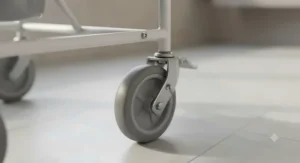
This model’s headline feature is a fully corrosion-proof aluminum frame purpose-built for daily shower exposure, something plastic-framed budget chairs simply can’t match over a two- or three-year lifespan. Four locking casters replace the mixed front-caster/rear-wheel setup seen on self-propelled designs, which keeps the chair firmly attendant-controlled — a deliberate choice for caregivers who need the person seated to stay put, not roll off unexpectedly. The padded, open-front seat and backrest are built for repeated wipe-downs, and the removable commode pail slides out without tools. Here’s what to weigh: because all four wheels lock independently, this chair holds position on sloped or slightly uneven bathroom tile better than two-wheel-lock designs, which matters more than most spec sheets let on. Aggregated feedback on Medline’s bathroom safety line frequently praises the brand’s long-standing reputation in hospital-grade equipment, while a common complaint is that the seat padding, while comfortable, isn’t as thick as some premium competitors.
Pros:
- ✅ Fully rust-proof aluminum frame for daily shower use
- ✅ Four independently locking casters for stability
- ✅ Tool-free removable commode pail
Cons:
- ❌ Seat padding is thinner than premium rivals
- ❌ No self-propel option for more independent users
Expect to pay in the C$300–C$400 range, positioning this as the dependable, mid-tier workhorse of the group.
3. Medline Aluminum Padded Shower Chair Commode with 4 Locking Casters — best value under $300 CAD
The standout advantage is price: this is one of the few chairs on this list that regularly lands under C$300 while still using a full aluminum frame rather than the steel-and-plastic hybrids common at this price point. Four locking casters and a padded vinyl seat with a splash-guard front give it the same functional core as pricier Medline models, just without the extras. On paper this means you’re getting roughly 80% of the mid-tier chair’s practical value for meaningfully less money — a genuinely useful trade-off if this is a short-term rental-style purchase for recovery rather than a permanent fixture. The spec sheet won’t tell you this, but user reports suggest the narrower armrest width can feel snug for larger-bodied users, so it’s worth measuring hip width before ordering. Reviewers commonly mention that setup takes under fifteen minutes without tools, which matters when equipment often arrives the same week it’s needed.
Pros:
- ✅ Full aluminum frame at a genuinely budget price
- ✅ Four locking casters for stability during transfers
- ✅ Quick, tool-free assembly out of the box
Cons:
- ❌ Armrest width runs narrow for larger users
- ❌ Lighter-duty casters than the rehab-grade Drive Medical model
Priced generally under C$300, this is the pick to search first if budget medical aid is the deciding factor in your shortlist.
4. KMINA PRO Shower Commode Wheelchair — best compact width for narrow bathrooms
This European-engineered chair’s standout feature is its notably narrow 21.8-inch width, which becomes a genuine deal-breaker-solver in older Canadian homes where bathroom doorways sometimes measure under 24 inches. Height-adjustable, removable footrests and folding armrests let a caregiver customize the fit without buying a different chair size, and the aluminum frame keeps total weight manageable for maneuvering solo. Based on the spec comparison, the KMINA PRO’s tighter turning radius matters most in condos, older bungalows, and mobile homes where a standard 26–28 inch commode wheelchair simply won’t clear the doorframe. Aggregated review sentiment repeatedly flags the “version 2.0 improved brakes” update as a meaningful upgrade over the original model, suggesting the manufacturer listened to real complaints about brake reliability in the first generation. What most buyers overlook is that the maximum toilet height compatibility is capped around 16.9 inches, so it’s worth measuring your existing toilet before assuming a perfect fit.
Pros:
- ✅ Narrowest footprint on this list for tight doorways
- ✅ Adjustable, removable footrests for a custom fit
- ✅ Updated brake system addresses earlier version’s complaints
Cons:
- ❌ Capped toilet-height compatibility needs pre-measuring
- ❌ Premium pricing for a European import
Typical pricing runs C$350–C$450, a reasonable premium if doorway width is your household’s real constraint.
5. DMI Rolling Shower Chair, Commode, Transport Chair — best budget donut-seat classic
The defining feature is DMI’s donut-shaped seat cut-out, which slides directly over almost any conventional toilet without needing a separate raised seat, simplifying what would otherwise be a two-piece setup. Rear-locking wheels combined with front casters let a caregiver push and then plant the chair securely, while the waterproof PVC backrest and vinyl seat are built to survive repeated shower exposure. Here’s what to weigh: at a 250-lb weight capacity, this is the lightest-duty chair on the list, so it’s a better match for smaller-framed users than for bariatric care needs. Reviewers frequently describe this model as “the one that’s been around forever” in home healthcare circles, and aggregated feedback consistently praises how easily it clears standard toilets thanks to that donut design, while a recurring gripe is that the plastic armrests feel less premium than aluminum-framed competitors. If you cannot verify a specific unit’s exact caster diameter from older stock photos, it’s worth double-checking current listing specs, since DMI has updated this model’s hardware over the years.
Pros:
- ✅ Donut seat cut-out fits over standard toilets easily
- ✅ Long production history with widely available parts
- ✅ Genuinely budget-friendly for a full 3-in-1 design
Cons:
- ❌ Lower 250-lb weight capacity than most rivals
- ❌ Plastic armrests feel less durable long-term
You’ll typically find this one priced under C$250, making it a strong shower commode chair under $300 CAD contender for households stretching every dollar.

6. Vive Shower Commode Transport Chair — lightest chair for one-person caregiving
Vive’s standout feature is sheer weight: at roughly 32 lbs, this is markedly lighter than the rehab-grade Drive Medical chair, which matters enormously if one caregiver — often working alone — needs to lift it in and out of a shower stall daily. The rust-proof aluminum frame, locking wheels front and back, and a removable commode bucket round out a design built specifically around solo caregiving rather than clinical settings. What most buyers overlook about this model is that its lighter build doesn’t mean a lower weight capacity — it still supports up to 300 lbs, so the weight savings come from smarter frame engineering, not thinner tubing that compromises safety. Reviewers consistently note that the reduced weight makes a genuine difference for caregivers managing stairs, tight turns, or transporting the chair between rooms multiple times a day. A common theme in aggregated feedback is that while the base transport chair (non-reclining) covers most needs well, buyers who also want a reclining headrest for hair-washing should check whether they need Vive’s separate reclining variant instead.
Pros:
- ✅ Roughly 32 lbs — easiest chair here to lift solo
- ✅ Full 300-lb weight capacity despite lighter frame
- ✅ Locking wheels front and back for secure transfers
Cons:
- ❌ Non-reclining; a separate Vive model adds that feature
- ❌ Slimmer frame may feel less substantial to some users
Expect a price in the C$350–C$450 range — a fair trade for caregivers who move this chair around daily and feel every extra pound.
7. HOMCOM 3-in-1 Shower Commode Wheelchair — best foldable footrest for tight storage
The standout feature is a foldable footrest paired with genuinely compact overall dimensions (roughly 21″ wide, adjustable 27″–33″ depth), making this one of the easiest chairs on this list to tuck against a wall or store in a small ensuite when it’s not in use. Four lockable wheels, a waterproof padded seat and backrest, and a detachable bucket give it the same functional core as pricier rivals, just packaged into a smaller footprint. On paper this means renters and small-condo dwellers get a genuine 3-in-1 commode, shower chair, and mobility aid without permanently dominating a small bathroom’s floor space. Aggregated feedback on HOMCOM’s bathroom safety line notes generally positive experiences with assembly and waterproofing, though a recurring theme is that the plastic seat surface, while easy to clean, feels less cushioned than foam-padded competitors during longer sitting periods. For anyone specifically searching for a folding commode chair for tight spaces, this is the model worth comparing first against the KMINA PRO above.
Pros:
- ✅ Foldable footrest saves real storage space
- ✅ Compact footprint suits small bathrooms and condos
- ✅ Detachable bucket simplifies cleaning routines
Cons:
- ❌ Seat cushioning is firmer than foam-padded rivals
- ❌ Weight capacity still needs verifying against current listing
Generally priced C$250–C$350, this is a genuinely strong compact storage option for anyone tight on square footage.
Practical Usage Guide: Setting Up and Maintaining Your Chair
Getting a new attendant commode wheelchair right in the first 30 days prevents most of the frustration people report later. Start by measuring your bathroom doorway, toilet height, and shower stall entry before assembly — a chair that’s technically “compact” on paper can still bind against a door hinge in practice. During first use, always test all wheel locks on dry ground before introducing water, since wet casters behave differently than dry ones and a false sense of security here is genuinely dangerous. Wipe down the frame and seat after every shower session with a mild, non-abrasive cleaner; harsh bleach solutions can degrade vinyl padding faster than manufacturers advertise. Check caster wheels weekly for hair or soap buildup, which is the single most common cause of a “sticky” or unpredictable roll that caregivers report in the early weeks of ownership. Finally, re-tighten any hex bolts on the armrests and footrests roughly once a month; vibration from regular rolling loosens hardware gradually, and a loose armrest during a transfer is one of the more preventable safety issues in home care.
Real-World Scenarios: Matching a Chair to Your Situation
Consider three caregiving profiles. First, a daughter caring for her father after a hip replacement, in a downtown Toronto condo with a 24-inch bathroom doorway — here, the compact KMINA PRO Shower Commode Wheelchair or HOMCOM 3-in-1 Shower Commode Wheelchair solves the doorway problem that a standard-width chair simply can’t. Second, a full-time home care worker managing multiple clients across different houses on a tight budget — the lightweight Vive Shower Commode Transport Chair reduces daily physical strain far more than its price tag suggests, since it’s being lifted in and out of vehicles and shower stalls repeatedly. Third, a couple on a fixed retirement income searching specifically for a shower commode chair under $300 CAD after a fall-related hospital discharge — the DMI Rolling Shower Chair, Commode, Transport Chair or Medline Aluminum Padded Shower Chair Commode deliver the essential safety features without the rehab-grade price premium. In each case, the “best” chair isn’t the one with the most features; it’s the one that matches the specific doorway, budget, or caregiving load in front of you.
How to Choose an Attendant Commode Wheelchair
What is an attendant commode wheelchair? It’s a wheeled chair, typically aluminum-framed, designed to be pushed by a caregiver rather than self-propelled by the user, combining a shower seat, toilet-height commode, and basic transport chair into one piece of bathroom safety equipment.
- Measure your doorways and toilet height first — a chair’s advertised “compact” width still needs to clear your actual bathroom door.
- Confirm the weight capacity against the user’s actual weight, not just a rough estimate, since undersized capacity is a genuine safety risk.
- Decide between self-propel and attendant-only based on the user’s arm strength and cognitive ability to safely operate wheel locks themselves.
- Check whether all four wheels lock, not just the rear pair, since four-wheel locking matters more on sloped or uneven bathroom tile.
- Weigh the chair yourself if you’re the primary caregiver, since a 15-lb difference matters enormously if you’re lifting it daily.
- Look at seat and armrest width relative to hip width, not just the overall chair dimensions advertised.
- Factor in your actual budget category — rehab-grade chairs justify their price for complex needs, but a shower commode chair under $300 CAD often covers straightforward recovery situations just as safely.
Attendant Commode Wheelchair vs Standard Bedside Commode
A standard stationary bedside commode is essentially a toilet-height frame with no wheels, meant to sit beside a bed for nighttime use. An attendant commode wheelchair, by contrast, adds mobility — the same person can be wheeled from bed to bathroom to shower without a separate transfer at each stop.
| Factor | Attendant Commode Wheelchair | Standard Bedside Commode |
|---|---|---|
| Mobility | Rolls between rooms | Stationary only |
| Shower use | Yes, water-resistant frame | No, not shower-rated |
| Price Range (CAD) | C$250–C$600 | Under C$150 typically |
| Best For | Multi-room care, shower access | Overnight bedside use only |
Looking at this comparison, a standard bedside commode wins on pure price for a single, narrow use case, but it can’t follow the user into the shower or across the hallway, which means many households end up needing two separate pieces of equipment instead of one. If your loved one needs both toileting help and shower assistance, an attendant commode wheelchair generally works out cheaper and simpler than buying a bedside commode plus a separate shower chair.

Common Mistakes When Buying an Attendant Commode Wheelchair
The most frequent mistake caregivers make is buying based on price alone without measuring the actual bathroom space first, leading to returns and rush-ordered replacements. A close second is assuming “self-propelled” and “attendant-propelled” are interchangeable terms — they describe genuinely different wheel configurations, and buying the wrong type can leave a user unable to move safely on their own or, conversely, able to roll away when they shouldn’t. Many buyers also skip checking toilet height compatibility, which matters more than it sounds, since some compact chairs like the KMINA PRO Shower Commode Wheelchair have a maximum toilet height they can straddle. Finally, some households underestimate how often a chair needs to be lifted or maneuvered daily and end up with a heavier rehab-grade model when a lighter chair like the Vive Shower Commode Transport Chair would have served the same medical need with far less physical strain on the caregiver.
Folding Commode Chair for Tight Spaces: Compact Storage Solutions
Small Canadian bathrooms — especially in older homes, condos, and rental units — often can’t spare permanent floor space for bulky equipment. A folding commode chair for tight spaces needs to do two things well: fit through the doorway when in use, and shrink down or tuck away when it isn’t. The HOMCOM 3-in-1 Shower Commode Wheelchair‘s foldable footrest is the clearest example on this list, letting the chair sit flatter against a wall between uses. The KMINA PRO Shower Commode Wheelchair‘s removable, height-adjustable footrests achieve a similar effect through a different mechanism. What most product listings won’t tell you is that “folding” in this category rarely means the entire frame collapses flat like a folding wheelchair — it usually means specific components (footrests, armrests) detach or fold, while the main frame stays rigid for safety reasons. If genuine compact storage between uses is your top priority, prioritize the footrest and armrest mechanisms over overall advertised “foldability” claims.
Shower Commode Chair Under $300 CAD: Budget Medical Aid Options
Cost is often the deciding factor after an unplanned hospital discharge, and finding a shower commode chair under $300 CAD doesn’t have to mean sacrificing the core safety features that matter. Both the DMI Rolling Shower Chair, Commode, Transport Chair and the Medline Aluminum Padded Shower Chair Commode with 4 Locking Casters typically fall into this bracket while still using full aluminum frames rather than the plastic-heavy construction common at rock-bottom price points.
| Model | Typical Price (CAD) | Frame Material | Value Verdict |
|---|---|---|---|
| DMI Rolling Shower Chair, Commode, Transport Chair | Under C$250 | Aluminum | Best for short-term recovery |
| Medline Aluminum Padded Shower Chair Commode | Under C$300 | Aluminum | Best all-around budget pick |
| HOMCOM 3-in-1 Shower Commode Wheelchair | C$250–C$350 | Aluminum | Best for compact storage on a budget |
Interpreting the numbers above, all three budget medical aid options still deliver a rust-resistant aluminum frame, which is the single spec that most affects long-term value — a corroding steel frame in a wet bathroom environment becomes a safety issue within a couple of years, so aluminum construction is worth prioritizing even on a tight budget. If you also need to check whether your province’s Assistive Devices Program can offset the cost, Ontario’s ADP program page outlines eligible categories and the general funding process.
✨ Ready to compare current listings? Check today’s pricing on the models above before they change!
Caregiver-Operated Equipment: What Makes a Chair Attendant-Friendly
Not every wheeled commode chair is genuinely built for caregiver-operated equipment use — some designs assume the seated person will help steer or brake, which isn’t realistic for many care situations. The features that actually separate true attendant-friendly chairs from self-propel designs include: rear-facing push handles positioned at a comfortable adult height, four independently locking casters (rather than just a rear pair) so the caregiver alone controls stability, and smaller wheel diameters that prioritize maneuverability in tight turns over speed or independent rolling distance. The Medline Aluminum Shower Commode Wheelchair and HOMCOM 3-in-1 Shower Commode Wheelchair both lean firmly into this attendant-first design philosophy. Reviewers consistently note that chairs with genuine four-wheel locking feel noticeably more secure during transfers than models where only the rear wheels lock, which is a detail easy to miss when comparing spec sheets that all sound similar on paper.
Long-Term Cost & Maintenance
The sticker price is only part of the real cost of ownership. Replacement commode pails, splash guards, and occasional caster replacements typically run modest amounts annually, but they add up over a multi-year care period. Aluminum frames generally outlast steel-and-plastic hybrids by several years in a wet bathroom environment, which is why the higher upfront cost of models like the Drive Medical Aluminum Rehab Shower Commode Chair can work out cheaper per year of use than repeatedly replacing a corroding budget frame. Total cost of ownership also depends on how often the chair gets moved: a heavier chair used daily wears its casters faster than an occasional-use chair, so caregivers managing multiple daily transfers may find the lighter Vive Shower Commode Transport Chair pays for itself in reduced wheel and bearing wear over a couple of years.
Safety, Regulations & Compliance in Canada
In Canada, most manual attendant commode wheelchairs fall under Health Canada’s Class I medical device category, meaning they’re considered lower-risk and don’t require a full Medical Device Licence, though sellers must still hold a valid Medical Device Establishment Licence. You can learn more about how Health Canada classifies medical devices by risk level directly from the source. Practically speaking, this means the regulatory burden on manufacturers is lighter than for higher-risk devices, so due diligence on wheel-lock reliability and frame material genuinely falls more on the buyer’s research than on a strict pre-market safety review. Always confirm a chair’s stated weight capacity against the user’s actual weight with some safety margin, and never use a shower-rated chair over an unlevel or damaged bathroom floor, since tipping risk increases sharply on uneven surfaces regardless of how well the brand’s wheel locks are engineered.
Frequently Asked Questions
❓ What's the difference between an attendant commode wheelchair and a regular wheelchair?
❓ Can an attendant commode wheelchair go in the shower?
❓ How much does a shower commode chair under $300 CAD typically include?
❓ Does Canada's Assistive Devices Program cover commode wheelchairs?
❓ What weight capacity should I look for in caregiver-operated equipment?
Conclusion
Choosing the right attendant commode wheelchair comes down to matching real constraints — your bathroom’s actual doorway width, your budget, and how much daily lifting a caregiver can realistically manage — rather than chasing the model with the longest feature list. The Drive Medical Aluminum Rehab Shower Commode Chair earns its premium price for complex recovery situations, while the DMI Rolling Shower Chair, Commode, Transport Chair and Medline Aluminum Padded Shower Chair Commode prove that a genuinely useful shower commode chair under $300 CAD is absolutely achievable. For tight Canadian bathrooms, the KMINA PRO Shower Commode Wheelchair and HOMCOM 3-in-1 Shower Commode Wheelchair solve the compact storage problem that standard-width chairs simply can’t. Whichever model fits your household, remember that this is fundamentally about protecting two people at once — the person being cared for, and the caregiver doing the lifting — so take the time to measure, compare, and check current pricing before you commit.
Recommended for You
- Self-Propelled vs Attendant Commode Wheelchair: 7 Best Picks (2026)
- Shower Commode Chair for Elderly: 7 Safest Picks for 2026
- Tilt-in-Space Wheelchair 2026: 7 Top Picks (Canada)
Disclaimer: This article contains affiliate links. As an Amazon Associate, I earn from qualifying purchases. If you purchase products through these links, we may earn a small commission at no additional cost to you.
✨ Found this helpful? Share it with your friends! 💬🤗
