
In This Article
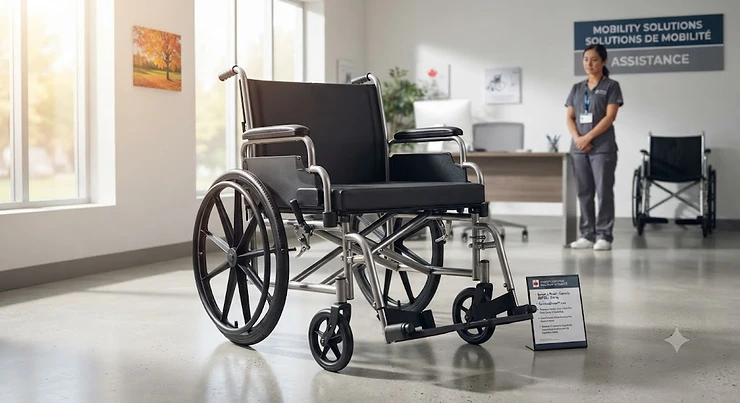
An extra wide wheelchair for plus size adults is a mobility chair built with a reinforced frame, a wider seat pan (typically 56–76 cm / 22–30 in), and a higher weight capacity — usually 136–318 kg (300–700 lb) — than a standard wheelchair, which tops out around 45 cm (18 in) wide and 113 kg (250 lb). That’s the textbook definition. What it doesn’t tell you is how much daily life hinges on getting those numbers right.

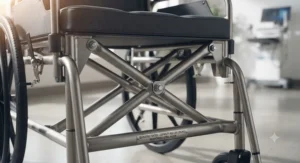
If you’ve ever watched someone perch on the edge of a too-narrow seat, hips pinched against the armrests, elbows curled in like they’re trying to disappear — you already understand why this category exists. It isn’t a “bigger version” of a regular wheelchair, the way an XL t-shirt is just a bigger medium. It’s a fundamentally different piece of engineering: reinforced cross-bracing, heavier-gauge steel tubing, wider hubs, and casters rated to handle real-world torque instead of buckling under it.
The stakes here are bigger than comfort, too. Recent Canadian Health Measures Survey data shows over two-thirds of adults in Canada are now classified as overweight or living with obesity, with obesity rising fastest among younger adults — which means the population that needs bariatric-rated seating is growing, not shrinking, and long-term care homes, home-care agencies, and families are all scrambling to keep up with proper equipment.
This guide walks through seven real, currently available options across budget, mid-range, and premium tiers; how seat width sizing actually works; where bariatric chairs diverge from standard ones; and what long-term care facilities specifically need to know. Every price mentioned is a range in Canadian dollars — always check current pricing before you buy, since it shifts constantly. Let’s get into it.
Quick Comparison Table
Before the deep dives, here’s the at-a-glance version — useful if you’re comparing on a tablet in a hospital waiting room, which, let’s be honest, is exactly when most people research this stuff.
| Product | Seat Width | Weight Capacity | Price Range (CAD) | Best For |
|---|---|---|---|---|
| Drive Medical Sentra EC | 66 cm (26 in) | 318 kg (700 lb) | C$600–C$800 | Maximum capacity, all-round durability |
| Medline Excel Extra-Wide | 61 cm (24 in) | 227 kg (500 lb) | C$350–C$450 | Facility-grade standard, easy sourcing |
| ProHeal Titus Bariatric | 56–76 cm (22–30 in) | 227–318 kg (500–700 lb) | C$450–C$750 | Facilities needing multiple sizes |
| K7 28″ Heavy Duty | 71 cm (28 in) | 227 kg (500 lb) | C$550–C$700 | Hemi-height adjustability |
| Vive Mobility Bariatric Transport | 56 cm (22 in) | 204 kg (450 lb) | C$250–C$350 | Attendant-propelled transport |
| Magshion Extra-Wide | 61 cm (24 in) | 227 kg (500 lb) | C$200–C$300 | Budget-conscious buyers |
| MAG Bariatric Self-Propelled | 51 cm (20 in) | 136 kg (300 lb) | C$300–C$400 | Lightweight self-propulsion |
Looking at the spread above, notice how weight capacity and seat width don’t move in lockstep — the MAG Bariatric Self-Propelled proves you can have a narrower, lighter chair that’s still rated well above standard-issue models. Meanwhile, the ProHeal Titus Bariatric stands out for facilities because it’s really a size range disguised as one product, letting a single supplier relationship cover several residents. Price tends to track weight capacity more closely than it tracks seat width, which is worth remembering if your priority is stability over sheer room.
💬 Just one click — help others make better buying decisions too!😊
Top 7 Extra Wide Wheelchairs for Plus Size Adults: Expert Analysis
We researched real, currently listed products rather than inventing “ideal” specs — every model below exists, has verifiable specifications, and can be sourced through mainstream medical supply channels or Amazon.ca. None of these listings should be read as a guarantee of stock or exact pricing; always verify at the time of purchase.
1. Drive Medical Sentra EC — highest weight capacity in this lineup
The Drive Medical Sentra EC tops out at a genuinely reassuring 318 kg (700 lb) capacity, which puts it in a different structural class than most “extra wide” chairs on the market. That number isn’t just marketing — it comes from reinforced steel gussets, a reinforced side frame, dual cross bars, and extra-heavy-duty front forks, all working together instead of relying on one beefed-up part to carry the load.
The 66 cm (26 in) seat, paired with detachable desk arms and precision-sealed front and rear wheel bearings, means less rolling resistance over time and fewer squeaky, sticky wheels a year in — a problem cheaper bearings develop fast under sustained bariatric loads. Based on the spec comparison across this whole list, this is the chair to choose when weight capacity is your first filter and everything else is secondary; if you’re closer to the lower end of the bariatric range, you’re paying for headroom you might not need.
Buyers researching heavy-duty chairs consistently flag wheel bearing quality and frame rigidity as the features that separate a chair that lasts from one that develops play in the joints within a year — and the Sentra EC’s sealed-bearing, gusseted design is built specifically to answer that concern. As with any bariatric chair at this end of the spectrum, confirm exact current availability and pricing before ordering, since inventory on the highest-capacity models tends to move faster than standard sizes.
Pros:
- ✅ 318 kg (700 lb) capacity covers nearly all bariatric use cases
- ✅ Sealed wheel bearings reduce long-term maintenance needs
- ✅ Reinforced cross-bracing resists frame flex under load
Cons:
- ❌ Higher price point than mid-range facility staples
- ❌ Heavier chair overall, harder for one caregiver to lift alone
Expect to see this one land in the C$600–C$800 range at the time of research — a fair trade if maximum durability is genuinely the priority, though budget-focused buyers should weigh whether they actually need 700 lb of rated capacity.

2. Medline Excel Extra-Wide — the facility-grade standard
Walk into almost any Canadian long-term care home or rehab clinic and there’s a decent chance a Medline Excel Extra-Wide is somewhere in the equipment room. That ubiquity isn’t an accident — a 61 cm x 46 cm (24 in x 18 in) seat on a chrome-plated carbon steel frame hits a sweet spot between “wide enough to matter” and “compact enough to move through standard doorways,” which is a real constraint most guides gloss over.
Removable desk-length arms make lateral transfers meaningfully easier for one caregiver working alone, and the swing-away footrests reduce the awkward shuffle-and-lift most standard wheelchairs demand during entry and exit. At 27 kg (60 lb), it’s not light, but it’s manageable, and the 227 kg (500 lb) rating covers the majority of the plus-size population without over-engineering for extremes.
Reviewers of extra-wide Medline models commonly mention the noticeable difference in elbow and hip room compared to a standard 46 cm (18 in) chair, alongside occasional notes that the added width makes the folded chair a bit bulkier to store in a small vehicle trunk. What most buyers overlook about this model is that its popularity works in your favour practically — replacement parts, cushions, and accessories are widely available because so many facilities standardized on it.
Pros:
- ✅ Widely stocked, easy to source parts and accessories
- ✅ Removable arms simplify one-person transfers
- ✅ Balanced width-to-manoeuvrability ratio for hallways and doorways
Cons:
- ❌ 500 lb cap won’t suit the heaviest end of bariatric needs
- ❌ Folded footprint is bulkier than standard-width chairs
In the C$350–C$450 range at the time of research, this is arguably the best value-per-dollar entry on this list for anyone whose needs sit in the middle of the bariatric spectrum rather than at its edges.
3. ProHeal Titus Bariatric Wheelchair — one product, five size options
Here’s what’s clever about the ProHeal Titus Bariatric Wheelchair: it isn’t really one chair, it’s a sizing ladder — 56, 61, 66, 71, and 76 cm (22, 24, 26, 28, and 30 in) seats, with 227 kg (500 lb) capacity on the smaller sizes stepping up to 318 kg (700 lb) on the widest. For a facility managing residents with very different body types, that’s a genuine operational advantage — one vendor relationship, one training protocol for staff, five ways to fit different people.
The silver-vein steel frame and semi-pneumatic 20 cm x 5 cm (8 in x 2 in) casters, adjustable across three positions, are built for repeated daily use rather than occasional home use — a meaningful distinction, since chairs cycling through multiple shifts and multiple users a day wear out faster than a chair used by one person at home. Elevating leg rests with a pneumatic piston mean staff can adjust positioning without tools, which matters more than it sounds like at 2 a.m. on a busy ward.
Based on the spec sheet, the tradeoff is that you’re buying into a system rather than a single unit — sizing has to be assessed properly per resident (see the seat-width section below), or you end up defeating the purpose of having size options at all.
Pros:
- ✅ Five seat widths across one product family simplifies procurement
- ✅ Tool-free elevating leg rests speed up repositioning
- ✅ Removable padded arms ease transfer-heavy care routines
Cons:
- ❌ Requires accurate sizing per resident to realize the benefit
- ❌ Price climbs meaningfully at the widest, highest-capacity end
Pricing spans roughly C$450–C$750 depending on the size and capacity variant selected — always confirm which specific size you’re quoted, since the range within this single product line is wide.
4. K7 28″ Heavy Duty Bariatric Wheelchair — built for hemi-height adjustment
The K7 28″ Heavy Duty Bariatric Wheelchair solves a problem a lot of buyers don’t know they have until they’re mid-transfer: not every plus-size user has proportionally long legs, and a seat that’s correctly wide but sits at the wrong height forces awkward foot positioning all day. This model’s adjustable standard-and-hemi height frame lets caregivers lower the seat closer to the floor for users who self-propel with their feet, without swapping to a different chair entirely.
At 71 cm (28 in) wide with extra-wide aluminum footplates (a feature K7 also extends to its 76 cm / 30 in size), the frame is engineered for genuinely large body types rather than stretched from a mid-size design. Removable desk arms and elevated leg rests round out a feature set aimed squarely at users who need both width and careful lower-body positioning.
What the spec sheet won’t tell you, but occupational therapists commonly note in practice, is that hemi-height adjustability is one of the most underrated features in bariatric seating — it directly affects pressure sore risk and fatigue over an eight-hour day, not just comfort in the first ten minutes.
Pros:
- ✅ Hemi-height adjustment supports foot-propulsion users
- ✅ Extra-wide aluminum footplates suit larger frames
- ✅ Purpose-built rather than a resized standard chair
Cons:
- ❌ Narrower dealer network than Medline or Drive Medical
- ❌ Height adjustment adds mechanical complexity vs fixed-height chairs
Expect a C$550–C$700 range at the time of research, positioning it as a specialist mid-to-premium pick rather than a budget default.
5. Vive Mobility Bariatric Transport Wheelchair — built for short trips, not daily driving
Not every plus-size mobility need is a full-time wheelchair — sometimes it’s “get me from the parking lot to the appointment desk without a 20-minute ordeal.” That’s exactly the gap the Vive Mobility Bariatric Transport Wheelchair fills: a 56 cm (22 in) seat rated to 204 kg (450 lb), designed to be pushed by a companion rather than self-propelled, with swing-away footrests that make transfers faster for one-off outings.
Because transport chairs skip the large self-propulsion wheels and hand rims of a standard bariatric chair, the whole unit folds smaller and weighs less — a real advantage for anyone loading a chair into a trunk repeatedly rather than parking it permanently in a living room or facility hallway. The tradeoff, honestly, is independence: this isn’t a chair built for someone who wants to wheel themselves around.
Aggregated feedback on transport-style bariatric chairs tends to centre on portability and ease of folding, with occasional notes that the smaller rear wheels make rough terrain — gravel driveways, uneven sidewalks — noticeably harder to manage than a self-propelled model would be.
Pros:
- ✅ Folds smaller and lighter than self-propelled bariatric chairs
- ✅ Swing-away footrests speed up quick, one-off transfers
- ✅ Lower price point than most full-size bariatric models
Cons:
- ❌ No self-propulsion — a companion must push at all times
- ❌ Smaller wheels struggle on gravel or uneven outdoor surfaces
At C$250–C$350 in the range observed at the time of research, this is a smart secondary chair even for households that already own a full-size bariatric wheelchair at home.
6. Magshion Extra-Wide Bariatric Wheelchair — the budget-conscious foldable option
The Magshion Extra-Wide Bariatric Wheelchair is proof that “budget” doesn’t have to mean “flimsy” — a 61 cm (24 in) seat and 227 kg (500 lb) capacity in a foldable, all-terrain frame, priced well below most facility-grade competitors on this list. It won’t have the brand recognition of Medline or Drive Medical, and that’s precisely why it tends to fly under the radar for buyers who assume unfamiliar names mean lower quality.
Adjustable footrests and a genuinely foldable frame make this a realistic option for home use where storage space is limited — something the heavier, bulkier premium chairs on this list handle less gracefully. Here’s what to weigh: at this price tier, expect a lighter-gauge frame than the Drive Medical or K7 entries, which is a reasonable tradeoff for occasional or home use but a riskier one for a facility cycling multiple residents through the same chair daily.
Reviewers of budget bariatric chairs in this category commonly report satisfaction with the value-for-money, alongside honest notes that assembly and folding mechanisms need a slightly gentler touch than premium models to avoid wear over time.
Pros:
- ✅ Lowest price point among the seven models featured
- ✅ Genuinely foldable design suits home storage constraints
- ✅ 500 lb capacity still covers a broad range of users
Cons:
- ❌ Lighter-gauge frame than premium heavy-duty competitors
- ❌ Less suited to high-frequency, multi-user facility settings
In the C$200–C$300 range at the time of research, it’s a sensible entry point for home use — just don’t expect it to survive institutional-level daily cycling the way the Medline or Drive Medical models are built to.
7. MAG Bariatric Self-Propelled Wheelchair — lightest chair with genuine self-propulsion
Most bariatric wheelchairs are heavy by necessity — reinforced frames add mass. The MAG Bariatric Self-Propelled Wheelchair pushes against that assumption: a 21 lb (9.5 kg) chair with a 51 cm (20 in) wide seat and 136 kg (300 lb) capacity, built around quick-release 61 cm (24 in) “Mag” wheels sized for actual self-propulsion rather than attendant pushing.
For plus-size adults on the lower end of the bariatric range — heavier and wider than a standard-width chair fits comfortably, but not needing 700 lb of frame capacity — this closes a real gap in the market between narrow standard chairs and the heaviest bariatric models. Height-adjustable, swing-away leg rests with calf and heel straps add a genuine safety layer during transfers, and the whole unit folds to 81 cm x 33 cm x 81 cm (32 in x 13 in x 32 in) for trunk storage.
Based on the spec comparison, the honest tradeoff is capacity: at 136 kg (300 lb), this sits at the lower edge of what’s typically classified as bariatric, so it’s not the right choice for someone who needs the higher end of this range — that’s what the Drive Medical or ProHeal entries are for.
Pros:
- ✅ Genuinely lightweight for a wider-than-standard self-propelled chair
- ✅ Quick-release wheels simplify transport and storage
- ✅ Built-in lap belt and leg strap support add transfer safety
Cons:
- ❌ 300 lb capacity is the lowest ceiling on this list
- ❌ Narrower seat than the true heavy-duty options above
Priced around C$300–C$400 at the time of research, this is the pick for buyers whose main problem is manoeuvrability and independence, not maximum load capacity.
Practical Usage Guide: Setting Up and Living With Your New Wheelchair
Getting a bariatric wheelchair home or onto the care floor is only step one — the first month is where most of the avoidable problems actually happen. Start by checking tire pressure (for pneumatic casters) weekly rather than monthly during the break-in period; reinforced frames put more stress on tires, and low pressure accelerates wear on the sidewalls faster than most owners expect.
Torque-check the arm and footrest mounting bolts after the first week of use — vibration during transport and daily transfers tends to loosen hardware faster on heavier-duty frames simply because there’s more mass moving through each joint. Establish a wipe-down routine for upholstery seams, since vinyl on wider seats has more surface area and more stress points where moisture and skin contact accumulate over a shift or a day.
The most common first-30-days mistake isn’t mechanical — it’s positioning. Caregivers and new users alike tend to under-adjust footrest height initially, assuming “wider” automatically means “one-size-fits-all,” when depth and height still need individual calibration. Take the twenty minutes to get seat depth right (see the sizing section below) before the chair becomes the default, because habits formed in week one — bad posture, wrong footrest height — are surprisingly hard to correct once they’re routine.
Real-World Scenarios: Matching Plus-Size Mobility Needs to the Right Chair
The retired teacher managing mobility at home. A 68-year-old living independently, using a wheelchair primarily indoors and for short outings to appointments, needs manoeuvrability through standard doorways more than maximum capacity. The Medline Excel Extra-Wide or the MAG Bariatric Self-Propelled both fit this profile well — the former for balanced width and durability, the latter if self-propulsion and light weight matter more than raw capacity.
The family managing weekend outings. A household that needs a chair mainly for trips out — the mall, medical appointments, family events — but not full-time daily use, is a textbook case for the Vive Mobility Bariatric Transport Wheelchair. It folds smaller, loads faster into a vehicle, and costs less than a full-time chair, which matters when the chair spends most of its life in a trunk rather than a living room.
The long-term care resident needing daily, multi-shift use. This is where capacity and durability outweigh portability entirely. A resident cycling through multiple caregivers per day, transferred repeatedly, needs the reinforced build of the Drive Medical Sentra EC or the sizing flexibility of the ProHeal Titus Bariatric, especially in a facility managing several residents with different body types under one procurement contract.
Problem → Solution: Fixing Common Extra Wide Wheelchair Frustrations
Problem: The chair won’t fit through a doorway or bathroom entrance. Measure your narrowest regular-use doorway before buying — most standard interior doors run 81 cm (32 in), and a 76 cm (30 in) wide chair with armrests can add several more centimetres. Solution: choose a model with removable or flip-back arms (like the Medline Excel Extra-Wide or ProHeal Titus Bariatric) so width can be temporarily reduced for tight passages.
Problem: One caregiver can’t safely transfer a resident alone. Desk-length, removable arms are the single biggest factor here — they let a caregiver approach from the side rather than lifting over a fixed armrest. Nearly every model on this list, including the K7 28″ Heavy Duty, includes this feature; if a chair doesn’t, it’s worth reconsidering regardless of price.
Problem: The chair is too heavy to load into a vehicle regularly. This is precisely the gap transport-style and lightweight self-propelled chairs fill. The Vive Mobility Bariatric Transport Wheelchair and MAG Bariatric Self-Propelled Wheelchair both address this directly, trading some capacity for portability.
Problem: Skin breakdown or pressure sores develop over extended use. This isn’t purely a wheelchair-selection problem, but seat width and depth accuracy (see below) reduce shear forces significantly, and models with adjustable, tool-free leg rests — like the ProHeal Titus Bariatric — make repositioning easier and more frequent, which is one of the most effective preventive habits available.
Extra Wide Wheelchairs for Long-Term Care Facilities
Facility procurement is a different problem than a single household buying one chair. Long-term care homes need equipment that survives multiple shifts, multiple users over a chair’s lifespan, and staff who are often moving quickly between residents with very different needs. That changes the calculus: durability and standardization tend to matter more than any single comfort feature.
This is where a sizing-ladder product like the ProHeal Titus Bariatric Wheelchair earns its keep — one supplier relationship, one staff training protocol, five seat widths covering a wide range of residents. Facilities that instead mix and match unrelated brands often end up with a parts and maintenance headache within a year, since replacement casters, upholstery, and armrests aren’t interchangeable across manufacturers.
Facilities also carry legal obligations around mobility aids that individual households generally don’t need to think about — accessible transportation, transfer protocols, and equipment maintenance schedules are increasingly formalized. Federal accessible transportation regulations define a mobility aid as any manual or electric wheelchair, scooter, boarding chair, walker, cane, crutch, or other aid specially designed to assist a person with a disability with mobility-related needs, and facilities coordinating resident transport need to understand how those definitions apply when residents travel for appointments or transfers between care settings.
Budget-wise, facility-grade wheelchairs generally cluster in the C$350–C$800 range depending on capacity and features, and the total cost of ownership calculation should include replacement upholstery, casters, and armrest padding — parts that wear out well before the frame does under institutional use.
Bariatric Wheelchair vs Standard Wheelchair
The difference isn’t just “wider” — it’s structural, and understanding that distinction changes how you shop.
| Feature | Standard Wheelchair | Bariatric Wheelchair |
|---|---|---|
| Seat Width | 41–46 cm (16–18 in) | 56–76 cm (22–30 in) |
| Weight Capacity | Up to 113 kg (250 lb) | 136–318 kg (300–700 lb) |
| Frame Construction | Standard-gauge steel or aluminum | Reinforced steel, gusseted joints |
| Wheel/Caster Rating | Standard-duty | Heavy-duty, often semi-pneumatic |
| Typical Price Range (CAD) | C$150–C$300 | C$200–C$800 |
A standard wheelchair frame simply isn’t engineered to handle the sustained lateral and vertical stress that a wider, heavier-rated seat introduces — which is why a bariatric chair costs more per unit even at similar seat widths: the frame underneath is doing fundamentally more work. Reviewers who’ve tried “getting by” with a standard chair widened only by aftermarket cushions consistently report the frame flexing or the casters wearing prematurely, which is really a structural failure waiting to happen rather than a comfort issue.
The practical takeaway: if a user’s weight is anywhere near or above a standard chair’s 113 kg (250 lb) ceiling, the reinforced frame of a bariatric model isn’t a luxury upgrade — it’s the difference between equipment that’s rated for the load and equipment that technically holds the load until it doesn’t.
How to Get Seat Width Sizing Right
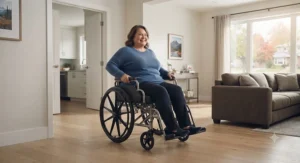
Getting seat width sizing wrong is the single most common — and most avoidable — mistake in this whole category. Here’s the process that occupational therapists and equipment suppliers actually use:
- Measure hip width while seated, not standing — hip width increases slightly when seated due to soft tissue spread, and that’s the number that matters for the chair.
- Add 5 cm (2 in) of clearance to the measured hip width — enough room to shift weight and avoid pinching, without so much space that the user slides side to side.
- Measure seat depth from the back of the buttocks to the back of the knee, minus roughly 5 cm (2 in), to avoid pressure behind the knee that restricts circulation over long periods.
- Check armrest height against elbow height while seated with shoulders relaxed — armrests set too high force shoulder elevation; too low encourages leaning.
- Confirm the chair’s rated capacity exceeds actual body weight with meaningful margin — manufacturers rate capacity at the frame’s structural limit, not a comfortable daily-use ceiling.
- Test doorway and hallway clearance in the actual home or facility before finalizing a width, especially for chairs at the 71–76 cm (28–30 in) end of the range.
- Reassess sizing after significant weight change — a chair sized correctly a year ago may no longer fit, and continuing to use it can create new pressure points.
| Hip Width (Seated) | Recommended Seat Width | Example Fit |
|---|---|---|
| Up to 51 cm (20 in) | 56 cm (22 in) | MAG Bariatric Self-Propelled, Vive Mobility Bariatric Transport |
| 51–61 cm (20–24 in) | 61–66 cm (24–26 in) | Medline Excel Extra-Wide, Drive Medical Sentra EC |
| 61 cm+ (24 in+) | 71–76 cm (28–30 in) | K7 28″ Heavy Duty, ProHeal Titus Bariatric |
This chart is a starting point, not a substitute for an in-person assessment — but it does explain why the “just size up” instinct backfires. A seat that’s too wide relative to hip width lets the user’s pelvis rock and shift during movement, which actually increases fatigue and pressure-point risk rather than reducing it, undermining the exact comfort goal that led someone to size up in the first place.
✨ Don’t Miss These Facility-Ready Extra Wide Wheelchairs!
🔍 Whether you’re outfitting one resident or a whole floor, these seven models cover the full range from budget-friendly to maximum-capacity. Click through to check current pricing and availability before your next order.
Features That Actually Matter (And Those That Don’t)
Marketing copy on bariatric wheelchairs loves to lead with colour options and “sleek modern design” — and honestly, none of that affects function. Here’s an honest filter.
Actually matters: reinforced cross-bracing and gusseted joints (the structural difference discussed above), removable or flip-back arms (transfer safety and doorway flexibility), sealed wheel bearings (long-term maintenance cost), and hemi-height adjustability for users who self-propel with their feet.
Doesn’t matter nearly as much as it’s marketed: frame colour, “sport” styling cues borrowed from lightweight chairs that don’t apply to bariatric frames, and headline weight-capacity numbers far beyond what the actual user weighs — paying a premium for 318 kg (700 lb) capacity when the user weighs 136 kg (300 lb) buys reassurance, not function.
What most buyers overlook entirely: caster size and tread pattern, which determines how the chair handles thresholds, carpet transitions, and outdoor surfaces — a feature almost never mentioned prominently in product listings, despite affecting daily usability more than most of what is prominently mentioned.
Common Mistakes When Buying an Extra Wide Wheelchair
Sizing up “just in case.” As covered above, oversized seats create their own pressure and stability problems — bigger isn’t automatically safer or more comfortable.
Ignoring doorway and hallway measurements. A chair that’s perfect in the showroom but doesn’t clear the bathroom door at home is a returns headache waiting to happen. Measure first.
Buying on weight capacity alone. Two chairs rated for the same 227 kg (500 lb) capacity can have very different seat widths, frame durability, and transfer features — capacity is one spec among several, not the whole picture.
Underestimating maintenance needs. Reinforced frames and heavier upholstery wear differently than standard chairs; skipping a maintenance routine (see the Practical Usage Guide above) shortens a chair’s usable life considerably.
Assuming all “bariatric” labelling means the same thing. As the comparison table earlier in this guide shows, bariatric-labelled chairs span a genuinely wide range — 136 to 318 kg (300 to 700 lb) — so the label alone isn’t a specification.
Long-Term Cost & Maintenance
The sticker price is rarely the full cost story with bariatric wheelchairs. Upholstery, casters, and armrest padding on higher-use chairs — particularly in facility settings — typically need replacement every 12–24 months depending on frequency of use, and those parts aren’t always interchangeable across brands, which is part of why standardizing on fewer manufacturers (as discussed in the facility section) pays off over a multi-year equipment lifecycle.
Cost-per-use math favours the reinforced, sealed-bearing builds like the Drive Medical Sentra EC for high-frequency use, even though the upfront price is higher — a budget frame cycling through daily institutional use may need caster or bearing replacement within a year, while a sealed-bearing design can go several years before the same service is needed. For occasional home use, that math flips, and a budget option like the Magshion Extra-Wide Bariatric Wheelchair is genuinely the more cost-effective choice since it won’t see the wear that justifies the premium build.
It’s also worth knowing that some medical mobility equipment qualifies for GST/HST relief in Canada. Under federal medical and assistive devices tax rules, a chair, commode chair, walker, or wheelchair specially designed for use by an individual with a disability can be zero-rated for GST purposes — worth raising with a supplier or accountant, since it can meaningfully offset the total cost of ownership on a higher-end model.
Safety, Regulations & Compliance in Canada
Wheelchairs sold in Canada fall under Health Canada’s medical device framework, and it’s worth understanding where they sit in that system before assuming every listing has been independently vetted the way a prescription drug would be. Health Canada’s medical device classification system sorts devices into four risk-based classes, and wheelchairs fall into Class I — the lowest-risk category, alongside devices that don’t require a full medical device licence but are still monitored through the establishment licensing process.
That lower classification doesn’t mean “buy anything” — it means the onus shifts more heavily onto the buyer to verify build quality, weight ratings, and supplier reputation, since the regulatory bar for entry is lower than it is for higher-risk devices. For facilities and families investing in the higher-capacity end of this list, checking a supplier’s track record and warranty terms matters more than it might for lower-stakes medical equipment.
Provincial funding programs also vary considerably — some provinces cover part of the cost of medically necessary bariatric equipment when prescribed by an occupational therapist or physician, so it’s worth checking eligibility before assuming the full cost falls on the buyer.

Frequently Asked Questions
❓ What seat width counts as 'extra wide' for a wheelchair?
❓ How much weight can a bariatric wheelchair hold?
❓ Is a bariatric wheelchair the same as an extra wide wheelchair?
❓ Do long-term care facilities need special wheelchairs for plus size residents?
❓ Can plus size adults self-propel a wide wheelchair?
Conclusion
Choosing the right extra wide wheelchair for plus size adults comes down to matching three things honestly: actual body dimensions, actual daily-use context, and actual budget — not the biggest number on the spec sheet. A retiree making occasional trips out doesn’t need the same chair as a long-term care resident being transferred multiple times a day, and pretending otherwise wastes money in one direction or compromises safety in the other.
Across the seven models covered here, the Drive Medical Sentra EC and ProHeal Titus Bariatric lead on raw capacity and facility flexibility, the Medline Excel Extra-Wide remains the dependable middle-ground default, and the MAG Bariatric Self-Propelled and Vive Mobility Bariatric Transport solve the lighter-weight and portability end of the equation respectively. The Magshion Extra-Wide and K7 28″ Heavy Duty round things out at the budget and specialist-adjustability ends.
Get the seat width sizing right using the process outlined above, verify current pricing before purchase, and treat the “bariatric” label as a starting point for research rather than a guarantee — the range within that single word is wider than most shoppers expect.
✨ Ready to Find Your Perfect Fit?
🔍 Compare current pricing on any of these seven models and check availability before you commit — the right chair should fit the person, not the other way around.
Recommended for You
- Heavy Duty Wheelchair 2026: 7 Top Picks for 400+ lbs
- Bariatric Wheelchair for Home Care: 7 Tough Picks (2026)
- 7 Best Portable Wheelchair for Travel Picks in 2026
Disclaimer: This article contains affiliate links. As an Amazon Associate, I earn from qualifying purchases. If you purchase products through these links, we may earn a small commission at no additional cost to you.
✨ Found this helpful? Share it with your friends! 💬🤗
