
In This Article
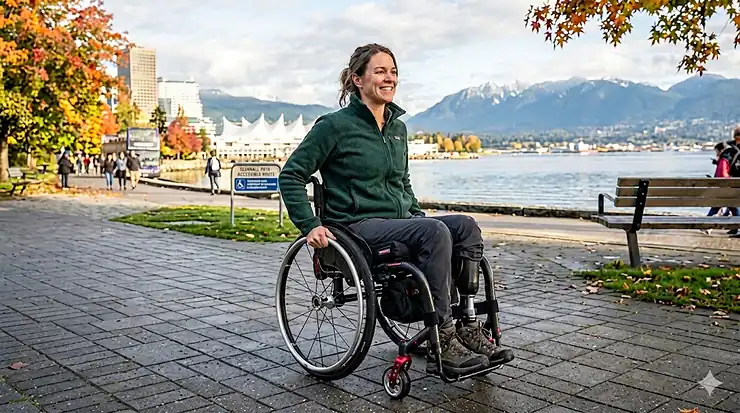
Here’s the thing nobody tells you before you start typing best custom wheelchair into a search bar at 11 p.m., half-panicked about an upcoming appointment: a true custom wheelchair — the kind moulded to your spine, fitted by an occupational therapist, built frame-by-frame for your exact measurements — isn’t something you click “Add to Cart” on. It’s a clinical process, usually arranged through your doctor, an OT, and a mobility equipment vendor, often partly funded through provincial programs.
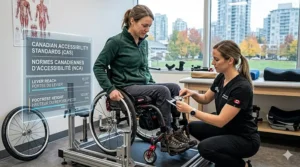
What is available, and available right now on Amazon.ca, is a different (and for a lot of people, perfectly good) category: adjustable and customizable wheelchairs — frames where you can tune the seat width, depth, armrests, footrests, and centre of gravity yourself, without a six-week clinical assessment. Karman Healthcare even markets one of its lightest frames as the chair for people who “aren’t able to consider a high-ticket custom-made wheelchair” — which, refreshingly, is the manufacturer admitting the distinction out loud.
This guide treats both worlds honestly. We’ll walk through seven real, adjustable wheelchairs you can buy today, explain who each one actually suits (not just what the spec sheet says), and tell you exactly when you should put the laptop down and call an OT instead. If you’ve got a complex postural need, a progressive condition, or pressure-sore risk, skip to the section on Canadian funding and assessments before you buy anything online.
Quick Comparison: 7 Customizable Wheelchairs on Amazon.ca
| Model | Weight | Best For | Key Adjustment | Price Range (CAD) |
|---|---|---|---|---|
| Karman Flexx Ultra-Lightweight | ~9–11 kg | Active users wanting near-custom fit | Centre of gravity, seat width/depth | $1,300–$1,800 |
| Karman S-115 Ultra-Light Ergonomic | ~11 kg | Budget-conscious daily users | Removable footrest, ergonomic frame | $550–$750 |
| Drive Medical Cruiser III | ~13–14 kg | First-time buyers, caregivers | Seat & armrest height | $400–$600 |
| Drive Medical AeroFly Ultra-Lite | ~6 kg | Frequent flyers, condo dwellers | Swing-away footrests, fold size | $700–$950 |
| Medline Premium Ultra-Lightweight | ~12 kg | Comfort-first, longer sitting periods | Flip-back arms, elevating leg rests | $500–$700 |
| Vive Mobility Active Wheelchair | ~11 kg | Sport-leaning, narrow doorway homes | 0°–10° tilt, narrow seat | $450–$650 |
| Vive Mobility Electric Wheelchair | ~30 kg | Users needing powered mobility | Reclining seat, joystick side swap | $1,400–$2,200 |
(Prices reflect general Canadian market ranges at the time of research — always confirm the live listing on Amazon.ca, since pricing shifts constantly and provincial taxes aren’t included.)
Looking at this table, the split is pretty clean: the Drive Medical and Vive options dominate the under-$1,000 CAD bracket and suit anyone who needs reliable mobility without ceremony, while the Karman Flexx and the Vive electric chair justify their higher price tags through genuine engineering — true centre-of-gravity tuning in the Flexx’s case, and powered independence in the electric chair’s. The trap Canadian buyers fall into is assuming a bigger price tag always means a better fit; it doesn’t. A $1,700 Flexx is wasted money for someone who just needs occasional transport mobility, and a $500 Cruiser III will frustrate someone who actually needs the postural adjustability only the pricier frames offer.
💬 Just one click — help others make better buying decisions too! 😊
✨ Don’t Miss These Exclusive Deals!
🔍 Take your search for the right wheelchair further — click through to check live pricing and availability on Amazon.ca. A few minutes of comparison now can save you a return shipment later.
Top 7 Customizable & Adjustable Wheelchairs in Canada
1. Karman Flexx Ultra-Lightweight Adjustable Wheelchair
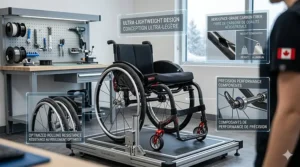
The standout feature here is the centre-of-gravity adjustment — a feature you’d normally only find on chairs prescribed through a clinic. That single adjustment changes how much effort it takes to push the chair over carpet, gravel, or the slushy mess that is a Canadian parking lot in March; moving the rear wheels forward reduces rolling resistance noticeably. Aircraft-grade aluminum keeps total weight low without the frame feeling flimsy.
What most buyers overlook is that the Flexx isn’t really competing with $500 transport chairs — it’s positioned as the closest thing to a clinic-fit chair you can buy without an OT referral, which makes it the right call specifically for active, independent users who don’t currently qualify for funded custom equipment but still need precise fit. Aggregate buyer feedback consistently praises the manoeuvrability and adjustability range, with the occasional complaint about the learning curve in dialling in the settings correctly the first time.
✅ Pros: Genuine centre-of-gravity tuning, very light for the adjustability on offer, quick-release axles for transport
❌ Cons: Setup takes patience, premium price for a manual chair
Expect to pay in the upper range listed above — pricier than most manual chairs, but the closest you’ll get to bespoke fit without a clinical referral.
2. Karman S-115 Ultra-Light Ergonomic Wheelchair
At roughly 11 kg, this is the chair you hand to someone who’s never lifted a wheelchair into a trunk before and needs it to not be a fight every time. The ergonomic frame geometry reduces the muscle strain of self-propelling, which matters more than people expect once you’re rolling several kilometres a week on Canadian sidewalks that are rarely as flat as they look.
In my read of the category, the S-115 earns its spot by being the rare “budget” chair that doesn’t feel like a compromise — the removable footrest and ergonomic push rims are details usually reserved for pricier models. It suits someone managing a temporary mobility limitation (post-surgery recovery, for instance) just as well as a longer-term daily user on a tighter budget. Reviewers consistently mention how much lighter it feels compared to standard steel-frame chairs, with occasional notes about armrest padding being thinner than expected.
✅ Pros: Excellent weight-to-price ratio, easy for caregivers to fold and lift, ergonomic push rims
❌ Cons: Thinner armrest padding, fewer adjustment points than the Flexx
3. Drive Medical Cruiser III Lightweight Wheelchair
The Cruiser III’s carbon-steel frame and adjustable seat and armrest options make it the default recommendation for someone buying their very first wheelchair — usually a family member shopping for a parent, in my experience reading buyer patterns. The mag wheels roll smoothly enough for indoor and light outdoor use without the upkeep that pneumatic tires demand, which matters in a country where road salt eats rubber and metal alike every winter.
What the spec sheet won’t tell you: the desk-length arms make transferring in and out of the chair noticeably easier at a kitchen table or office desk, a small detail that ends up mattering daily. This is the chair for someone prioritizing dependable, no-surprises mobility over athletic performance. Customer feedback skews toward “reliable and easy to manoeuvre,” with the steel frame’s extra weight being the most common trade-off mentioned.
✅ Pros: Budget-friendly, smooth-rolling mag wheels, simple to operate for first-time users
❌ Cons: Heavier than aluminum alternatives, less adjustability for complex needs
4. Drive Medical AeroFly Ultra-Lite Wheelchair
At around 6 kg, the AeroFly is built for one job: disappearing into the trunk of a Civic or the overhead bin of a regional flight. Swing-away footrests and an 18-inch seat width keep it functional without adding bulk. If you live in a condo with a narrow elevator or you’re the type who travels for work and refuses to be stranded without mobility support, this is the practical answer.
The trade-off most people don’t anticipate is stability — ultra-light frames flex more on rough terrain than heavier steel chairs, so this shines on sidewalks and indoors but isn’t the chair for gravel trails or cottage country. Buyers consistently highlight how genuinely portable it feels compared to “lightweight” chairs that still weigh 13+ kg.
✅ Pros: Genuinely portable, easy one-person fold, ideal for travel and small spaces
❌ Cons: Less stable on rough or uneven terrain, narrower seat than some users need
5. Medline Premium Ultra-Lightweight Wheelchair
The flip-back desk arms and elevating leg rests are the headline here, and they matter more than they sound. Elevating leg rests reduce lower-limb swelling for users who sit for extended periods — a real concern during long Canadian winters when outdoor mobility drops and indoor sitting time climbs. Flip-back arms make lateral transfers (bed to chair, chair to car) noticeably smoother than fixed-arm designs.
What most listings skip: that comfort-focused design adds weight, so this isn’t the chair for someone optimizing for portability — it’s the chair for someone who’ll be sitting in it for hours at a stretch and needs the extra cushioning and leg support more than they need a featherweight frame. Reviewers frequently mention comfort over long durations as the standout, with the heavier frame being the expected, accepted trade-off.
✅ Pros: Elevating leg rests genuinely reduce swelling, comfortable for extended sitting, easy lateral transfers
❌ Cons: Heavier than travel-focused models, bulkier fold
6. Vive Mobility Active Wheelchair
Built with a narrower, sport-tuned seat and a 0°–10° tilt adjustment, this one is aimed squarely at users who refuse to let “wheelchair” mean “slow.” The narrower frame (15.5″ wide) is a genuine advantage in older Canadian homes with tight 24-inch doorways — a detail that trips up a lot of first-time buyers who don’t measure their own hallways before ordering.
The tilt adjustment is the sleeper feature: small posture shifts throughout the day reduce pressure-point fatigue, something people don’t notice mattering until they’ve sat in a fixed-angle chair for six hours straight. This suits an active, independent user more than someone needing maximum stability or bariatric support — at a 275 lb capacity, it’s built for agility, not bulk.
✅ Pros: Narrow profile clears tight doorways, tilt adjustment improves all-day comfort, sport-tuned wheels roll efficiently
❌ Cons: Lower weight capacity than bulkier models, less padding than comfort-focused chairs
7. Vive Mobility Electric Wheelchair
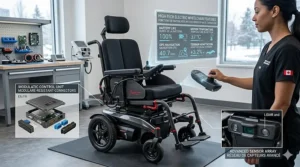
For users whose mobility need has moved past self-propelling, this electric chair’s customizable seating — height-adjustable, reclining, swivel for transfers — does the job a manual chair simply can’t. The joystick repositions to either side, which is a small but meaningful detail for users with asymmetric hand strength, a common reality after stroke or with certain neurological conditions.
Canadian winters are the real test for any electric chair: cold reduces battery efficiency, sometimes by 10–20%, so factor in shorter effective range between November and March than the spec sheet promises in ideal conditions. This is the right call for someone prioritizing independence over manual exercise, particularly indoors and on paved routes; it’s not the chair for unpaved trails or deep snow.
✅ Pros: Genuine seating customization, side-switchable joystick, multi-year frame guarantee
❌ Cons: Heavy at ~30 kg (not easily lifted solo), reduced battery range in cold weather
Real Stories: Matching the Chair to the Canadian Life
The Toronto condo dweller commuting daily to a desk job needs something that survives a narrow elevator, a crowded subway platform, and a 24-inch hallway door — the AeroFly Ultra-Lite or the Active Wheelchair’s narrow frame fit this life far better than anything comfort-focused.
The Calgary retiree managing arthritis and spending most of the day at home, transferring frequently between chair, bed, and recliner, gets more daily value from the Medline’s elevating leg rests and flip-back arms than from raw portability — comfort over a long sitting day beats featherweight design every time.
The rural Manitoba user living 40 minutes from the nearest mobility equipment service centre needs a frame that’s simple, durable, and easy to self-maintain — the Drive Medical Cruiser III’s steel frame and straightforward mechanics mean fewer trips into town for a loose bolt or a flat caster.
Problem → Solution: The Headaches Canadians Actually Hit
Problem: The chair doesn’t fit through your doorway. Measure your narrowest interior doorway before ordering — not your front door. The Active Wheelchair’s 15.5″ seat width solves this more often than people expect.
Problem: Cold weather kills your electric range. Store the battery indoors overnight rather than in an unheated garage, and budget for 10–20% less range than the listed spec between November and March.
Problem: No local service centre for repairs. Stick to widely-distributed brands (Drive Medical, Medline, Karman) with parts availability across Canada rather than no-name imports — a $40 caster wheel shouldn’t require a cross-border order.
Problem: Road salt and slush are wrecking the frame. Rinse the lower frame and wheel bearings with fresh water after slushy outings; salt residue accelerates corrosion on steel frames specifically, less so on aluminum.
Custom vs. Adjustable vs. Off-the-Shelf — What’s the Real Difference
A true custom wheelchair is built around a clinical seating assessment: an occupational therapist measures pressure points, posture, spasticity patterns, and daily environment, then a vendor builds or configures a frame — sometimes with moulded backrests or headrests — to that exact profile. This process is typically what’s covered, partially or fully, by provincial assistive devices programs.
An adjustable wheelchair — everything in this article — ships pre-built with a range of tunable settings (seat width, depth, centre of gravity, tilt) that a capable adult can configure at home. It covers a huge portion of real-world needs without the wait time or paperwork.
An off-the-shelf chair has fixed dimensions with no meaningful adjustment beyond armrest height. It’s the cheapest entry point and fine for short-term or occasional use, but the least forgiving if your needs are even slightly outside “average.”
How to Choose the Right Wheelchair in Canada
- Get a professional opinion first if your need is medical, not situational. A short consult with a doctor or OT costs little and saves you from an expensive return.
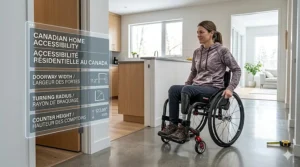
- Measure your home before your body. Doorways, turning radius in bathrooms, and threshold heights matter more than most spec sheets suggest.
- Decide manual versus powered honestly. Upper-body strength, daily distance, and terrain (hills, gravel, snow) should drive this, not preference alone.
- Prioritize weight only if you’re lifting the chair regularly — into a car trunk, up porch stairs, onto transit.
- Check parts availability, not just the purchase price — a chair with no Canadian-available replacement casters becomes expensive fast.
- Confirm weight capacity with margin, not at the limit — comfort and frame longevity both suffer at the edge of rated capacity.
- Budget for accessories (cushions, bags, all-weather covers) — they rarely come included and add real cost.
Common Mistakes Canadians Make When Buying Online
Buying based on weight alone is the most common one — an ultra-light frame that flexes on gravel or snow-packed sidewalks creates a worse daily experience than a slightly heavier, sturdier chair. Skipping the doorway measurement is a close second; a chair that’s an inch too wide for your narrowest hallway is a returns nightmare. People also frequently underestimate cold-weather battery loss on electric chairs, and assume Amazon pricing already reflects Canadian duties and exchange differences when in fact Canadian list prices typically already account for that, running somewhat higher than equivalent US listings — annoying, but it spares you customs delays and cross-border warranty headaches.
Wheelchair Funding, Regulations & Standards in Canada
If your need is medical rather than situational, it’s worth knowing that Health Canada recommends professional assessment before purchasing an expensive assistive device like a wheelchair, particularly since most reimbursement through insurance or provincial programs requires a prescription. Provinces run their own assistance programs — British Columbia’s Health Assistance ministry, for example, has occupational and physical therapists assess eligibility and help with equipment trials before approving funding for manual or power wheelchairs. Ontario runs a comparable Assistive Devices Program for residents with long-term physical disabilities.
On the standards side, CSA Group maintains accessibility and mobility-equipment standards used across Canadian legislation, covering everything from mobility-aid vehicle securement to barrier-free building design. None of this applies to a quick Amazon purchase of an adjustable transport chair — but it absolutely applies if you’re heading toward a funded, clinically-fitted custom chair, where an occupational therapist’s wheelchair assessment becomes the actual first step, not a product page.
✨ Don’t Miss These Exclusive Deals!
🔍 Ready to compare options? Check current pricing and availability for any of these picks on Amazon.ca before deciding — and if your needs sound more clinical than situational, start with your doctor or OT instead.

FAQ
❓ Can I get a custom wheelchair through Amazon.ca?
❓ Does Canada cover the cost of a custom wheelchair?
❓ Are adjustable wheelchairs good enough for daily use?
❓ How much does a custom wheelchair cost in Canada?
❓ Do electric wheelchairs work well in Canadian winters?
Conclusion
If there’s one thing worth carrying away from all this, it’s that “custom” and “adjustable” aren’t the same promise, and conflating them is how people end up disappointed with a perfectly good chair. For situational mobility needs — recovery, travel, aging parents, tight budgets — the seven adjustable options above genuinely solve real problems, and a little doorway-measuring and honest self-assessment of terrain and strength will get you to the right one faster than any spec sheet alone. For anything medical, complex, or long-term, the smartest first purchase isn’t a wheelchair at all — it’s a conversation with an occupational therapist who can point you toward funding you didn’t know existed.
Recommended for You
- Best High-Performance Wheelchair in Canada 2026: Top 7 Picks
- 7 Best Rigid Frame Wheelchairs in Canada 2026
- Wheelchair Hockey Chair: 7 Best Picks for Canadians (2026)
Disclaimer: This article contains affiliate links. As an Amazon Associate, I earn from qualifying purchases. If you purchase products through these links, we may earn a small commission at no additional cost to you.
✨ Found this helpful? Share it with your friends! 💬🤗
